
Recruiting Teams Get Sharper Signals by Inviting Candidates To Show Their Work
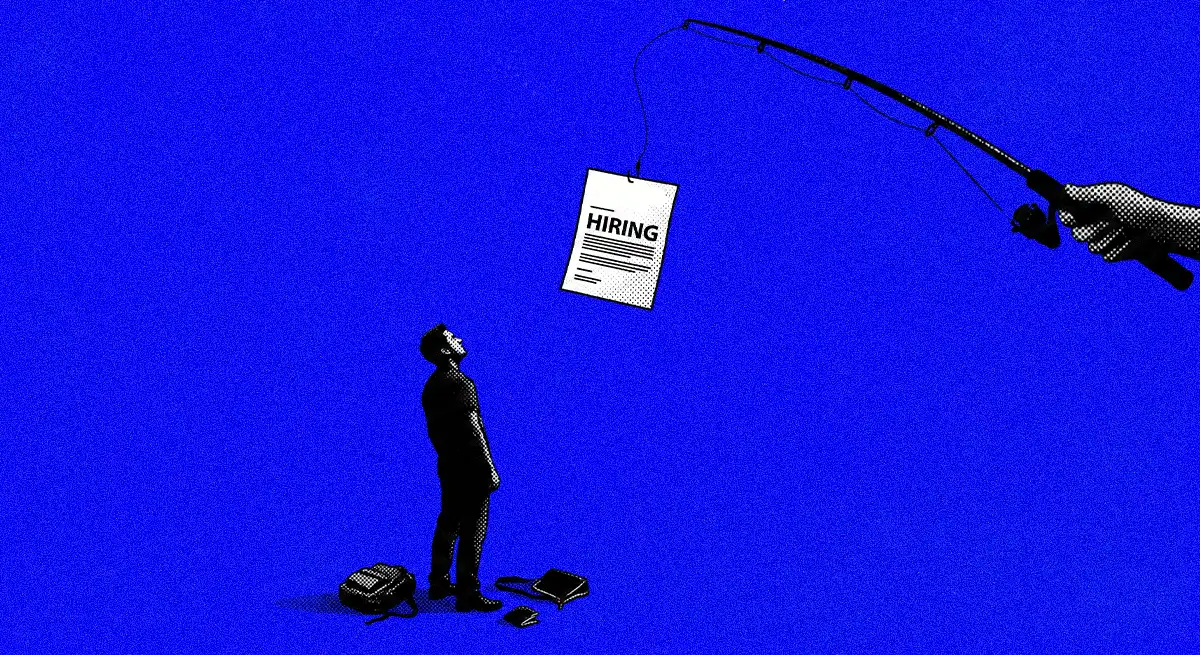
Asking an employee to spend their PTO to connect to a company that may or may not work out isn't the flex companies think it is.

Clark Bartron
Organizational Coach
Clark Bartron
Asking candidates to spend their vacation time auditioning for a job they may not get pushes the burden of selection uncertainty onto the people with the least leverage to refuse. The work trial hiring format narrows the candidate pool to those who happen to be unemployed, those with surplus PTO, and those desperate enough to take the risk, and it sends a message about how the organization values employee time before that employee has even joined. Companies adopting the practice often frame it as a sign of cultural seriousness. The pattern says something different about how the company thinks about equity, candidate experience, and its own brand.
Clark Bartron is an organizational coach with deep experience in onboarding, recruitment, and employee development. Much of his coaching work centers on the human realities behind hiring processes, like how candidates manage rejection, how onboarding actually unfolds in the first 90 days, and how organizations either build or erode trust at the front door. That perspective shaped his reaction when multi-day unpaid work trials began surfacing as a recruiting tactic within his network.
“PTO is a big part of work-life balance for many people. Asking an employee to spend their PTO to connect to a company that may or may not work out isn’t the flex companies think it is,” he says. His objection to the practice is structural, and it starts with who actually gets to participate.
The filter problem
A multi-day trial requiring PTO assumes the candidate has PTO to spend. Many employees do not. Some accrue only a week after a full year of work. Others have to wait 90 days before they can use anything. The format selects for a narrow slice of the labor market: people who are between jobs, people senior enough to have banked time off, and people willing to gamble several days of unpaid time on a single opportunity. “How can you say that you’ve got the best person for the role if your whole recruitment strategy is connecting to people who either have PTO and don’t mind using it, or have to be unemployed to do this?” Clark questions.
He’s sympathetic to candidates in toxic environments who treat any exit as a good option, and he recognizes that short-term unemployment beats no employment. But the people most likely to opt into a multi-day trial are not the same people most likely to be the best hire. The format also misses what he calls the comfort trap, where strong candidates in stable but unfulfilling roles want to grow and are willing to look elsewhere, just not willing to torch a week of leave to do it. “A lot of people who are looking for a change, who are looking to evolve in their space, may look at this as an opportunity, but not at the expense of their PTO. That’s a nonstarter.”
A bad first day before day one
The candidates who do clear a multi-day trial and get the offer arrive with the scales tipped. They’ve already paid a cost their colleagues did not, and that dynamic doesn’t reset on the start date.
Clark points out that a proper onboarding takes about 90 days, with the first couple just spent getting acclimated to systems and people. A five-day trial cannot meaningfully replicate that arc. “If we have five days and we subtract two days for a candidate to get a sense of bearing, what are you doing for the other three days?” Typically, he says, it’s dedicated to an unclear work product that the company is asking the candidate to deliver without context, payment, or guardrails. The candidate’s takeaway from that experience shapes how they enter the role. They’ve seen the company set a high upfront cost for participation, but haven’t seen what the company is willing to offer in return.
What employers are actually trying to solve
The temptation behind work trials is real. Clark acknowledges that recruiting teams are buried, AI-generated resumes have made applications look interchangeable, and the traditional interview process struggles to surface culture fit, which is often the variable that decides who actually gets the offer. “What they’re attempting to do here isn’t a bad idea in its kernel,” he says. “But it’s a blind spot because it doesn’t apply to everybody. They’re measuring for culture fit, and that’s really what a lot of organizations don’t do well.”
His diagnosis is that companies should solve the culture fit problem directly rather than approximate it through unpaid labor. That means designing the interview process so that culture fit is the explicit subject of a dedicated conversation, taking place after an initial screen and a hiring manager round. “It comes down to checking off boxes, and culture fit is understandably a big box to check. I’d just suggest that work trials are not a method that celebrates all of the potential employees that the company could have.” It’s an aspect that matters because even candidates who are ultimately rejected are potential customers, potential applicants for other roles, and potential ambassadors. A recruiting process that treats them as throwaway volume erodes employer brand in ways that show up later in the funnel.
Better assessment, designed for both sides
Clark is not against real-world assessment. What he takes issue with is assessment that costs candidates more than the company is willing to invest itself. His preferred alternative for many roles is a short, structured demonstration of how a candidate works, paired with materials the candidate has already built. “As an organizational coach and a trainer, the way I manage it is, ‘Give me a fifteen-minute presentation on whatever you want. You can use existing material. I’m not going to tell you what to cover.'”
His prescription for candidates is symmetrical to the one he gives employers. Build the artifacts that let you push back with credible alternatives. “It comes down to showing your work. Have a website or a portfolio you can point employers to and say, ‘This is what my work looks like. This is how I’ve solved that problem.'” LinkedIn project sections, personal sites, and curated case studies give candidates a way to say no to an excessive trial while still demonstrating fit. They also let hiring managers see the work without extracting unpaid output. The point is reciprocity. Both parties get a credible signal without one side absorbing all the cost.
The work-trial debate sits inside a larger truth Clark keeps returning to. Hiring at scale, in a market saturated with AI-assisted applications and overburdened recruiting teams, requires both sides to take a different approach than the one they relied on five years ago. “Recruitment has to do something different. Potential employees have to do something different. How else can you distinguish yourself from the million other people that are out there and available?”
The views and opinions expressed are those of Clark Bartron and do not represent the official policy or position of any organization.
Related articles





TL;DR
Multi-day work trials that require candidates to spend PTO auditioning for a role narrow the talent pool and set an unbalanced tone for the eventual hire before onboarding even begins.
Clark Bartron, an organizational coach with deep experience in onboarding, recruitment, and employee development, believes the work trial format misdiagnoses what employers are actually trying to solve.
He advocates for interviewing for culture fit directly, replacing extended trials with short structured demonstrations, and enabling both sides to show their work without one side absorbing all the cost.

Clark Bartron
Clark Bartron
Organizational Coach
Organizational Coach
Asking candidates to spend their vacation time auditioning for a job they may not get pushes the burden of selection uncertainty onto the people with the least leverage to refuse. The work trial hiring format narrows the candidate pool to those who happen to be unemployed, those with surplus PTO, and those desperate enough to take the risk, and it sends a message about how the organization values employee time before that employee has even joined. Companies adopting the practice often frame it as a sign of cultural seriousness. The pattern says something different about how the company thinks about equity, candidate experience, and its own brand.
Clark Bartron is an organizational coach with deep experience in onboarding, recruitment, and employee development. Much of his coaching work centers on the human realities behind hiring processes, like how candidates manage rejection, how onboarding actually unfolds in the first 90 days, and how organizations either build or erode trust at the front door. That perspective shaped his reaction when multi-day unpaid work trials began surfacing as a recruiting tactic within his network.
“PTO is a big part of work-life balance for many people. Asking an employee to spend their PTO to connect to a company that may or may not work out isn’t the flex companies think it is,” he says. His objection to the practice is structural, and it starts with who actually gets to participate.
The filter problem
A multi-day trial requiring PTO assumes the candidate has PTO to spend. Many employees do not. Some accrue only a week after a full year of work. Others have to wait 90 days before they can use anything. The format selects for a narrow slice of the labor market: people who are between jobs, people senior enough to have banked time off, and people willing to gamble several days of unpaid time on a single opportunity. “How can you say that you’ve got the best person for the role if your whole recruitment strategy is connecting to people who either have PTO and don’t mind using it, or have to be unemployed to do this?” Clark questions.
He’s sympathetic to candidates in toxic environments who treat any exit as a good option, and he recognizes that short-term unemployment beats no employment. But the people most likely to opt into a multi-day trial are not the same people most likely to be the best hire. The format also misses what he calls the comfort trap, where strong candidates in stable but unfulfilling roles want to grow and are willing to look elsewhere, just not willing to torch a week of leave to do it. “A lot of people who are looking for a change, who are looking to evolve in their space, may look at this as an opportunity, but not at the expense of their PTO. That’s a nonstarter.”
A bad first day before day one
The candidates who do clear a multi-day trial and get the offer arrive with the scales tipped. They’ve already paid a cost their colleagues did not, and that dynamic doesn’t reset on the start date.
Clark points out that a proper onboarding takes about 90 days, with the first couple just spent getting acclimated to systems and people. A five-day trial cannot meaningfully replicate that arc. “If we have five days and we subtract two days for a candidate to get a sense of bearing, what are you doing for the other three days?” Typically, he says, it’s dedicated to an unclear work product that the company is asking the candidate to deliver without context, payment, or guardrails. The candidate’s takeaway from that experience shapes how they enter the role. They’ve seen the company set a high upfront cost for participation, but haven’t seen what the company is willing to offer in return.
What employers are actually trying to solve
The temptation behind work trials is real. Clark acknowledges that recruiting teams are buried, AI-generated resumes have made applications look interchangeable, and the traditional interview process struggles to surface culture fit, which is often the variable that decides who actually gets the offer. “What they’re attempting to do here isn’t a bad idea in its kernel,” he says. “But it’s a blind spot because it doesn’t apply to everybody. They’re measuring for culture fit, and that’s really what a lot of organizations don’t do well.”
His diagnosis is that companies should solve the culture fit problem directly rather than approximate it through unpaid labor. That means designing the interview process so that culture fit is the explicit subject of a dedicated conversation, taking place after an initial screen and a hiring manager round. “It comes down to checking off boxes, and culture fit is understandably a big box to check. I’d just suggest that work trials are not a method that celebrates all of the potential employees that the company could have.” It’s an aspect that matters because even candidates who are ultimately rejected are potential customers, potential applicants for other roles, and potential ambassadors. A recruiting process that treats them as throwaway volume erodes employer brand in ways that show up later in the funnel.
Better assessment, designed for both sides
Clark is not against real-world assessment. What he takes issue with is assessment that costs candidates more than the company is willing to invest itself. His preferred alternative for many roles is a short, structured demonstration of how a candidate works, paired with materials the candidate has already built. “As an organizational coach and a trainer, the way I manage it is, ‘Give me a fifteen-minute presentation on whatever you want. You can use existing material. I’m not going to tell you what to cover.'”
His prescription for candidates is symmetrical to the one he gives employers. Build the artifacts that let you push back with credible alternatives. “It comes down to showing your work. Have a website or a portfolio you can point employers to and say, ‘This is what my work looks like. This is how I’ve solved that problem.'” LinkedIn project sections, personal sites, and curated case studies give candidates a way to say no to an excessive trial while still demonstrating fit. They also let hiring managers see the work without extracting unpaid output. The point is reciprocity. Both parties get a credible signal without one side absorbing all the cost.
The work-trial debate sits inside a larger truth Clark keeps returning to. Hiring at scale, in a market saturated with AI-assisted applications and overburdened recruiting teams, requires both sides to take a different approach than the one they relied on five years ago. “Recruitment has to do something different. Potential employees have to do something different. How else can you distinguish yourself from the million other people that are out there and available?”
The views and opinions expressed are those of Clark Bartron and do not represent the official policy or position of any organization.