
Growing Companies Are Engineering Deliberate Touchpoints To Carry Culture At Scale
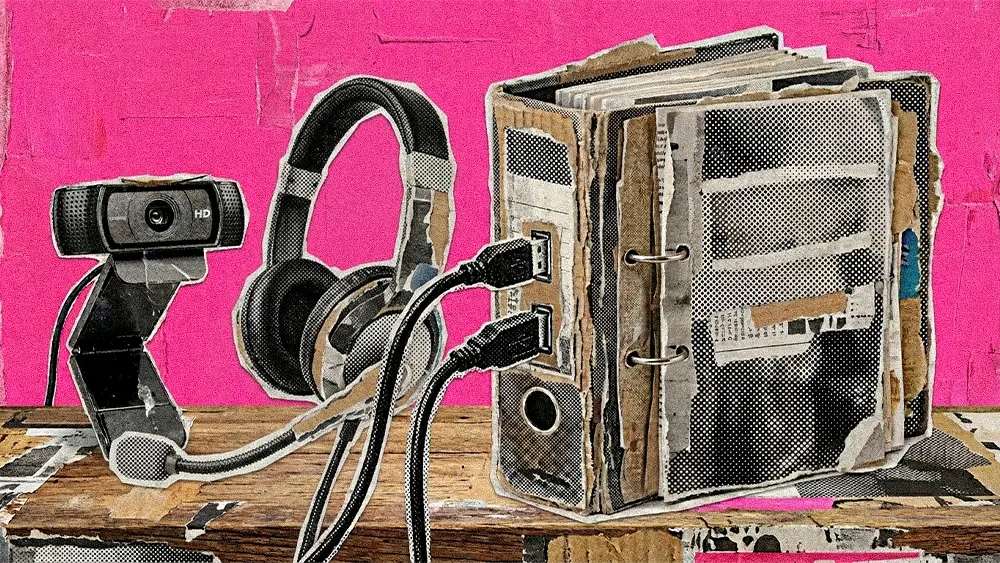
Companies start out nimble, but as they grow, teams drift away from that core. Remote work adds another layer because the informal touchpoints that held the culture together don’t happen unless leaders rebuild them.

Michael McGuire
Chief Revenue Officer
NobelBiz
When the world went remote, many companies took the easy route by moving their existing meetings onto Zoom and scheduling video calls in the slots that used to belong to hallway conversations. The decision exposed a growing distance between executive leadership and individual contributors that had been forming long before remote work ever entered the picture. The cultural friction of organizational changes only sharpened the practical hurdles of managing a remote workforce, with HR leaders quickly realizing that running a modern team requires a different toolkit than running a physical office. The skills now in highest demand involve rebuilding the informal communication systems that once held companies together by accident.
Michael McGuire, Chief Revenue Officer at NobelBiz, has spent more than 24 years scaling fast-paced call centers where everyone pitched in, giving him a firsthand view of how accountability and execution actually work inside high-pressure teams. Today, he leads in a structured, global software environment that operates almost entirely remotely. McGuire’s vantage point spans both extremes of the modern workplace, and he sees a generation of leaders rethinking how accountability and execution survive without physical proximity.
“Companies start out nimble, with everybody pitching in and staying close to the customer. As they grow, teams drift away from that core. Remote work adds another layer because the informal conversations and quick problem-solving that used to hold the culture together don’t happen unless leaders rebuild those touchpoints on purpose,” McGuire says. The early-days culture McGuire describes operates like a nucleus, with everyone close enough to the core problem to know what the customer needs without anyone formally telling them. Geography and headcount pull the team further from that nucleus over time, and remote work accelerates the drift. Without intentional leadership mechanisms in place, the values that once defined the company end up surviving on the org chart but not in the daily work.
Data behind the disconnect
The leadership-employee gap McGuire describes shows up in measurable workforce data, with findings from BambooHR’s State of the Workforce 2026 report, The Rising Cost of Dignity Debt, quantifying the stakes. The report captures a gap that runs in both directions, with 81% of leaders reporting productivity increases at exactly the same moment 85% of employees report significant workplace stress, and 58% of workers naming transparency as their top leadership ask. The disconnect compounds when 54% of leaders admit they have delayed fixing a known operational flaw because the cost or disruption felt too high, underscoring how the leadership-employee divide is more than perception. Underneath those data points sits a daily behavioral pattern McGuire sees consistently in remote environments, where work that used to get finished by accident now requires intentional scheduling to get done at all.
The physical distance produces issues that compound over time, with employees in isolated environments fading into the background and contributing to a wider employee engagement dip. The isolation creates a managerial blind spot, where leaders project ambition onto employees who simply want to do their jobs and miss the signals needed to spot future leaders. The loss of the daily social layer removes the small-moment interactions that once doubled as performance management. “When you’re physically in a business, you have that walk-down-the-hall chit-chat, or you can quickly stop in somebody’s office to take care of a problem,” McGuire notes. “In the remote environment, what I’ve always seen is no news is good news. As long as you’re over there doing your job and you’re not on my radar, then I’m less likely to interact with you, coach you, or even promote you.”
Engineering the casual collision
The same fragmentation helps explain why so many companies defer fixing known operational flaws even when employees see the problem clearly. Executive bandwidth constraints and the absence of a physical office often leave culture initiatives stalled, with the loss of the whiteboard removing a natural forcing function that used to keep commitments visible between meetings. Employees may also hesitate to surface known flaws because raising the issue tends to come with the implicit expectation that they will own the fix, on top of their actual day jobs. The pattern reads as disengagement but is actually an operational bottleneck, with employees holding back ideas to avoid the project management burden that comes with them. “I just wanted to help and give some of my ideas. I don’t want to run a whole project plan of seeing this from start to finish,” McGuire says.
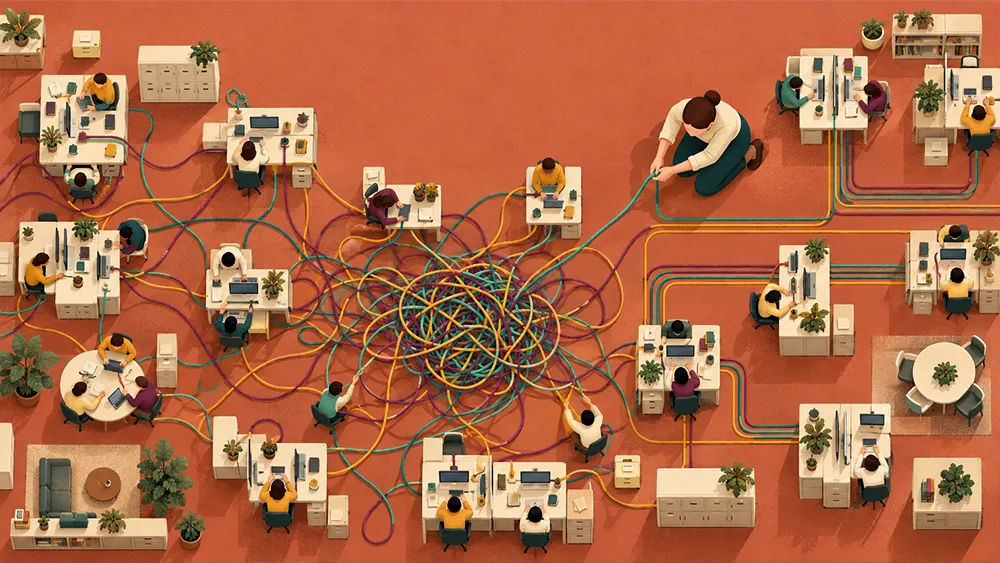
Closing the gap requires treating transparency as a function of access, which means creating deliberate pathways for interaction in a remote setting rather than waiting for the right conversation to happen on its own. When that access breaks down, organizations fracture into departmental silos with a strict stay-in-your-lane mentality, with key customer context getting lost across a disjointed chain of handoffs. McGuire relies on deliberate virtual access mechanisms to bridge the gap and recreate the spontaneous collisions that used to drive cross-functional problem-solving. “You have to layer in more touchpoints than the typical two-times-a-week meetings,” he advises. “We brought in a virtual office type of technology where I could just click on your profile and jump into your office.”
Keeping nimble alive
Today’s executives are often drowning in daily tasks while trying to manage long-term planning, with even well-intentioned leaders running up against a human bandwidth limit that no amount of effort can solve on its own. McGuire treats AI as a practical utility to absorb that friction, with intelligent workflow assistants handling the busywork of scheduling, reminders, and project planning so that the workplace baseline for follow-through becomes automated. The structural support frees leaders to actually mentor their teams and makes sure good ideas keep moving without overwhelming the individuals who proposed them. “What ends up happening is I move on to the next task. I get a demo, I get a sale, I’m coaching a team member. Then I come back to the team meeting and I say, you know what, guys, I got busy,” notes McGuire.
Technology effectively acts as the missing persistence layer, providing the executive bandwidth that disappears when a leader cannot manually track every commitment made in every meeting. The result is a system where promising ideas actually get carried through rather than shelved for the next quarter, which is what makes the broader cultural argument hold up at scale. “I have an AI tool that sends me an email every day, nudging me on these tasks. AI can absolutely take away a lot of that busy work that we just shelf,” McGuire concludes. “When you add remote and virtual employees, you start getting a watered-down version of your original premise. Anything that you can do to guard against that or to create that nimbleness through either AI or technology will allow you to continue to keep the same excitement within the company.”
Related articles


TL;DR

Michael McGuire
NobelBiz
Chief Revenue Officer
Chief Revenue Officer
When the world went remote, many companies took the easy route by moving their existing meetings onto Zoom and scheduling video calls in the slots that used to belong to hallway conversations. The decision exposed a growing distance between executive leadership and individual contributors that had been forming long before remote work ever entered the picture. The cultural friction of organizational changes only sharpened the practical hurdles of managing a remote workforce, with HR leaders quickly realizing that running a modern team requires a different toolkit than running a physical office. The skills now in highest demand involve rebuilding the informal communication systems that once held companies together by accident.
Michael McGuire, Chief Revenue Officer at NobelBiz, has spent more than 24 years scaling fast-paced call centers where everyone pitched in, giving him a firsthand view of how accountability and execution actually work inside high-pressure teams. Today, he leads in a structured, global software environment that operates almost entirely remotely. McGuire’s vantage point spans both extremes of the modern workplace, and he sees a generation of leaders rethinking how accountability and execution survive without physical proximity.
“Companies start out nimble, with everybody pitching in and staying close to the customer. As they grow, teams drift away from that core. Remote work adds another layer because the informal conversations and quick problem-solving that used to hold the culture together don’t happen unless leaders rebuild those touchpoints on purpose,” McGuire says. The early-days culture McGuire describes operates like a nucleus, with everyone close enough to the core problem to know what the customer needs without anyone formally telling them. Geography and headcount pull the team further from that nucleus over time, and remote work accelerates the drift. Without intentional leadership mechanisms in place, the values that once defined the company end up surviving on the org chart but not in the daily work.
Data behind the disconnect
The leadership-employee gap McGuire describes shows up in measurable workforce data, with findings from BambooHR’s State of the Workforce 2026 report, The Rising Cost of Dignity Debt, quantifying the stakes. The report captures a gap that runs in both directions, with 81% of leaders reporting productivity increases at exactly the same moment 85% of employees report significant workplace stress, and 58% of workers naming transparency as their top leadership ask. The disconnect compounds when 54% of leaders admit they have delayed fixing a known operational flaw because the cost or disruption felt too high, underscoring how the leadership-employee divide is more than perception. Underneath those data points sits a daily behavioral pattern McGuire sees consistently in remote environments, where work that used to get finished by accident now requires intentional scheduling to get done at all.
The physical distance produces issues that compound over time, with employees in isolated environments fading into the background and contributing to a wider employee engagement dip. The isolation creates a managerial blind spot, where leaders project ambition onto employees who simply want to do their jobs and miss the signals needed to spot future leaders. The loss of the daily social layer removes the small-moment interactions that once doubled as performance management. “When you’re physically in a business, you have that walk-down-the-hall chit-chat, or you can quickly stop in somebody’s office to take care of a problem,” McGuire notes. “In the remote environment, what I’ve always seen is no news is good news. As long as you’re over there doing your job and you’re not on my radar, then I’m less likely to interact with you, coach you, or even promote you.”
Engineering the casual collision
The same fragmentation helps explain why so many companies defer fixing known operational flaws even when employees see the problem clearly. Executive bandwidth constraints and the absence of a physical office often leave culture initiatives stalled, with the loss of the whiteboard removing a natural forcing function that used to keep commitments visible between meetings. Employees may also hesitate to surface known flaws because raising the issue tends to come with the implicit expectation that they will own the fix, on top of their actual day jobs. The pattern reads as disengagement but is actually an operational bottleneck, with employees holding back ideas to avoid the project management burden that comes with them. “I just wanted to help and give some of my ideas. I don’t want to run a whole project plan of seeing this from start to finish,” McGuire says.
Closing the gap requires treating transparency as a function of access, which means creating deliberate pathways for interaction in a remote setting rather than waiting for the right conversation to happen on its own. When that access breaks down, organizations fracture into departmental silos with a strict stay-in-your-lane mentality, with key customer context getting lost across a disjointed chain of handoffs. McGuire relies on deliberate virtual access mechanisms to bridge the gap and recreate the spontaneous collisions that used to drive cross-functional problem-solving. “You have to layer in more touchpoints than the typical two-times-a-week meetings,” he advises. “We brought in a virtual office type of technology where I could just click on your profile and jump into your office.”
Keeping nimble alive
Today’s executives are often drowning in daily tasks while trying to manage long-term planning, with even well-intentioned leaders running up against a human bandwidth limit that no amount of effort can solve on its own. McGuire treats AI as a practical utility to absorb that friction, with intelligent workflow assistants handling the busywork of scheduling, reminders, and project planning so that the workplace baseline for follow-through becomes automated. The structural support frees leaders to actually mentor their teams and makes sure good ideas keep moving without overwhelming the individuals who proposed them. “What ends up happening is I move on to the next task. I get a demo, I get a sale, I’m coaching a team member. Then I come back to the team meeting and I say, you know what, guys, I got busy,” notes McGuire.
Technology effectively acts as the missing persistence layer, providing the executive bandwidth that disappears when a leader cannot manually track every commitment made in every meeting. The result is a system where promising ideas actually get carried through rather than shelved for the next quarter, which is what makes the broader cultural argument hold up at scale. “I have an AI tool that sends me an email every day, nudging me on these tasks. AI can absolutely take away a lot of that busy work that we just shelf,” McGuire concludes. “When you add remote and virtual employees, you start getting a watered-down version of your original premise. Anything that you can do to guard against that or to create that nimbleness through either AI or technology will allow you to continue to keep the same excitement within the company.”