
Companies Regain Visibility Into Culture Through Absence Data And An Open Reporting Route
When we talk about a toxic culture, it doesn't always mean face-to-face bullying or intimidation. A lot of things happen behind the scenes. It's about whether people feel valued or safe enough to have an open conversation.

Paul Mcloughlin
Senior Manufacturing Consultant
Bosch
HR usually learns about a culture problem only after an employee reports it. The employee has to judge the issue serious enough to raise, choose someone to raise it with, and then live with the response. Each of those judgments gets harder as a culture gets worse, and the people closest to the problem are often the ones carrying the most to lose by raising it. Employees who decide against reporting leave HR with nothing to act on until the problem shows up somewhere else in the business.
Paul Mcloughlin, Senior Manufacturing Consultant at Bosch, advises companies on change management and lean foundation tools. He has worked in manufacturing and on factory floors since his early twenties, and his consulting work has since taken him through a range of organizations. Across all of them, Mcloughlin pays particular attention to what employees decide is safe to say out loud.
“When we talk about a toxic culture, it doesn’t always mean face-to-face bullying or intimidation. A lot of things happen behind the scenes. It’s about the engagement of a leadership team, and whether people feel valued or safe enough to have an open conversation,” says Mcloughlin. Behavior that triggers a formal complaint is the easier problem to address, because it generates a record. What Mcloughlin describes generates none. It changes how people speak to each other and what they decide to withhold, and an HR team has no field to check for either.
Why leaders hear so little
Employees ultimately decide what to pass upward, and they base that decision on what happened to the last person who spoke up. Once raising an issue has cost someone their standing, the calculation is settled for everyone who witnessed. Mcloughlin observes the same pattern across the organizations he works with, and he points to the cost it carries for the leadership team itself. “A lot of the time, because nobody challenges leadership, leadership very rarely understand the impact of their behaviours on an organisation,” says Mcloughlin.
A leader who has never been told about a problem has little reason to think one exists. Mcloughlin places the responsibility for changing that on leadership, and specifically on how a leadership team receives criticism of itself. Employees who anticipate a defensive response say nothing, which leaves leadership confident in a version of events nobody has corrected. “In a lot of instances, leadership teams don’t even realize it’s happening, because nobody steps up and tells them, because of that fear factor,” notes Mcloughlin. “It’s really from a leadership point of view, how do they open up their organization to allow those open conversations without feeling it’s a personal attack.”
Leadership teams often treat low turnover as evidence that the culture is working, and Mcloughlin encounters that reasoning regularly. “We say our people stay, so it can’t be that bad,” he notes. Retention data records the decision to stay without recording the reason for it, and he describes one that no retention number can show. “If you’re working in a toxic environment, you start to lose a bit of respect for yourself,” explains Mcloughlin. “You also tend to develop a lack of confidence. A lot of people stay in a toxic environment based on the fact that they’ve lost their confidence and are starting to underwrite their own expertise and ability because of the culture that they’ve been in.”
Start with who shows up
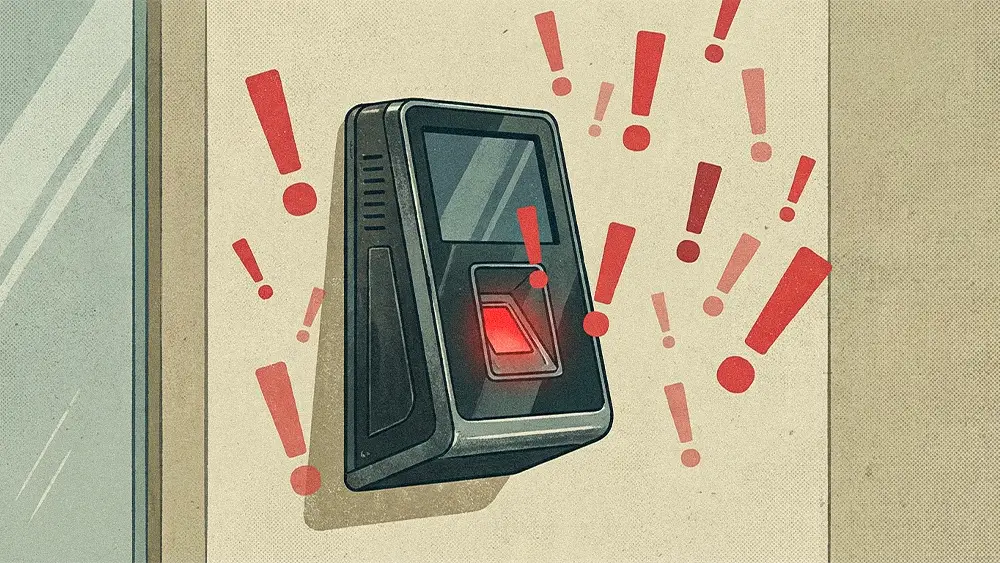
A resignation is one data point, produced on the day someone quits. Attendance produces data every day, already logged in the same system that handles time off. An employee with no intention of quitting either shows up or calls out, and the record captures it either way, at no cost and without a survey. Mcloughlin describes the point at which an employee decides whether to come in. “That first second in the morning when you wake up is where you decide whether you’re getting out of bed or not,” says Mcloughlin. “If you feel intimidated, you feel bullied, you feel like you’ve been in a toxic environment, a lot of the time the answer will be, I’m putting my head back on the pillow, I can’t face it today.”
Unplanned absence, what Mcloughlin calls casual absenteeism, is the pattern worth tracking, and a trend across several months says more than any single month’s total. The same employee calling out on the same day each month warrants a closer look, as does one team’s absence rate climbing while the rest hold steady. Both appear well before anyone gives notice. Among companies with 150 or fewer employees, BambooHR’s 2026 Employee Happiness Index found that the least happy lose 18 to 19 percentage points more of their workforce each year than the happiest. “Are people turning up to work on a regular basis to do the job?” notes Mcloughlin. “If so, then they’re happy. If they’re not turning up to work, and you’ve got a lot of casual absenteeism, then there’s a problem that’s driving that somewhere in the business.”
Give people a clear channel
A rising absence rate tells an HR team that people are staying home, but it doesn’t tell them why. The employees who could explain it are the same ones weighing whether speaking up is safe, so the explanation stays among them and never reaches anyone who can act on it. “It makes people have corridor conversations which turn into rumors,” explains Mcloughlin. “As rumors start to spread, that then starts to drive even more toxicity in the organization.” Employees left without accurate information will supply their own, and Mcloughlin’s answer is to keep people informed. “As long as you know what’s going on, there are no rumors, because rumors drive culture and can drive a toxic culture as well,” he adds.
Keeping people informed moves information toward employees. Getting it back from them depends on whether they believe a problem counts as one, and employees judge the same behavior differently. One person hears blunt feedback where another hears something worth reporting. A standard that lives only in a manager’s head produces the same split across teams, because every manager applies their own version of it. Mcloughlin advises leaders to formalize the definition. “It fits into your company policies, into how the company has set its guidelines and its parameters, what’s acceptable and what’s not acceptable,” he says. “We also have to have that ability to challenge things which aren’t acceptable in the organization.”
A written standard, a route for raising concerns, and steady communication all need an owner and a budget. Companies already do that for equipment, servicing it on a schedule with someone responsible for the result. Mcloughlin asks them to treat the people doing the work the same way, keeping them safe and making sure they have what the job requires. “You can replace a robot, you can replace a piece of software, you can replace a tool,” he concludes. “You can never replace a person.”
Related articles




TL;DR

Paul Mcloughlin
Bosch
Senior Manufacturing Consultant
Senior Manufacturing Consultant
HR usually learns about a culture problem only after an employee reports it. The employee has to judge the issue serious enough to raise, choose someone to raise it with, and then live with the response. Each of those judgments gets harder as a culture gets worse, and the people closest to the problem are often the ones carrying the most to lose by raising it. Employees who decide against reporting leave HR with nothing to act on until the problem shows up somewhere else in the business.
Paul Mcloughlin, Senior Manufacturing Consultant at Bosch, advises companies on change management and lean foundation tools. He has worked in manufacturing and on factory floors since his early twenties, and his consulting work has since taken him through a range of organizations. Across all of them, Mcloughlin pays particular attention to what employees decide is safe to say out loud.
“When we talk about a toxic culture, it doesn’t always mean face-to-face bullying or intimidation. A lot of things happen behind the scenes. It’s about the engagement of a leadership team, and whether people feel valued or safe enough to have an open conversation,” says Mcloughlin. Behavior that triggers a formal complaint is the easier problem to address, because it generates a record. What Mcloughlin describes generates none. It changes how people speak to each other and what they decide to withhold, and an HR team has no field to check for either.
Why leaders hear so little
Employees ultimately decide what to pass upward, and they base that decision on what happened to the last person who spoke up. Once raising an issue has cost someone their standing, the calculation is settled for everyone who witnessed. Mcloughlin observes the same pattern across the organizations he works with, and he points to the cost it carries for the leadership team itself. “A lot of the time, because nobody challenges leadership, leadership very rarely understand the impact of their behaviours on an organisation,” says Mcloughlin.
A leader who has never been told about a problem has little reason to think one exists. Mcloughlin places the responsibility for changing that on leadership, and specifically on how a leadership team receives criticism of itself. Employees who anticipate a defensive response say nothing, which leaves leadership confident in a version of events nobody has corrected. “In a lot of instances, leadership teams don’t even realize it’s happening, because nobody steps up and tells them, because of that fear factor,” notes Mcloughlin. “It’s really from a leadership point of view, how do they open up their organization to allow those open conversations without feeling it’s a personal attack.”
Leadership teams often treat low turnover as evidence that the culture is working, and Mcloughlin encounters that reasoning regularly. “We say our people stay, so it can’t be that bad,” he notes. Retention data records the decision to stay without recording the reason for it, and he describes one that no retention number can show. “If you’re working in a toxic environment, you start to lose a bit of respect for yourself,” explains Mcloughlin. “You also tend to develop a lack of confidence. A lot of people stay in a toxic environment based on the fact that they’ve lost their confidence and are starting to underwrite their own expertise and ability because of the culture that they’ve been in.”
Start with who shows up
A resignation is one data point, produced on the day someone quits. Attendance produces data every day, already logged in the same system that handles time off. An employee with no intention of quitting either shows up or calls out, and the record captures it either way, at no cost and without a survey. Mcloughlin describes the point at which an employee decides whether to come in. “That first second in the morning when you wake up is where you decide whether you’re getting out of bed or not,” says Mcloughlin. “If you feel intimidated, you feel bullied, you feel like you’ve been in a toxic environment, a lot of the time the answer will be, I’m putting my head back on the pillow, I can’t face it today.”
Unplanned absence, what Mcloughlin calls casual absenteeism, is the pattern worth tracking, and a trend across several months says more than any single month’s total. The same employee calling out on the same day each month warrants a closer look, as does one team’s absence rate climbing while the rest hold steady. Both appear well before anyone gives notice. Among companies with 150 or fewer employees, BambooHR’s 2026 Employee Happiness Index found that the least happy lose 18 to 19 percentage points more of their workforce each year than the happiest. “Are people turning up to work on a regular basis to do the job?” notes Mcloughlin. “If so, then they’re happy. If they’re not turning up to work, and you’ve got a lot of casual absenteeism, then there’s a problem that’s driving that somewhere in the business.”
Give people a clear channel
A rising absence rate tells an HR team that people are staying home, but it doesn’t tell them why. The employees who could explain it are the same ones weighing whether speaking up is safe, so the explanation stays among them and never reaches anyone who can act on it. “It makes people have corridor conversations which turn into rumors,” explains Mcloughlin. “As rumors start to spread, that then starts to drive even more toxicity in the organization.” Employees left without accurate information will supply their own, and Mcloughlin’s answer is to keep people informed. “As long as you know what’s going on, there are no rumors, because rumors drive culture and can drive a toxic culture as well,” he adds.
Keeping people informed moves information toward employees. Getting it back from them depends on whether they believe a problem counts as one, and employees judge the same behavior differently. One person hears blunt feedback where another hears something worth reporting. A standard that lives only in a manager’s head produces the same split across teams, because every manager applies their own version of it. Mcloughlin advises leaders to formalize the definition. “It fits into your company policies, into how the company has set its guidelines and its parameters, what’s acceptable and what’s not acceptable,” he says. “We also have to have that ability to challenge things which aren’t acceptable in the organization.”
A written standard, a route for raising concerns, and steady communication all need an owner and a budget. Companies already do that for equipment, servicing it on a schedule with someone responsible for the result. Mcloughlin asks them to treat the people doing the work the same way, keeping them safe and making sure they have what the job requires. “You can replace a robot, you can replace a piece of software, you can replace a tool,” he concludes. “You can never replace a person.”