
‘Leisure Sickness’ Turns Post-Vacation Absences Into an Early Warning for HR Leaders
If work can't be done within nine to five, the workload is unmanageable, and we need to start owning that.

Beverley McCluskey
Founder
Florere Vita
Someone holds everything together for months, then finally stops, and their body falls apart: a migraine on day two of vacation, a sore throat the Friday night the pressure lifts. There’s a name for the pattern: leisure sickness, a term used to describe people who become ill when work pressure finally lets up. For employers, the telling pattern is what happens around holidays. When people repeatedly get sick the moment work lets up, or come back from leave still exhausted, the problem may not be too little time off. It may be that the organization has made real recovery impossible.
That’s the lens Beverley McCluskey brings as the Founder of Florere Vita, where she works with women in high-pressure careers who are running on empty and can’t see a way to keep going at the same pace. She spent years in corporate pharmaceuticals, working long days and traveling constantly, before what she called a “catastrophic burnout” forced a reckoning. She’s now fully recovered and helps other women avoid the same collapse.
“The minute you let go, get off the treadmill, boom, in it comes,” McCluskey says. She noticed it first in herself, then heard the same story from friends. One always got a sore throat. Another blamed a bug picked up on the flight. It was never something new, always a familiar weak point, and usually something that rest alone would fix. “You haven’t rested for the last three months,” she says. “Now the pressure’s off, you’re not at work, so your body floors you. And it does.”
What the pattern looks like
Leisure sickness doesn’t stay confined to holidays, which is why it’s an HR concern rather than a private one. McCluskey has watched employees take annual leave, then call in sick the day they were due back, and she suspects the two are often connected.
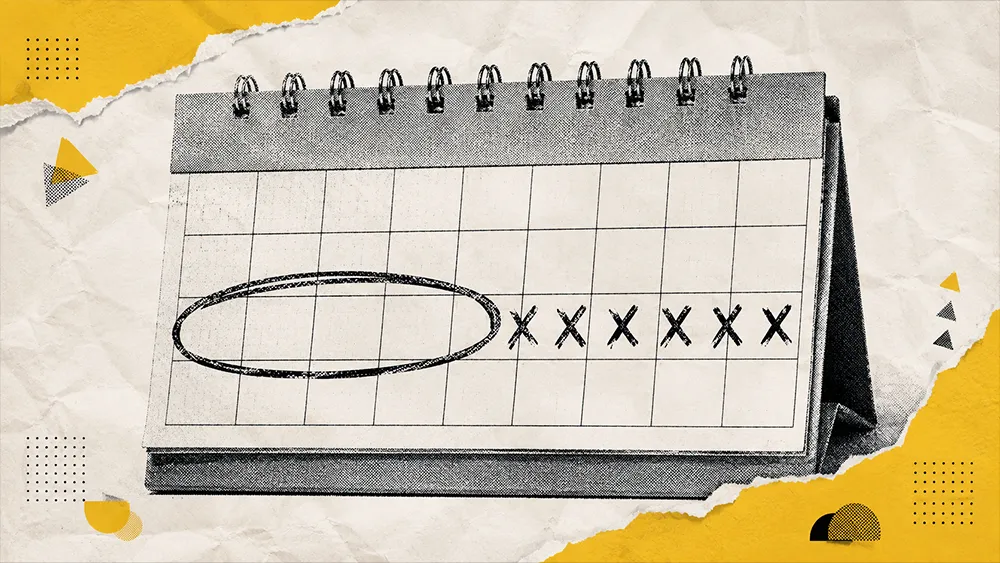
“When I was a line manager, I’d have people whose time off and sick leave would be quite closely correlated,” McCluskey says. Someone books a week away, comes back Monday, and phones in unwell. Maybe they’re still genuinely ill. Maybe, McCluskey suggests, the symptoms surfaced once the pressure lifted. The assumption is that people return from leave recharged and ready, and sometimes they come back no better off than when they left.
HR doesn’t need to diagnose leisure sickness or draw conclusions from a single absence. It can look for recurring patterns: short sicknesses clustered around periods of intense work, employees who routinely become ill immediately after leave, or people returning from vacation still showing signs of exhaustion. Last-minute annual leave can be another signal, since a same-day request to burn a vacation day may point to a crisis rather than a plan. None of these is proof on its own, but together they turn attendance records into something closer to an early-warning system.
Other workforce data can add context to what those absences suggest. BambooHR’s 2026 Employee Happiness Report found men scoring 6.8 eNPS points happier than women in the first half of the year, a reading that gives HR another piece of context when looking at employee experience. Read alongside a run of post-vacation sick days, a satisfaction split like that is one more reason to ask who is carrying the most and recovering the least.
Why recovery isn’t happening
McCluskey works mostly with women, so she most often sees the pattern there. Her explanation is less about biology than about load. On top of their paid jobs, many of the women she works with are running households and raising children, sometimes caring for aging parents, too. Then come the extras, the PTA volunteering, the batch of muffins for the weekend fair. Very little is left for recovery, and women are more likely than men to report burnout.
The practical consequence is that some employees arrive at vacation already carrying an enormous amount of work, paid and unpaid. “A lot of women thought this is just the price you pay to be an independent woman with a career,” McCluskey says. “It’s so common it feels normal.” A week off, in other words, doesn’t necessarily equal a week of recovery. That’s where the organization has a responsibility to look beyond whether an employee technically took their leave.
For McCluskey, it comes down to losing the off switch. Someone can be physically exhausted but wired and unable to sleep, she says, lying in bed running through the school bags and the unanswered email even though they’re supposed to be off. “When you find you’re doing these bad habits, that’s a signal you’re already too depleted,” McCluskey says. The problem is that employees can end up treating those symptoms as personal failings rather than recognizing what caused them.
What organizations reward
If the job is what’s preventing recovery, then the fixes sit with the organization, not just the individual. Responsibility has to sit on both sides, McCluskey says. The employee needs to spot the pattern, and the employer needs to stop rewarding the behavior that produces it. Emails at eight or ten at night aren’t a time-management problem. “That’s no boundaries, and my work and home life have completely bled into each other,” she says. If employees are still expected to monitor email at nine at night, vacation isn’t really creating separation from work.
She’d also stop rewarding the performance of those who leave last. “If work can’t be done within nine to five, the workload is unmanageable, and we need to start owning that,” she says. When someone genuinely can’t finish, the conversation belongs to whoever assigned the work, not to the employee who stays until eight to prove commitment.
The absence data gives HR a starting point, but it’s only useful if someone acts on it. That means treating a cluster of post-leave sick days as a workload question rather than an attendance one, looking at whether the pattern is concentrated in particular teams or roles, and asking managers what a role actually demands in the weeks nobody is off. The goal of annual leave isn’t to get people away from their desks; it’s to return them to work recovered. If an employee needs the first three days of every holiday just to stop feeling like they’re at work, and the first day back to recover from the holiday, the real question is what the job is asking of them the rest of the year.
Related articles

TL;DR

Beverley McCluskey
Florere Vita
Founder
Founder
Someone holds everything together for months, then finally stops, and their body falls apart: a migraine on day two of vacation, a sore throat the Friday night the pressure lifts. There’s a name for the pattern: leisure sickness, a term used to describe people who become ill when work pressure finally lets up. For employers, the telling pattern is what happens around holidays. When people repeatedly get sick the moment work lets up, or come back from leave still exhausted, the problem may not be too little time off. It may be that the organization has made real recovery impossible.
That’s the lens Beverley McCluskey brings as the Founder of Florere Vita, where she works with women in high-pressure careers who are running on empty and can’t see a way to keep going at the same pace. She spent years in corporate pharmaceuticals, working long days and traveling constantly, before what she called a “catastrophic burnout” forced a reckoning. She’s now fully recovered and helps other women avoid the same collapse.
“The minute you let go, get off the treadmill, boom, in it comes,” McCluskey says. She noticed it first in herself, then heard the same story from friends. One always got a sore throat. Another blamed a bug picked up on the flight. It was never something new, always a familiar weak point, and usually something that rest alone would fix. “You haven’t rested for the last three months,” she says. “Now the pressure’s off, you’re not at work, so your body floors you. And it does.”
What the pattern looks like
Leisure sickness doesn’t stay confined to holidays, which is why it’s an HR concern rather than a private one. McCluskey has watched employees take annual leave, then call in sick the day they were due back, and she suspects the two are often connected.
“When I was a line manager, I’d have people whose time off and sick leave would be quite closely correlated,” McCluskey says. Someone books a week away, comes back Monday, and phones in unwell. Maybe they’re still genuinely ill. Maybe, McCluskey suggests, the symptoms surfaced once the pressure lifted. The assumption is that people return from leave recharged and ready, and sometimes they come back no better off than when they left.
HR doesn’t need to diagnose leisure sickness or draw conclusions from a single absence. It can look for recurring patterns: short sicknesses clustered around periods of intense work, employees who routinely become ill immediately after leave, or people returning from vacation still showing signs of exhaustion. Last-minute annual leave can be another signal, since a same-day request to burn a vacation day may point to a crisis rather than a plan. None of these is proof on its own, but together they turn attendance records into something closer to an early-warning system.
Other workforce data can add context to what those absences suggest. BambooHR’s 2026 Employee Happiness Report found men scoring 6.8 eNPS points happier than women in the first half of the year, a reading that gives HR another piece of context when looking at employee experience. Read alongside a run of post-vacation sick days, a satisfaction split like that is one more reason to ask who is carrying the most and recovering the least.
Why recovery isn’t happening
McCluskey works mostly with women, so she most often sees the pattern there. Her explanation is less about biology than about load. On top of their paid jobs, many of the women she works with are running households and raising children, sometimes caring for aging parents, too. Then come the extras, the PTA volunteering, the batch of muffins for the weekend fair. Very little is left for recovery, and women are more likely than men to report burnout.
The practical consequence is that some employees arrive at vacation already carrying an enormous amount of work, paid and unpaid. “A lot of women thought this is just the price you pay to be an independent woman with a career,” McCluskey says. “It’s so common it feels normal.” A week off, in other words, doesn’t necessarily equal a week of recovery. That’s where the organization has a responsibility to look beyond whether an employee technically took their leave.
For McCluskey, it comes down to losing the off switch. Someone can be physically exhausted but wired and unable to sleep, she says, lying in bed running through the school bags and the unanswered email even though they’re supposed to be off. “When you find you’re doing these bad habits, that’s a signal you’re already too depleted,” McCluskey says. The problem is that employees can end up treating those symptoms as personal failings rather than recognizing what caused them.
What organizations reward
If the job is what’s preventing recovery, then the fixes sit with the organization, not just the individual. Responsibility has to sit on both sides, McCluskey says. The employee needs to spot the pattern, and the employer needs to stop rewarding the behavior that produces it. Emails at eight or ten at night aren’t a time-management problem. “That’s no boundaries, and my work and home life have completely bled into each other,” she says. If employees are still expected to monitor email at nine at night, vacation isn’t really creating separation from work.
She’d also stop rewarding the performance of those who leave last. “If work can’t be done within nine to five, the workload is unmanageable, and we need to start owning that,” she says. When someone genuinely can’t finish, the conversation belongs to whoever assigned the work, not to the employee who stays until eight to prove commitment.
The absence data gives HR a starting point, but it’s only useful if someone acts on it. That means treating a cluster of post-leave sick days as a workload question rather than an attendance one, looking at whether the pattern is concentrated in particular teams or roles, and asking managers what a role actually demands in the weeks nobody is off. The goal of annual leave isn’t to get people away from their desks; it’s to return them to work recovered. If an employee needs the first three days of every holiday just to stop feeling like they’re at work, and the first day back to recover from the holiday, the real question is what the job is asking of them the rest of the year.