
AI Adoption Works When Leaders Trade Avalanche Rollouts For Agile Sprints

We're still doing performance management like it's 1999, but work is moving much faster than that now. People don't have a clear definition of what good looks like, let alone what great looks like.
Michael Franco
Founder & Chief People Strategist
Quokka Hub
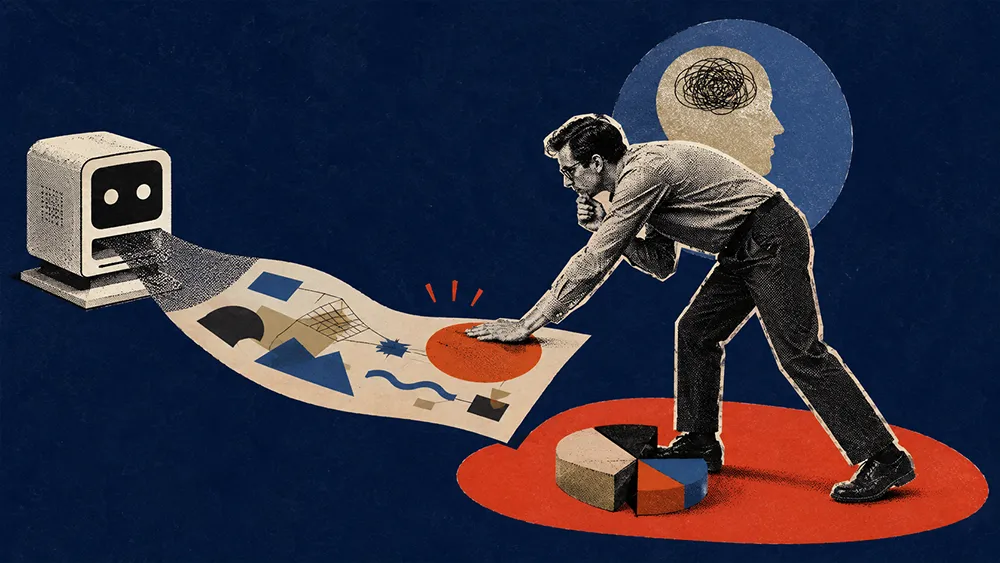
Companies rolling out AI at speed are discovering a fault line that runs straight through the middle of their org charts. New tools arrive without enough training, senior leaders push competing priorities down the chain, and middle managers end up absorbing pressure from both directions while being measured by performance frameworks built for a completely different era of work.
Michael Franco is the Founder and Chief People Strategist of Quokka Hub, a people and culture consultancy with more than 12 years of experience at companies including Wells Fargo and Oakley. Using continuous pulse analytics and anonymous employee surveys, Franco tracks how teams actually respond to technological disruption. In those results, the strain on middle managers points to a design flaw in how organizations communicate, prioritize, and evaluate work.
“We’re still doing performance management like it’s 1999, but work is moving much faster than that now. People don’t have a clear definition of what good looks like, let alone what great looks like,” Franco says. That gap lands hardest on middle managers, who are expected to drive AI adoption and deliver results while being evaluated by a system never designed to reflect how their jobs actually work today.
The psychological safety problem
The strain usually starts at the bottom of the org chart. In some companies, executives are deploying new AI tools at breakneck speed, just as headlines about layoffs dominate the news cycle. Franco’s surveys mirror that broader anxiety. People don’t feel safe raising concerns, and teams find themselves handed new systems with minimal guidance on how to actually use them well.
Honest feedback about what’s actually broken rarely makes it past the first filter.
“Nobody has the safety to communicate, and their roles are changing, and now they have new tools that they weren’t properly trained on using,” Franco says. “Everybody’s doing the best they can, trying to cover their own assets to ensure that they keep this role, whatever it may have changed to, for the longest possible time.” That instinct toward self-protection quietly breaks the operational feedback loop that organizations depend on to course-correct. When employees can’t surface real concerns, the people making decisions above them are operating on bad information. Deploying AI tools without first building team trust erodes performance even when the tools themselves are sound.
Zombie projects and the cost of misaligned priorities
At the same time, prioritization at the top can get fuzzy. Well-intentioned leadership teams often overload their organizations with overlapping initiatives, announcing new tools and dropping implementation responsibility onto middle managers who had no input into the decision and limited context on how it fits alongside everything else already in motion.
When initiatives pile up without clear sequencing, managers become a strained communication filter, pushed to drive adoption while fielding questions from employees who are still figuring out what the changes mean in practice. Partial rollouts accumulate, and the productivity gains companies expect from AI quietly get consumed by the rework and confusion that poorly sequenced rollouts generate.
One business owner Franco worked with had a name for what accumulates: zombie projects. Initiatives kicked off months earlier that remain technically active but no longer have real sponsorship. “They were calling them zombie projects, the ones that were started months before, and they wanted them done, but nobody’s really keeping up on it,” he says. “They are sitting there and wasting resources and the mental capacity of these middle managers.” Unresolved work poses a burnout risk independent of the workload it carries.
The translation gap no one planned for
Someone has to stand between the executive who chose the tool and the employee who has to use it. That someone is almost always a middle manager who was handed the implementation without being consulted on the decision. Executives routinely overestimate how far AI adoption has actually progressed and underestimate the friction their teams are navigating daily.
“If you have a CTO dropping new technology, they don’t really know how that’s going to affect the person using it, but they put it on the middle manager to implement it,” Franco says. “The middle manager now has to listen to the person who’s using it and then give feedback to the CTO, who doesn’t understand what that person does. You’re getting lost in translation right there.”
This communication breakdown is one of the most consistent failure modes in AI adoption. With no clear channel in either direction, the rollout stalls, and the manager takes the blame.
Performance management is stuck in 1999
Most performance systems were built for a world where work was stable, individual, and slow-moving. Middle managers today operate in none of those conditions, yet many are still being evaluated through annual reviews that can’t account for interdependencies, tool failures, or shifting priorities.
Franco describes middle managers as standing at the center of a web of interconnected workflows, responsible for maintaining tension across multiple threads at once. “They’re standing in the middle of a web trying to make sure that each string is holding tension,” he says. “The middle managers are being stretched too thin. They have two arms, and they’re not a spider. They cannot hold on to everything.”
The downstream effect is clear in Quokka Hub’s surveys. Employees don’t have a clear sense of what good or great performance looks like when tools and expectations are moving targets. That uncertainty shows up equally among high performers who are looking for ways to go above and beyond, but, as Franco puts it, “don’t even know what that is.”
Agile rhythms over annual snapshots
The fix Franco proposes is matching the cadence of performance management to the actual speed of the work. He draws a parallel to product teams in B2B SaaS, which run on agile cadences rather than annual milestones. In his view, performance conversations should follow a similar rhythm, with structured quarterly reviews tied to clear KPIs and business outcomes, supported by lighter, more frequent touchpoints throughout the year.
“Honestly, quarterly might not even be enough,” Franco says. He compares it to agile standups in tech, where teams surface blockers quickly. “That’s one way that you’re going to get something done. And now you know, oh wait, this is why they may not score well on the performance. Because three days in a row, they’ve had a system down or something from another team that has not worked.”
That means one-on-ones and check-ins need to carry live context. If a dependent system has been down for days or another team has dropped the baton, that should be part of the conversation when someone’s results get reviewed. He also pushes for peer-to-peer feedback at handoff points. “If you’re handing something off to me, I should be comfortable and free enough to go to you and say, ‘Listen, this is really great. Next time we really need this because now I’m going to move this,'” he says. “You then understand my role in the bigger picture as well.”
Franco is clear that more frequent feedback conversations don’t mean more meetings. “I do suggest that’s a sit-down time for a set amount of time,” he says of quarterly reviews. “But no, we do not need more meetings. We don’t need to all come together to give feedback on one project.” When someone hits a deadline or hands off a deliverable, a quick Slack message reviewing what worked and what’s needed next time is often enough to keep expectations aligned.
Sprints, not avalanches
The same discipline applies to AI rollouts, and it starts at the top. Franco recommends that senior leaders agree on a short, explicit list of priorities before anything gets pushed into the organization. “The CTO wants this, the CFO wants this, the CEO wants this. What are 1, 2, and 3? Implement 1,” he says. Each priority becomes its own sprint: implement it, gather feedback from the people actually using the tools, adjust, and only then move to the next one. “If you really need people to start using AI, this is number one. Then you implement it, you review it, you see where they’re missing it, and then you make a plan before you start going on to, oh well, we also need AI to do this, or we need something else to do this. It’ll be never-ending projects, and none of them will get done.”
Franco believes this kind of accountability belongs at every stage of a company’s growth. “I think it’s never too early to do performance reviews, and if you’re a founder, you should be doing performance reviews on yourself,” he says. “What did I do last quarter? What could I do better? What complaints did I have from my team?”
For Franco, the through line across all of it comes down to communication and capacity. Organizations that treat both as design problems, rather than individual failures, give their middle managers a real chance to do the job. “If you’re just going to keep piling on and everybody has their own agenda, you’re going to stress this middle manager out to where they become decision-fatigued and no longer effective,” he says. “They will get blamed for it, when really it’s senior management dropping it on them, and those they lead not speaking up about what’s actually going wrong.”
Related articles

TL;DR
Michael Franco
Quokka Hub
Founder & Chief People Strategist
Founder & Chief People Strategist
Companies rolling out AI at speed are discovering a fault line that runs straight through the middle of their org charts. New tools arrive without enough training, senior leaders push competing priorities down the chain, and middle managers end up absorbing pressure from both directions while being measured by performance frameworks built for a completely different era of work.
Michael Franco is the Founder and Chief People Strategist of Quokka Hub, a people and culture consultancy with more than 12 years of experience at companies including Wells Fargo and Oakley. Using continuous pulse analytics and anonymous employee surveys, Franco tracks how teams actually respond to technological disruption. In those results, the strain on middle managers points to a design flaw in how organizations communicate, prioritize, and evaluate work.
“We’re still doing performance management like it’s 1999, but work is moving much faster than that now. People don’t have a clear definition of what good looks like, let alone what great looks like,” Franco says. That gap lands hardest on middle managers, who are expected to drive AI adoption and deliver results while being evaluated by a system never designed to reflect how their jobs actually work today.
The psychological safety problem
The strain usually starts at the bottom of the org chart. In some companies, executives are deploying new AI tools at breakneck speed, just as headlines about layoffs dominate the news cycle. Franco’s surveys mirror that broader anxiety. People don’t feel safe raising concerns, and teams find themselves handed new systems with minimal guidance on how to actually use them well.
Honest feedback about what’s actually broken rarely makes it past the first filter.
“Nobody has the safety to communicate, and their roles are changing, and now they have new tools that they weren’t properly trained on using,” Franco says. “Everybody’s doing the best they can, trying to cover their own assets to ensure that they keep this role, whatever it may have changed to, for the longest possible time.” That instinct toward self-protection quietly breaks the operational feedback loop that organizations depend on to course-correct. When employees can’t surface real concerns, the people making decisions above them are operating on bad information. Deploying AI tools without first building team trust erodes performance even when the tools themselves are sound.
Zombie projects and the cost of misaligned priorities
At the same time, prioritization at the top can get fuzzy. Well-intentioned leadership teams often overload their organizations with overlapping initiatives, announcing new tools and dropping implementation responsibility onto middle managers who had no input into the decision and limited context on how it fits alongside everything else already in motion.
When initiatives pile up without clear sequencing, managers become a strained communication filter, pushed to drive adoption while fielding questions from employees who are still figuring out what the changes mean in practice. Partial rollouts accumulate, and the productivity gains companies expect from AI quietly get consumed by the rework and confusion that poorly sequenced rollouts generate.
One business owner Franco worked with had a name for what accumulates: zombie projects. Initiatives kicked off months earlier that remain technically active but no longer have real sponsorship. “They were calling them zombie projects, the ones that were started months before, and they wanted them done, but nobody’s really keeping up on it,” he says. “They are sitting there and wasting resources and the mental capacity of these middle managers.” Unresolved work poses a burnout risk independent of the workload it carries.
The translation gap no one planned for
Someone has to stand between the executive who chose the tool and the employee who has to use it. That someone is almost always a middle manager who was handed the implementation without being consulted on the decision. Executives routinely overestimate how far AI adoption has actually progressed and underestimate the friction their teams are navigating daily.
“If you have a CTO dropping new technology, they don’t really know how that’s going to affect the person using it, but they put it on the middle manager to implement it,” Franco says. “The middle manager now has to listen to the person who’s using it and then give feedback to the CTO, who doesn’t understand what that person does. You’re getting lost in translation right there.”
This communication breakdown is one of the most consistent failure modes in AI adoption. With no clear channel in either direction, the rollout stalls, and the manager takes the blame.
Performance management is stuck in 1999
Most performance systems were built for a world where work was stable, individual, and slow-moving. Middle managers today operate in none of those conditions, yet many are still being evaluated through annual reviews that can’t account for interdependencies, tool failures, or shifting priorities.
Franco describes middle managers as standing at the center of a web of interconnected workflows, responsible for maintaining tension across multiple threads at once. “They’re standing in the middle of a web trying to make sure that each string is holding tension,” he says. “The middle managers are being stretched too thin. They have two arms, and they’re not a spider. They cannot hold on to everything.”
The downstream effect is clear in Quokka Hub’s surveys. Employees don’t have a clear sense of what good or great performance looks like when tools and expectations are moving targets. That uncertainty shows up equally among high performers who are looking for ways to go above and beyond, but, as Franco puts it, “don’t even know what that is.”
Agile rhythms over annual snapshots
The fix Franco proposes is matching the cadence of performance management to the actual speed of the work. He draws a parallel to product teams in B2B SaaS, which run on agile cadences rather than annual milestones. In his view, performance conversations should follow a similar rhythm, with structured quarterly reviews tied to clear KPIs and business outcomes, supported by lighter, more frequent touchpoints throughout the year.
“Honestly, quarterly might not even be enough,” Franco says. He compares it to agile standups in tech, where teams surface blockers quickly. “That’s one way that you’re going to get something done. And now you know, oh wait, this is why they may not score well on the performance. Because three days in a row, they’ve had a system down or something from another team that has not worked.”
That means one-on-ones and check-ins need to carry live context. If a dependent system has been down for days or another team has dropped the baton, that should be part of the conversation when someone’s results get reviewed. He also pushes for peer-to-peer feedback at handoff points. “If you’re handing something off to me, I should be comfortable and free enough to go to you and say, ‘Listen, this is really great. Next time we really need this because now I’m going to move this,'” he says. “You then understand my role in the bigger picture as well.”
Franco is clear that more frequent feedback conversations don’t mean more meetings. “I do suggest that’s a sit-down time for a set amount of time,” he says of quarterly reviews. “But no, we do not need more meetings. We don’t need to all come together to give feedback on one project.” When someone hits a deadline or hands off a deliverable, a quick Slack message reviewing what worked and what’s needed next time is often enough to keep expectations aligned.
Sprints, not avalanches
The same discipline applies to AI rollouts, and it starts at the top. Franco recommends that senior leaders agree on a short, explicit list of priorities before anything gets pushed into the organization. “The CTO wants this, the CFO wants this, the CEO wants this. What are 1, 2, and 3? Implement 1,” he says. Each priority becomes its own sprint: implement it, gather feedback from the people actually using the tools, adjust, and only then move to the next one. “If you really need people to start using AI, this is number one. Then you implement it, you review it, you see where they’re missing it, and then you make a plan before you start going on to, oh well, we also need AI to do this, or we need something else to do this. It’ll be never-ending projects, and none of them will get done.”
Franco believes this kind of accountability belongs at every stage of a company’s growth. “I think it’s never too early to do performance reviews, and if you’re a founder, you should be doing performance reviews on yourself,” he says. “What did I do last quarter? What could I do better? What complaints did I have from my team?”
For Franco, the through line across all of it comes down to communication and capacity. Organizations that treat both as design problems, rather than individual failures, give their middle managers a real chance to do the job. “If you’re just going to keep piling on and everybody has their own agenda, you’re going to stress this middle manager out to where they become decision-fatigued and no longer effective,” he says. “They will get blamed for it, when really it’s senior management dropping it on them, and those they lead not speaking up about what’s actually going wrong.”