
As Application Volume Skyrockets, Hiring Teams Must Be More Deliberate At The Finish Line
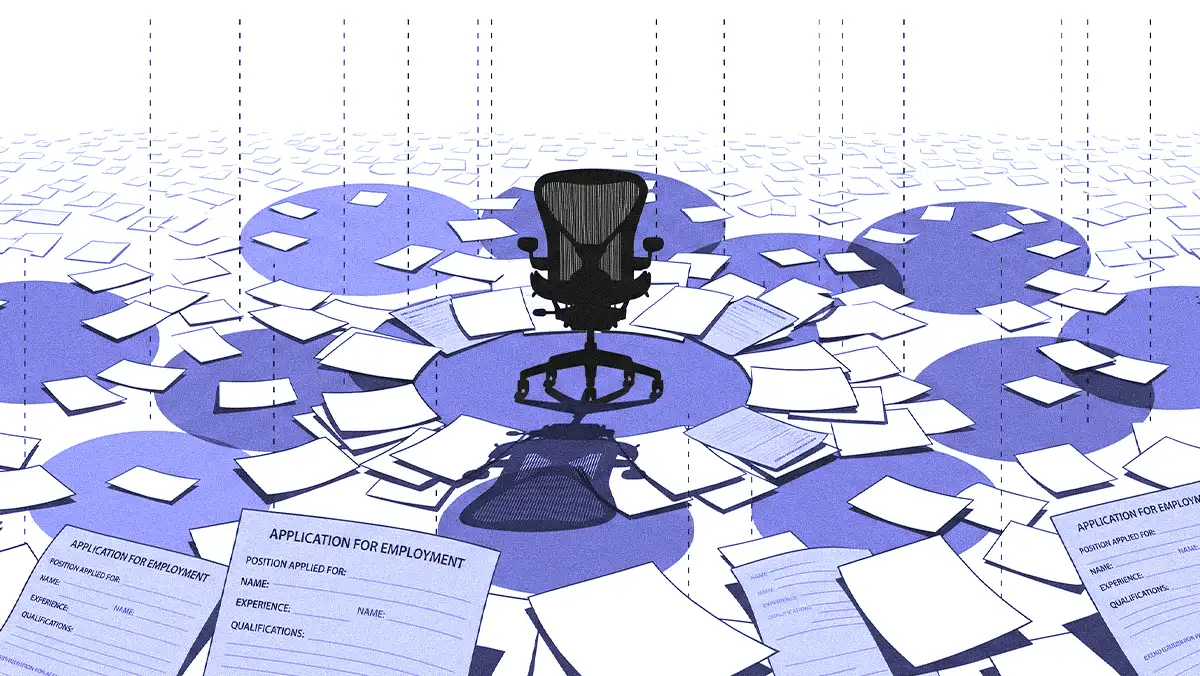
Hiring managers spend all this time with someone, then start getting cold feet because they think there might be someone better they haven’t met yet. That FOMO keeps them scanning the market instead of making the hire.

Kevin Ho
Co-Founder
ContextAI
Hiring may be slowing, but the breakdown isn’t where many teams think it is. While recruiting technology has advanced far beyond the early days of the ATS, enterprise hiring pipelines remain stuck. It’s easy to point to AI as the cause of today’s slowdown, but that explanation misses the mark as the real friction might be happening later in the process. The numbers tell the same story: applications have recently doubled, yet hiring is down roughly 20%. The issue isn’t a lack of candidates or tools. It’s a growing hesitation among hiring managers, shaped by economic pressure and uncertainty about making the “right” call.
Kevin Ho, Co-Founder of ContextAI, looks at the hiring slowdown through the lens of decision-making. His company builds talent intelligence systems designed to help teams optimize hiring workflows and move candidates through the funnel more effectively. Before launching ContextAI, Ho spent nearly a decade as a Vice President at Société Générale, where he led infrastructure transactions totaling more than $10 billion. That background shapes how he interprets today’s bottleneck. In his view, the issue isn’t a lack of candidates, it’s hesitation at the point of decision. Employers often hold back because they believe a better candidate might still be out there, a “keep scanning” instinct that slows timelines, breaks momentum, and ultimately costs teams strong hires.
“A lot of candidates are getting stuck near the end of the process. Hiring managers spend all this time with someone, then start getting cold feet because they think there might be someone better they haven’t met yet. That FOMO keeps them scanning the market instead of making the hire,” Ho explains. As hiring managers hesitate, the burden falls on recruiters to present clearer, more structured information that supports a decision. Many top performing teams are piecing together their own ad-hoc systems, linking tools like Notion and ZoomInfo and relying on spreadsheets to track and present candidate insights. At the same time, traditional outreach is breaking down. Inboxes are crowded, and AI-generated “slop” is making it harder to stand out through volume alone. The result is a move toward more precise, data-driven engagement, where recruiters focus on targeted interactions and stronger signal to help decisions move forward.
Paralyzed by possibility: Ho points out that hiring decisions are still grounded in traditional business signals, not just AI headlines. Leaders are watching inflation, interest rates, cost pressures, and overall market conditions when deciding how aggressively to hire. Candidates are responding to many of those same signals, weighing their own risk in an uncertain environment. Ho believes that shared caution helps explain why applications are rising while hiring lags, with both sides slowing down at the same moment. The result is a bottleneck at the end of the funnel, where decisions stall despite strong candidates already in play. “It’s a specter in your mind,” he says. “You might love a candidate, but you believe there’s a Kevin squared out there who might be so much better.”
Volume without value: The rise of AI has also changed the dynamics of outreach. While it has made it easier to send more messages, it has also made those messages easier to ignore. As inboxes fill up, the difference comes down to how intentional the approach is. Recruiters can no longer rely on volume or existing networks alone. Instead, success depends on building systems that identify the right candidates, surface meaningful signals, and engage them with well-timed, customized communication. “If you want to be truly competitive, you need to have a system that gathers those insights and signals appropriately and efficiently,” Ho advises. “You should also incorporate some type of automation so that you’re showing up in someone’s inbox at the right time and with a lot of personalization.”
As roles evolve, waiting for a perfect external candidate often slows hiring without improving outcomes. Demand for AI-related talent remains high even as overall hiring cools, and the pace of change is pushing more teams to invest in the people they already have. Internal hiring now accounts for roughly 62% of roles, up from 51% just a few years ago, as companies look to develop employees who already understand the business and can grow into emerging needs. In that environment, Ho believes the case for building talent internally becomes easier to make. “Internal candidates understand your mission and culture, and there’s a level of trust that only builds when people have been in the trenches together,” he concludes. “If all goes well, it’s a win-win for everybody.”
Related articles




TL;DR
Hiring pipelines are fuller than ever, but the slowdown often happens at the decision stage, where hesitation and uncertainty are delaying final hiring calls.
Kevin Ho, Co-Founder of ContextAI, is seeing hiring managers struggle with decision-making, often delaying offers due to fear of missing out on a better candidate.
For HR teams, the opportunity lies in improving decision support by providing clearer candidate signals, reducing reliance on volume, and investing in internal talent to keep roles moving forward.

Kevin Ho
ContextAI
Co-Founder
Co-Founder
Hiring may be slowing, but the breakdown isn’t where many teams think it is. While recruiting technology has advanced far beyond the early days of the ATS, enterprise hiring pipelines remain stuck. It’s easy to point to AI as the cause of today’s slowdown, but that explanation misses the mark as the real friction might be happening later in the process. The numbers tell the same story: applications have recently doubled, yet hiring is down roughly 20%. The issue isn’t a lack of candidates or tools. It’s a growing hesitation among hiring managers, shaped by economic pressure and uncertainty about making the “right” call.
Kevin Ho, Co-Founder of ContextAI, looks at the hiring slowdown through the lens of decision-making. His company builds talent intelligence systems designed to help teams optimize hiring workflows and move candidates through the funnel more effectively. Before launching ContextAI, Ho spent nearly a decade as a Vice President at Société Générale, where he led infrastructure transactions totaling more than $10 billion. That background shapes how he interprets today’s bottleneck. In his view, the issue isn’t a lack of candidates, it’s hesitation at the point of decision. Employers often hold back because they believe a better candidate might still be out there, a “keep scanning” instinct that slows timelines, breaks momentum, and ultimately costs teams strong hires.
“A lot of candidates are getting stuck near the end of the process. Hiring managers spend all this time with someone, then start getting cold feet because they think there might be someone better they haven’t met yet. That FOMO keeps them scanning the market instead of making the hire,” Ho explains. As hiring managers hesitate, the burden falls on recruiters to present clearer, more structured information that supports a decision. Many top performing teams are piecing together their own ad-hoc systems, linking tools like Notion and ZoomInfo and relying on spreadsheets to track and present candidate insights. At the same time, traditional outreach is breaking down. Inboxes are crowded, and AI-generated “slop” is making it harder to stand out through volume alone. The result is a move toward more precise, data-driven engagement, where recruiters focus on targeted interactions and stronger signal to help decisions move forward.
Paralyzed by possibility: Ho points out that hiring decisions are still grounded in traditional business signals, not just AI headlines. Leaders are watching inflation, interest rates, cost pressures, and overall market conditions when deciding how aggressively to hire. Candidates are responding to many of those same signals, weighing their own risk in an uncertain environment. Ho believes that shared caution helps explain why applications are rising while hiring lags, with both sides slowing down at the same moment. The result is a bottleneck at the end of the funnel, where decisions stall despite strong candidates already in play. “It’s a specter in your mind,” he says. “You might love a candidate, but you believe there’s a Kevin squared out there who might be so much better.”
Volume without value: The rise of AI has also changed the dynamics of outreach. While it has made it easier to send more messages, it has also made those messages easier to ignore. As inboxes fill up, the difference comes down to how intentional the approach is. Recruiters can no longer rely on volume or existing networks alone. Instead, success depends on building systems that identify the right candidates, surface meaningful signals, and engage them with well-timed, customized communication. “If you want to be truly competitive, you need to have a system that gathers those insights and signals appropriately and efficiently,” Ho advises. “You should also incorporate some type of automation so that you’re showing up in someone’s inbox at the right time and with a lot of personalization.”
As roles evolve, waiting for a perfect external candidate often slows hiring without improving outcomes. Demand for AI-related talent remains high even as overall hiring cools, and the pace of change is pushing more teams to invest in the people they already have. Internal hiring now accounts for roughly 62% of roles, up from 51% just a few years ago, as companies look to develop employees who already understand the business and can grow into emerging needs. In that environment, Ho believes the case for building talent internally becomes easier to make. “Internal candidates understand your mission and culture, and there’s a level of trust that only builds when people have been in the trenches together,” he concludes. “If all goes well, it’s a win-win for everybody.”