
AI Forces An L&D Shift From Course Builder to Architect of a Living Learning Ecosystem
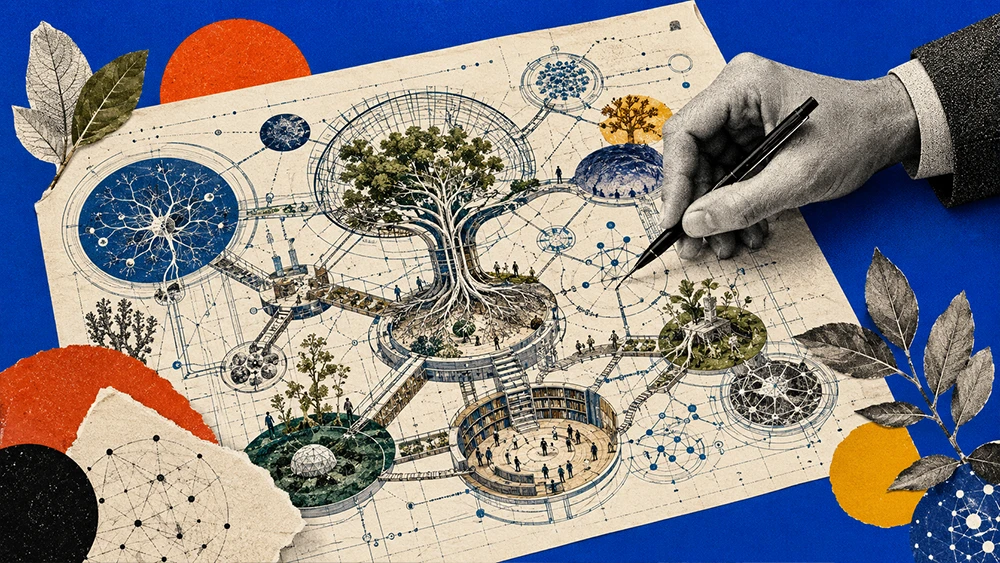
The best part of AI in the L&D space is that it's going to force us to do all the things we've said for years we should be doing.

Stephanie Arehart
Director of Learning Experience Design
Optimum
The learning infrastructure inside most organizations has been broken for years. Knowledge documents go stale, training happens as a one-and-done event, and programs get built as one-size-fits-all courses disconnected from how employees actually work. None of this was fatal as long as L&D controlled the gate. AI removes the gate and, in doing so, exposes the gap between the knowledge an organization thinks it has documented and the accurate, current, usable knowledge employees actually need.
Pushing for a new approach is Stephanie Arehart, the Director of Learning Experience Design at Optimum. She holds a Master of Education in instructional technology, is a Certified Professional in Talent Development, and is pursuing a PhD in industrial and organizational psychology. In her view, the pressure AI creates is pushing L&D out of its traditional role as knowledge gatekeeper.
“AI is forcing us to rethink that and make sure that the content we have out there, the knowledge documents, are the foundation of what our learning should be,” she says. “This is the way it should have been, but it wasn’t. AI is forcing us to fix that.” The correction, she says, is overdue, and it changes what L&D teams should prioritize.
From gatekeeper to ecosystem architect
For years, L&D operated as the gatekeeper of formal training, focused heavily on building courses and programs. That model never captured the full picture of how people actually learn, and AI is dismantling it by giving learners the ability to generate their own training on demand. “AI is removing a lot of the gatekeeper responsibility that L&D has taken in the past,” Arehart notes. “Learners can use AI to create their own learning on the fly. So, L&D has to evolve from being just primarily a content provider to becoming an architect of learning ecosystems.”
The timing matters because the productivity narrative around AI is running ahead of the workforce reality. BambooHR’s State of the Workforce 2026 report found that while 81% of business leaders say productivity increased in the past year, nearly half of leaders admit AI hasn’t yet delivered tangible value and may be overhyped. More tellingly for L&D, 74% of leaders say their employees already have the skills needed for an AI-enabled workforce, a confidence the report frames as a blind spot, since organizations are often overlooking the training, upskilling, and role redesign that adoption actually requires. The gap between assuming readiness and building it is exactly the gap L&D is now being asked to close.
The shift is driven by a convergence Arehart describes as a perfect storm: a more dynamic and digital workplace, broader access to information and data, and AI capability arriving all at once. The combination is forcing L&D in a direction the discipline always said it should go but rarely did.
The foundation has to be accurate first
The biggest obstacle Arehart identifies is that organizations have treated knowledge management as an event rather than an ongoing practice. Content gets created, delivered, and abandoned, and the documentation slowly drifts out of date. “We’ve treated it as very much of a one-and-done,” she says. “We’ve checked the box. We’ve created this thing. We’ve delivered it. Let’s move on. AI is forcing us to rethink that.”
The stakes are higher now because AI agents draw on that internal documentation to answer employee questions. If the foundation is wrong, the AI confidently delivers wrong answers at scale. That makes accuracy and a process for keeping content current a precondition for everything else. “We have to look at content we have out there, make sure it’s accurate, and have a process for how we’re going to make sure new things are always up to date, because we have this AI agent checking on us. It’s become more critical.”
Practical enablement beats abstract literacy
When it comes to building an AI-enabled workforce, Arehart is direct that the skills that matter today are the same ones that always mattered: the KPIs and metrics that drive the business. Rather than changing the target, AI makes hitting it more achievable. “The skills we need to focus on are the same ones we should have focused on outside of AI. AI just makes it easier, highlights it more, and lets us actually do the things we’ve been supposed to do that we haven’t been able to do,” she explains.
That emphasis aligns with where the BambooHR data lands on durable skills. Even amid rapid AI adoption, 70% of workers say soft skills are now a significant or primary focus in performance reviews, and the capabilities employees rank as most valuable going forward, problem-solving under pressure (49%), clear communication (46%), and managing leadership and people (40%), are precisely the ones AI cannot replicate. The work of an AI-enabled L&D function is not only teaching the tool, but reinforcing the human skills the tool makes more valuable.
Arehart’s organization pairs a baseline of general AI literacy with a heavy emphasis on real-world application. The literacy piece matters specifically so employees stop treating AI like a search engine and start understanding where it draws its information. “We’re focused on sharing examples of real-world use. ‘Here’s how someone used AI, here’s what they got out of it, here’s what they learned,’ so people can start to see that. It sparks the idea of how employees could use it.”
She says the understanding of how prompts work and where AI sources its answers is foundational, because it connects directly back to the documentation problem. “We have ours set up to point to internal documents. When people understand that, we can start talking about the huge gap of content it uses to get information, and how a lot of that’s not correct. That’s foundational.”
Self-directed learning solves the time problem
The common objection to self-directed AI learning is that employees don’t have time for it. Arehart pushes back on the premise. The time problem, in her view, is created by the old model, not the new one. “We’re wasting a lot of time right now on training that is not in the flow of work. It’s a one-size-fits-all thrown out there for someone who may not need all of it, may not need it right now, or may need it in a different format.”
A learning ecosystem where each employee customizes training to their actual job and immediate need is a better use of time than mass-produced courses, even though it feels like it would require more. One concrete example is on-demand role play. A manager preparing for a difficult conversation can practice it with AI, pull in context from the employee’s performance reviews, get feedback, and walk in more confident. “It’s not just a robot doing people’s jobs. We’re using it as a partner,” Arehart shares.
The distinction matters because the BambooHR report ties AI-driven distrust directly to adoption without redesign. More than half of workers (54%) say AI has disrupted their daily work and 47% report negative reactions toward workplace AI tools. Framing AI as a partner that removes low-value work, rather than a mandate layered on top of existing expectations, is part of how L&D can keep enablement from accruing the kind of dignity debt the report warns about.
The competitive cost of waiting
For organizations still hesitant, often over data security or cost concerns, Arehart’s warning is that the disadvantage will not be visible until it’s significant. Employees are already using AI on their phones regardless of whether the organization sanctions it, which makes owning the process and setting the structure the smarter move. “The things that manifest are going to be harder to see until it’s almost too late, until it’s a big deal. If L&D is operating in this way and able to make big improvements in how we deliver training, we’ll start to see a competitive advantage,” she says.
The opportunity Arehart sees underneath it all is that AI is finally compelling L&D to make the moves it has long promised. “The best part of AI in the L&D space is that it’s going to force us to do all the things we’ve said for years we should be doing.”
Related articles



TL;DR

Stephanie Arehart
Optimum
Director of Learning Experience Design
Director of Learning Experience Design
The learning infrastructure inside most organizations has been broken for years. Knowledge documents go stale, training happens as a one-and-done event, and programs get built as one-size-fits-all courses disconnected from how employees actually work. None of this was fatal as long as L&D controlled the gate. AI removes the gate and, in doing so, exposes the gap between the knowledge an organization thinks it has documented and the accurate, current, usable knowledge employees actually need.
Pushing for a new approach is Stephanie Arehart, the Director of Learning Experience Design at Optimum. She holds a Master of Education in instructional technology, is a Certified Professional in Talent Development, and is pursuing a PhD in industrial and organizational psychology. In her view, the pressure AI creates is pushing L&D out of its traditional role as knowledge gatekeeper.
“AI is forcing us to rethink that and make sure that the content we have out there, the knowledge documents, are the foundation of what our learning should be,” she says. “This is the way it should have been, but it wasn’t. AI is forcing us to fix that.” The correction, she says, is overdue, and it changes what L&D teams should prioritize.
From gatekeeper to ecosystem architect
For years, L&D operated as the gatekeeper of formal training, focused heavily on building courses and programs. That model never captured the full picture of how people actually learn, and AI is dismantling it by giving learners the ability to generate their own training on demand. “AI is removing a lot of the gatekeeper responsibility that L&D has taken in the past,” Arehart notes. “Learners can use AI to create their own learning on the fly. So, L&D has to evolve from being just primarily a content provider to becoming an architect of learning ecosystems.”
The timing matters because the productivity narrative around AI is running ahead of the workforce reality. BambooHR’s State of the Workforce 2026 report found that while 81% of business leaders say productivity increased in the past year, nearly half of leaders admit AI hasn’t yet delivered tangible value and may be overhyped. More tellingly for L&D, 74% of leaders say their employees already have the skills needed for an AI-enabled workforce, a confidence the report frames as a blind spot, since organizations are often overlooking the training, upskilling, and role redesign that adoption actually requires. The gap between assuming readiness and building it is exactly the gap L&D is now being asked to close.
The shift is driven by a convergence Arehart describes as a perfect storm: a more dynamic and digital workplace, broader access to information and data, and AI capability arriving all at once. The combination is forcing L&D in a direction the discipline always said it should go but rarely did.
The foundation has to be accurate first
The biggest obstacle Arehart identifies is that organizations have treated knowledge management as an event rather than an ongoing practice. Content gets created, delivered, and abandoned, and the documentation slowly drifts out of date. “We’ve treated it as very much of a one-and-done,” she says. “We’ve checked the box. We’ve created this thing. We’ve delivered it. Let’s move on. AI is forcing us to rethink that.”
The stakes are higher now because AI agents draw on that internal documentation to answer employee questions. If the foundation is wrong, the AI confidently delivers wrong answers at scale. That makes accuracy and a process for keeping content current a precondition for everything else. “We have to look at content we have out there, make sure it’s accurate, and have a process for how we’re going to make sure new things are always up to date, because we have this AI agent checking on us. It’s become more critical.”
Practical enablement beats abstract literacy
When it comes to building an AI-enabled workforce, Arehart is direct that the skills that matter today are the same ones that always mattered: the KPIs and metrics that drive the business. Rather than changing the target, AI makes hitting it more achievable. “The skills we need to focus on are the same ones we should have focused on outside of AI. AI just makes it easier, highlights it more, and lets us actually do the things we’ve been supposed to do that we haven’t been able to do,” she explains.
That emphasis aligns with where the BambooHR data lands on durable skills. Even amid rapid AI adoption, 70% of workers say soft skills are now a significant or primary focus in performance reviews, and the capabilities employees rank as most valuable going forward, problem-solving under pressure (49%), clear communication (46%), and managing leadership and people (40%), are precisely the ones AI cannot replicate. The work of an AI-enabled L&D function is not only teaching the tool, but reinforcing the human skills the tool makes more valuable.
Arehart’s organization pairs a baseline of general AI literacy with a heavy emphasis on real-world application. The literacy piece matters specifically so employees stop treating AI like a search engine and start understanding where it draws its information. “We’re focused on sharing examples of real-world use. ‘Here’s how someone used AI, here’s what they got out of it, here’s what they learned,’ so people can start to see that. It sparks the idea of how employees could use it.”
She says the understanding of how prompts work and where AI sources its answers is foundational, because it connects directly back to the documentation problem. “We have ours set up to point to internal documents. When people understand that, we can start talking about the huge gap of content it uses to get information, and how a lot of that’s not correct. That’s foundational.”
Self-directed learning solves the time problem
The common objection to self-directed AI learning is that employees don’t have time for it. Arehart pushes back on the premise. The time problem, in her view, is created by the old model, not the new one. “We’re wasting a lot of time right now on training that is not in the flow of work. It’s a one-size-fits-all thrown out there for someone who may not need all of it, may not need it right now, or may need it in a different format.”
A learning ecosystem where each employee customizes training to their actual job and immediate need is a better use of time than mass-produced courses, even though it feels like it would require more. One concrete example is on-demand role play. A manager preparing for a difficult conversation can practice it with AI, pull in context from the employee’s performance reviews, get feedback, and walk in more confident. “It’s not just a robot doing people’s jobs. We’re using it as a partner,” Arehart shares.
The distinction matters because the BambooHR report ties AI-driven distrust directly to adoption without redesign. More than half of workers (54%) say AI has disrupted their daily work and 47% report negative reactions toward workplace AI tools. Framing AI as a partner that removes low-value work, rather than a mandate layered on top of existing expectations, is part of how L&D can keep enablement from accruing the kind of dignity debt the report warns about.
The competitive cost of waiting
For organizations still hesitant, often over data security or cost concerns, Arehart’s warning is that the disadvantage will not be visible until it’s significant. Employees are already using AI on their phones regardless of whether the organization sanctions it, which makes owning the process and setting the structure the smarter move. “The things that manifest are going to be harder to see until it’s almost too late, until it’s a big deal. If L&D is operating in this way and able to make big improvements in how we deliver training, we’ll start to see a competitive advantage,” she says.
The opportunity Arehart sees underneath it all is that AI is finally compelling L&D to make the moves it has long promised. “The best part of AI in the L&D space is that it’s going to force us to do all the things we’ve said for years we should be doing.”