
HR Steps Forward to Lead AI-Innovation at Work, Giving the Term ‘Hybrid Workforce’ a Whole New Meaning

Key Points
HR remains one of the lowest adopters of AI, which limits its influence and leaves companies unprepared to manage a workforce that now includes both people and AI systems.
Vince Kuraitis, Founder of Better Health Technologies, says HR must rethink its mandate and step into a leadership role as companies build hybrid human and AI teams.
He calls for redefining HR as “Workforce Resources,” using AI to coordinate fragmented information, guide job transitions, and give the function a stronger strategic voice at the C suite level.
We’ve got a human workforce and an AI workforce. Human Resources needs to take a leadership role in guiding that.
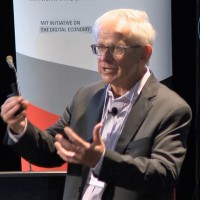
Vince Kuraitis
Principal
Better Health Technologies
In most companies, Human Resources is treated as an operational cost center, its function defined by the C-suite’s constant pressure to manage the rising price of employee benefits. Now, as companies integrate AI into their operations, that mindset has created a strategic vulnerability. Studies show that HR remains one of the lowest adopters of AI, with adoption rates hovering around 10%. This adoption gap reveals a leadership challenge: HR faces a potential failure of vision at the very moment it should be evolving to adapt to this new era.
Vince Kuraitis is a healthcare business and technology strategist with over 35 years of experience advising more than 150 organizations, including hospitals, pharma, medical devices, and health tech. As the founder of Better Health Technologies, and faculty at the future-focused think tank The Fast Future Executive, Kuraitis guides strategy for major corporations like Philips, Samsung, and Medtronic. He argues that HR departments have a rare opportunity to expand their strategic importance, but only if they fundamentally reconfigure their role in managing the modern workforce.
“We’ve got a human workforce and an AI workforce. Human Resources needs to take a leadership role in guiding that,” says Kuraitis. The first step, he asserts, is to rethink the department’s identity from the ground up, which requires a fundamental change in its business model.
From HR to WR: Kuraitis proposes a new name for HR: “Workforce Resources.” This reframe expands the department’s mandate to manage the entire workforce ecosystem, including AI agents and the systems that operate alongside human employees. “Even the term human resources needs to be re-examined. It’s no longer just people. Maybe a better term is workforce resources.” For Kuraitis, that semantic change signals a strategic one. He argues that the department must guide not only human talent, but the full mix of human and AI contributors shaping the organization’s future.
Connecting the chaos: To illustrate what this innovation looks like in practice, Kuraitis describes an AI-powered “digital front door” for the workforce, a centralized layer where employees can ask questions and receive clear, consistent answers in real time. Instead of navigating fragmented portals, policy documents, and email chains, workers can interact with a single intelligent interface that connects underlying systems across benefits, payroll, compliance, and professional development. “Today, employee information is scattered, inaccessible, and fragmented. We need to think of AI as a super coordination tool that can connect all of those different pieces,” he explains. In this model, AI does not replace HR; it orchestrates information, reduces friction, and elevates the employee experience through clarity and speed.
But technology alone won’t solve this. Navigating this transition requires HR leadership willing to champion a new vision at the C-suite level. The leadership challenge, Kuraitis argues, is fundamentally shifting how executives understand the scope of workforce management.
Engineering an epiphany: Kuraitis lays out a two-step blueprint for change that calls for a visionary HR leader to first redefine the department’s role internally. Then, that leader must help the rest of the C-suite reach a key realization that the workforce now includes both humans and AI systems. “Once senior management grasps that the workforce is no longer just people, they have an ‘aha moment’ and you get their support,” he notes. “You have to create that ‘aha moment’ first.”
Without a top-down vision, employees are left to grapple with uncertainty, which undermines trust and risks creating a leadership vacuum. Managing the anxieties of the human workforce requires proactive support, guided by a clear corporate AI policy and a commitment to maintaining compliance. Ultimately, Kuraitis believes the entire challenge is an optimistic call to action. For a department often relegated to a cost center, this moment represents a chance to elevate its role for the future and claim a central seat at the table. “HR and benefits have been painted as the back of the bus, seen as something we just have to do, not something that’s strategic,” he concludes. “This moment is an opportunity for the department to take on a whole new dimension and become a central, powerful voice at the C-suite level.”
Related articles




TL;DR
HR remains one of the lowest adopters of AI, which limits its influence and leaves companies unprepared to manage a workforce that now includes both people and AI systems.
Vince Kuraitis, Founder of Better Health Technologies, says HR must rethink its mandate and step into a leadership role as companies build hybrid human and AI teams.
He calls for redefining HR as “Workforce Resources,” using AI to coordinate fragmented information, guide job transitions, and give the function a stronger strategic voice at the C suite level.
Vince Kuraitis
Better Health Technologies
Principal
Principal
In most companies, Human Resources is treated as an operational cost center, its function defined by the C-suite’s constant pressure to manage the rising price of employee benefits. Now, as companies integrate AI into their operations, that mindset has created a strategic vulnerability. Studies show that HR remains one of the lowest adopters of AI, with adoption rates hovering around 10%. This adoption gap reveals a leadership challenge: HR faces a potential failure of vision at the very moment it should be evolving to adapt to this new era.
Vince Kuraitis is a healthcare business and technology strategist with over 35 years of experience advising more than 150 organizations, including hospitals, pharma, medical devices, and health tech. As the founder of Better Health Technologies, and faculty at the future-focused think tank The Fast Future Executive, Kuraitis guides strategy for major corporations like Philips, Samsung, and Medtronic. He argues that HR departments have a rare opportunity to expand their strategic importance, but only if they fundamentally reconfigure their role in managing the modern workforce.
“We’ve got a human workforce and an AI workforce. Human Resources needs to take a leadership role in guiding that,” says Kuraitis. The first step, he asserts, is to rethink the department’s identity from the ground up, which requires a fundamental change in its business model.
From HR to WR: Kuraitis proposes a new name for HR: “Workforce Resources.” This reframe expands the department’s mandate to manage the entire workforce ecosystem, including AI agents and the systems that operate alongside human employees. “Even the term human resources needs to be re-examined. It’s no longer just people. Maybe a better term is workforce resources.” For Kuraitis, that semantic change signals a strategic one. He argues that the department must guide not only human talent, but the full mix of human and AI contributors shaping the organization’s future.
Connecting the chaos: To illustrate what this innovation looks like in practice, Kuraitis describes an AI-powered “digital front door” for the workforce, a centralized layer where employees can ask questions and receive clear, consistent answers in real time. Instead of navigating fragmented portals, policy documents, and email chains, workers can interact with a single intelligent interface that connects underlying systems across benefits, payroll, compliance, and professional development. “Today, employee information is scattered, inaccessible, and fragmented. We need to think of AI as a super coordination tool that can connect all of those different pieces,” he explains. In this model, AI does not replace HR; it orchestrates information, reduces friction, and elevates the employee experience through clarity and speed.
But technology alone won’t solve this. Navigating this transition requires HR leadership willing to champion a new vision at the C-suite level. The leadership challenge, Kuraitis argues, is fundamentally shifting how executives understand the scope of workforce management.
Engineering an epiphany: Kuraitis lays out a two-step blueprint for change that calls for a visionary HR leader to first redefine the department’s role internally. Then, that leader must help the rest of the C-suite reach a key realization that the workforce now includes both humans and AI systems. “Once senior management grasps that the workforce is no longer just people, they have an ‘aha moment’ and you get their support,” he notes. “You have to create that ‘aha moment’ first.”
Without a top-down vision, employees are left to grapple with uncertainty, which undermines trust and risks creating a leadership vacuum. Managing the anxieties of the human workforce requires proactive support, guided by a clear corporate AI policy and a commitment to maintaining compliance. Ultimately, Kuraitis believes the entire challenge is an optimistic call to action. For a department often relegated to a cost center, this moment represents a chance to elevate its role for the future and claim a central seat at the table. “HR and benefits have been painted as the back of the bus, seen as something we just have to do, not something that’s strategic,” he concludes. “This moment is an opportunity for the department to take on a whole new dimension and become a central, powerful voice at the C-suite level.”