
Are You Counting Yards or Scoring Touchdowns? How One Leader Is Redefining Productivity

Key Points
As a younger workforce rejects the “always-on” work culture, Dr. Timo Sandritter champions a leadership philosophy focused on human-centered outcomes.
Sandritter, an executive and founder, says leaders should abandon the myth of “work-life balance” for a “one life” approach that values all forms of wealth, including health and family.
His model advocates for measuring results, or “touchdowns,” instead of hours, replacing annual reviews with continuous coaching, and prioritizing human well-being to prevent burnout.
I've never subscribed to what is called 'work-life balance' because I have one life. I tell my people that I want professionals who can manage their own time. I think whatever mode works for an individual is the mode that should work for the company.
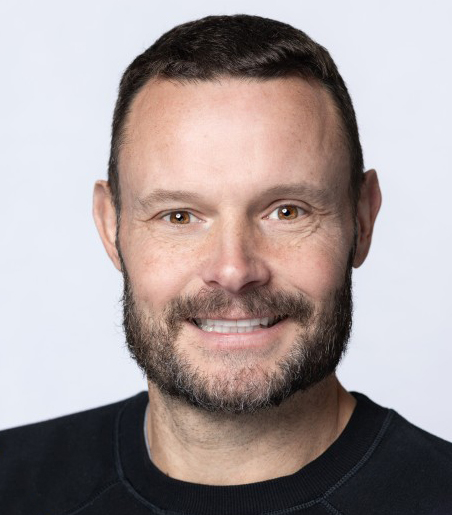
Dr. Timo Sandritter
Executive Board Member
Ingentis
A younger workforce is rejecting the always-on, crisis-mode culture of the past, leaving many leaders scrambling to keep up. But this conflict isn’t just about generational preferences. It reveals a deeper problem where many businesses are fundamentally confusing effort with results.
That’s the exact premise Dr. Timo Sandritter, an executive and entrepreneur with dual doctorates in global strategy and organizational leadership, has spent his career challenging. As a current Executive Board Member at Ingentis, he’s a recognized expert in scaling companies. But his experience as a founder leading two separate companies, RippleWorx and Cygnus Strategy Group to successful acquisitions, gives him a practical perspective that questions conventional wisdom.
His starting point is radical: abandon the idea of a separate professional and personal life. “I’ve never subscribed to what is called ‘work-life balance’ because I always had one life. I tell my people that I want professionals who can manage their own time. I think whatever mode works for an individual is the mode that should work.”
Touchdowns, not yards: From this “one life” foundation, he makes his case against the traditional culture of being present just for the sake of it. Instead of obsessing over hours, he says, leaders should focus on a simpler metric. He uses sports analogies to make the concept concrete. “At the end of the game, your total yards doesn’t really matter. The more important metric is how many touchdowns you scored. In soccer, it’s how many goals you scored, not if you ran 10 miles around the soccer field.”
The other currencies: He sees this generational change as being driven by a new workplace value system, where a growing part of the workforce is no longer willing to sacrifice everything for a single definition of success. “There are different forms of what I call wealth. We have money and status, or prestige. That’s one form of wealth. But time, spirituality, health, and relationships are also very different forms of wealth.”
But this model isn’t about letting everyone do whatever they want. It relies on a disciplined, collaborative approach to setting expectations, where leaders and their teams define a “North Star” together. While performance is expected, Sandritter says the management of that performance makes all the difference. His solution? Replace the dreaded annual check-in with a system of continuous feedback. “I don’t believe in performance reviews that are annual. I believe in an ongoing coaching and performance culture. We know it in sports. Even the GOATs still have coaches. But they don’t get coached once a year. It’s an ongoing process that happens when it’s needed.”
The entire system relies on a non-negotiable respect for human priorities. Central to this philosophy is the idea that certain boundaries are sacred. Sandritter models this behavior for his own team. “My family will always prevail over anything I do professionally. Period. And I tell my employees the same. It should never be a competition whether you attend your children’s soccer game at night versus having to work until 8:00 p.m.”
When the grind grinds you down: “Realistically, until last year, I didn’t even believe burnout was real. I was in the hospital last year, and it was because I put pressure on myself to be constantly on. I realized that as I get older, I need to listen to my health a little bit more.” This personal revelation became a cornerstone of his leadership, shaping his commitment to ensuring his team avoids similar pitfalls. “I don’t ever want any of my employees to experience so much stress at work that it affects their health, because that is not healthy. That should never happen.”
He concludes that while periods of intense work are part of the job, they must be . Returning to his sports analogy, athletes train hard during the season, but they also know when to rest. “At some point,” he says, “we have to refuel.” His closing advice distills the entire philosophy down to a single, human-centric mandate for any leader navigating today’s workplace. “We’re all busy, but we are not too busy to be humans. And that, to me, is what the overarching message should be.”
Related articles





TL;DR
As a younger workforce rejects the “always-on” work culture, Dr. Timo Sandritter champions a leadership philosophy focused on human-centered outcomes.
Sandritter, an executive and founder, says leaders should abandon the myth of “work-life balance” for a “one life” approach that values all forms of wealth, including health and family.
His model advocates for measuring results, or “touchdowns,” instead of hours, replacing annual reviews with continuous coaching, and prioritizing human well-being to prevent burnout.
Dr. Timo Sandritter
Ingentis
Executive Board Member
Executive Board Member
A younger workforce is rejecting the always-on, crisis-mode culture of the past, leaving many leaders scrambling to keep up. But this conflict isn’t just about generational preferences. It reveals a deeper problem where many businesses are fundamentally confusing effort with results.
That’s the exact premise Dr. Timo Sandritter, an executive and entrepreneur with dual doctorates in global strategy and organizational leadership, has spent his career challenging. As a current Executive Board Member at Ingentis, he’s a recognized expert in scaling companies. But his experience as a founder leading two separate companies, RippleWorx and Cygnus Strategy Group to successful acquisitions, gives him a practical perspective that questions conventional wisdom.
His starting point is radical: abandon the idea of a separate professional and personal life. “I’ve never subscribed to what is called ‘work-life balance’ because I always had one life. I tell my people that I want professionals who can manage their own time. I think whatever mode works for an individual is the mode that should work.”
Touchdowns, not yards: From this “one life” foundation, he makes his case against the traditional culture of being present just for the sake of it. Instead of obsessing over hours, he says, leaders should focus on a simpler metric. He uses sports analogies to make the concept concrete. “At the end of the game, your total yards doesn’t really matter. The more important metric is how many touchdowns you scored. In soccer, it’s how many goals you scored, not if you ran 10 miles around the soccer field.”
The other currencies: He sees this generational change as being driven by a new workplace value system, where a growing part of the workforce is no longer willing to sacrifice everything for a single definition of success. “There are different forms of what I call wealth. We have money and status, or prestige. That’s one form of wealth. But time, spirituality, health, and relationships are also very different forms of wealth.”
But this model isn’t about letting everyone do whatever they want. It relies on a disciplined, collaborative approach to setting expectations, where leaders and their teams define a “North Star” together. While performance is expected, Sandritter says the management of that performance makes all the difference. His solution? Replace the dreaded annual check-in with a system of continuous feedback. “I don’t believe in performance reviews that are annual. I believe in an ongoing coaching and performance culture. We know it in sports. Even the GOATs still have coaches. But they don’t get coached once a year. It’s an ongoing process that happens when it’s needed.”
The entire system relies on a non-negotiable respect for human priorities. Central to this philosophy is the idea that certain boundaries are sacred. Sandritter models this behavior for his own team. “My family will always prevail over anything I do professionally. Period. And I tell my employees the same. It should never be a competition whether you attend your children’s soccer game at night versus having to work until 8:00 p.m.”
When the grind grinds you down: “Realistically, until last year, I didn’t even believe burnout was real. I was in the hospital last year, and it was because I put pressure on myself to be constantly on. I realized that as I get older, I need to listen to my health a little bit more.” This personal revelation became a cornerstone of his leadership, shaping his commitment to ensuring his team avoids similar pitfalls. “I don’t ever want any of my employees to experience so much stress at work that it affects their health, because that is not healthy. That should never happen.”
He concludes that while periods of intense work are part of the job, they must be . Returning to his sports analogy, athletes train hard during the season, but they also know when to rest. “At some point,” he says, “we have to refuel.” His closing advice distills the entire philosophy down to a single, human-centric mandate for any leader navigating today’s workplace. “We’re all busy, but we are not too busy to be humans. And that, to me, is what the overarching message should be.”