
Columbia Program Director and HR Expert Shares How to Reclaim Your Team from a Crisis of Culture

Key Points
Many workplaces face burnout from constant manufactured urgency, but leaders can adopt a new mindset to break this cycle.
Dr. Steve Safier, a Columbia University HR expert, explains that this shift requires leaders to act as empathetic stewards for their teams.
By modeling healthy work habits and embracing ambiguity, leaders can foster a culture where quality and employee well-being take priority.
My definition of mental health is the ability to tolerate ambiguity. We can't predict everything, and sometimes we're going to feel stressed out. Ride with it. We'll figure out what to do. We don't have to figure it out by tomorrow.
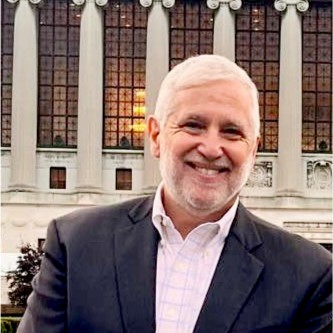
Steve Safier, PhD
Program Director, M.S. in Human Capital Management
Columbia University
In too many workplaces, a culture of manufactured urgency is the default setting. Driven by the push to do more with less, an “everything-is-an-emergency” mentality leads teams toward burnout. That pressure isn’t new, but it is amplified by today’s technology, company cultures, and economic uncertainty. Flexibility in exchange for constant connectivity is now a standard feature of modern work, but escaping the urgency cycle also involves looking inward at the mindsets that drive our behavior.
To better understand workplace mindsets, we turned to Steve Safier, PhD, an award-winning Program Director and lecturer for the M.S. in Human Capital Management program at Columbia University. Holding a doctorate in clinical psychology, his advice isn’t just academic theory, but informed by a long career as a Chief Transformation and Human Resources Officer, COO, and management consultant, giving him a grounded perspective on the modern workplace.
“My definition of mental health is the ability to tolerate ambiguity,” he says. “We can’t predict everything, and sometimes we’re going to feel stressed out. Ride with it. We’ll figure out what to do. We don’t have to figure it out by tomorrow.”
Pleased and satisfied: The drive to optimize is often internal, rooted in a human tendency to constantly improve. Many of us are conditioned to believe that if we can do more, we must do more, making it difficult to feel a sense of completion. Safier recalls a former client, a chief operating officer, who personifies this mindset. The COO’s motto created a culture of ongoing dissatisfaction, and this pressure established a continuous cycle of work. “His motto was to be ‘pleased but never satisfied.’ Once in a while, be satisfied. It doesn’t mean not to strive, but now with technology, we have the ability to connect the dots even better. When you combine personal, team and technological ability with a reasonable growth mindset, our work becomes better and more satisfying,” Safier explains.
The ‘mud’ flows down: Think the answer is just better communication? Safier points to a messier reality: a chaotic “open field,” where pressure comes from analytics, stakeholders, customers, and, sometimes harshest of all, managers. An effective strategy is to cultivate an empathy that recognizes this wider system. “Everybody has a boss. I used to think mine was shoveling mud down at me until I realized that mud was coming to him from somewhere else,” Safier notes. “Realizing my boss couldn’t always control what he was asking made it less personal. It helped me become much more effective because I could shift my focus to figuring out what would make him successful.”
For leaders, that concept of empathy should be a core management philosophy. As Safier explains, a manager’s job is to act as a steward and, often as a shield, exercising judgment to buffer their team from manufactured crises. That approach asks leaders to cultivate a mindset rooted in situational awareness, prioritizing team well-being over rigid processes. “It’s more an attitude than a process,” Safier states. “I use a simple phrase: if it’s not a crunch, don’t make it a crunch. You have to wax and wane, and you can’t ask the same individuals to do the urgent work all the time. You have to shuffle the workload around people. That’s part of where the empathy comes in.”
But for a culture of reason and prioritization to take hold, leaders must authentically model those values themselves. “The answer is 20/80,” Safier says. “20% of the time, you talk about it. 80% of it is modeling. You have to live it. That’s the only way people will take it seriously. Modeling is the most important management tool that exists.”
Perhaps the biggest lesson Safier offers comes from the world of higher education, where the focus is on quality, coupled with a genuine investment in people. As he points out, this translates well to the corporate setting with the right values. “The thing we can do is show caring for our students in a more explicit, consistent way. My students know that I care about them. It doesn’t mean that I’m not going to grade them correctly or hold them accountable. I want them to succeed in their personal and professional lives. It’s that personal caring and commitment to quality that I would hold up in higher ed as being the lodestar,” Safier explains. It’s a lesson worth remembering.
Related articles





TL;DR
Many workplaces face burnout from constant manufactured urgency, but leaders can adopt a new mindset to break this cycle.
Dr. Steve Safier, a Columbia University HR expert, explains that this shift requires leaders to act as empathetic stewards for their teams.
By modeling healthy work habits and embracing ambiguity, leaders can foster a culture where quality and employee well-being take priority.

Steve Safier, PhD
Columbia University
Program Director, M.S. in Human Capital Management
Program Director, M.S. in Human Capital Management
In too many workplaces, a culture of manufactured urgency is the default setting. Driven by the push to do more with less, an “everything-is-an-emergency” mentality leads teams toward burnout. That pressure isn’t new, but it is amplified by today’s technology, company cultures, and economic uncertainty. Flexibility in exchange for constant connectivity is now a standard feature of modern work, but escaping the urgency cycle also involves looking inward at the mindsets that drive our behavior.
To better understand workplace mindsets, we turned to Steve Safier, PhD, an award-winning Program Director and lecturer for the M.S. in Human Capital Management program at Columbia University. Holding a doctorate in clinical psychology, his advice isn’t just academic theory, but informed by a long career as a Chief Transformation and Human Resources Officer, COO, and management consultant, giving him a grounded perspective on the modern workplace.
“My definition of mental health is the ability to tolerate ambiguity,” he says. “We can’t predict everything, and sometimes we’re going to feel stressed out. Ride with it. We’ll figure out what to do. We don’t have to figure it out by tomorrow.”
Pleased and satisfied: The drive to optimize is often internal, rooted in a human tendency to constantly improve. Many of us are conditioned to believe that if we can do more, we must do more, making it difficult to feel a sense of completion. Safier recalls a former client, a chief operating officer, who personifies this mindset. The COO’s motto created a culture of ongoing dissatisfaction, and this pressure established a continuous cycle of work. “His motto was to be ‘pleased but never satisfied.’ Once in a while, be satisfied. It doesn’t mean not to strive, but now with technology, we have the ability to connect the dots even better. When you combine personal, team and technological ability with a reasonable growth mindset, our work becomes better and more satisfying,” Safier explains.
The ‘mud’ flows down: Think the answer is just better communication? Safier points to a messier reality: a chaotic “open field,” where pressure comes from analytics, stakeholders, customers, and, sometimes harshest of all, managers. An effective strategy is to cultivate an empathy that recognizes this wider system. “Everybody has a boss. I used to think mine was shoveling mud down at me until I realized that mud was coming to him from somewhere else,” Safier notes. “Realizing my boss couldn’t always control what he was asking made it less personal. It helped me become much more effective because I could shift my focus to figuring out what would make him successful.”
For leaders, that concept of empathy should be a core management philosophy. As Safier explains, a manager’s job is to act as a steward and, often as a shield, exercising judgment to buffer their team from manufactured crises. That approach asks leaders to cultivate a mindset rooted in situational awareness, prioritizing team well-being over rigid processes. “It’s more an attitude than a process,” Safier states. “I use a simple phrase: if it’s not a crunch, don’t make it a crunch. You have to wax and wane, and you can’t ask the same individuals to do the urgent work all the time. You have to shuffle the workload around people. That’s part of where the empathy comes in.”
But for a culture of reason and prioritization to take hold, leaders must authentically model those values themselves. “The answer is 20/80,” Safier says. “20% of the time, you talk about it. 80% of it is modeling. You have to live it. That’s the only way people will take it seriously. Modeling is the most important management tool that exists.”
Perhaps the biggest lesson Safier offers comes from the world of higher education, where the focus is on quality, coupled with a genuine investment in people. As he points out, this translates well to the corporate setting with the right values. “The thing we can do is show caring for our students in a more explicit, consistent way. My students know that I care about them. It doesn’t mean that I’m not going to grade them correctly or hold them accountable. I want them to succeed in their personal and professional lives. It’s that personal caring and commitment to quality that I would hold up in higher ed as being the lodestar,” Safier explains. It’s a lesson worth remembering.