
Before HR Commits to a Bigger Goal, It Needs to Know What the Team Can Deliver

I love visionaries, because that’s usually your ownership and your senior leadership people, and they have really great goals and dreams. But we have to work backwards from that.
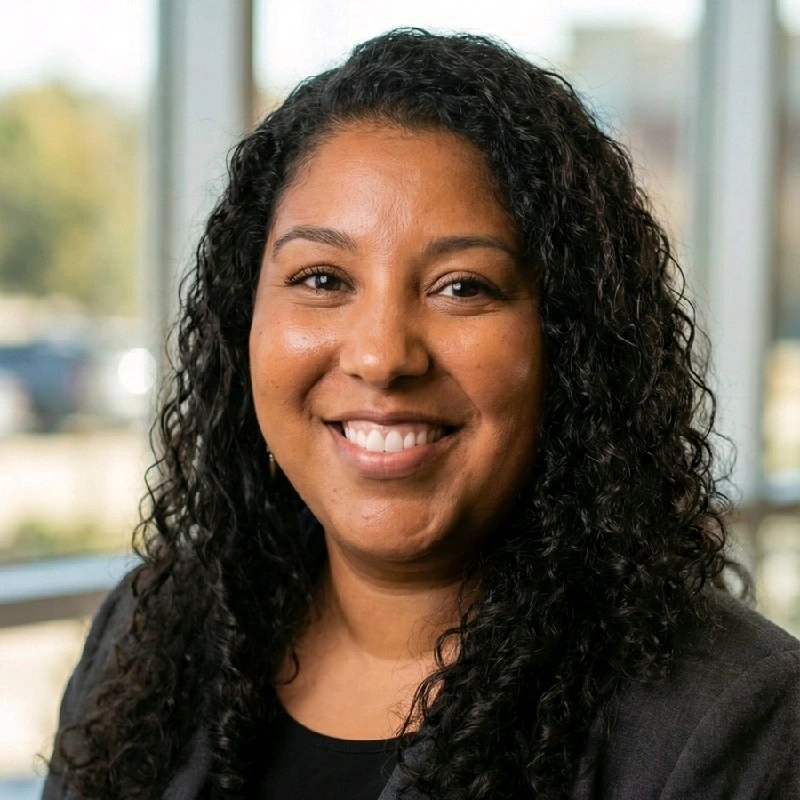
Stephanie Morris
HR Manager
ABC Home & Commercial Services
Leadership goals often arrive before anyone has worked out what it will take to achieve them. Whether the ambition is to build a leadership pipeline or raise employee engagement by next year, the goal may be sound; the trouble shows up later, when HR realizes it’s expected to deliver a bigger result with the same people and systems, without a clear picture of the resources the work will require.
Stephanie Morris, HR Manager at ABC Home & Commercial Services, has watched that tension play out at companies she’s worked for as they grew from smaller operations into larger ones, and she hears the same patterns come up in her advanced leader group through Vistage. Alongside her role at ABC, she’s launching her own practice as a leadership and wellbeing advisor. When leadership sets a bigger goal, Morris starts with the vision and works backward to determine what the team will need to deliver it.
“I love visionaries, because that’s usually your ownership and your senior leadership people, and they have really great goals and dreams,” Morris says. “But we have to work backwards from that.” Owners and senior leaders are often planning years out, based on where they expect the market to go, while the directors and managers responsible for execution work on a much shorter horizon. Before anything moves forward, Morris asks two questions: whether the company is equipped to make the change, and whether employees know what will be expected of them.
What the team can take on
When an owner asks HR to become more strategic, Morris starts by mapping who’s in the department and what each person handles today. If the team is already at capacity, new responsibilities will require a change in priorities, staffing or existing processes. From there, she looks at where people are cross-trained and which features of the company’s existing systems could absorb part of the load. That search often leads her into the fine print of the company’s software agreements.
“They have a lot of features you can use, but they do come with a cost,” she says. “If we want to send employee surveys through our system, we can absolutely do that, but we have to buy the package, and the same goes for performance reviews.”
Pricing those add-ons alongside any new hires gives leadership a realistic number for the expanded remit. Morris folds job descriptions into the same review, since outdated descriptions can leave employees unclear about their responsibilities. BambooHR’s Redesigning Work report suggests that problem is widespread. HR pros estimate that 61% of jobs at the average organization need updated descriptions to reflect AI’s impact, yet they estimate they’ve updated only 43% of their workforce’s descriptions so far. The same lag shows up in specific industries, and in BambooHR’s Education workforce report, 66% of educators say schools are adopting AI faster than teachers are being trained to manage it.
Morris also wants leadership to define the business problem behind a new request before HR settles on a solution. A request for more employee feedback could mean an owner wants a general read on how people feel about the company. It could also mean the real target is cutting turnover by a set percentage. In Morris’s experience, that goal can reveal a training or management problem hiding inside what initially sounded like a survey request.
Where to start asking questions
When turnover is the target, Morris pulls a report showing which managers’ departments have lost the most people and treats it as a map of where to look. Attrition in a single department can trace back to the manager or to something else entirely, so the real investigation happens in her regular one-on-ones with managers, a practice she recommends to any HR team that doesn’t already have one. In those meetings, she walks through recent terminations and exit interview findings and asks the manager what they see behind the pattern.
“Maybe a manager is telling someone what to do instead of being curious about something,” she says. “If you’re more curious, then people are less defensive, because we’re there to support management, and management supports the employees that do the job.” When the conversations point to how a manager talks with people, Morris responds with coaching. After a stretch of it, she runs a pulse check to see whether the pattern has moved, and managers can bring the same curiosity into corrective action conversations.
Morris approaches each case on its own terms, building relationships with managers and adjusting through trial and error. That support reaches managers at a difficult moment for the role, as global manager engagement fell from 27% in 2024 to 22% in 2025.
Seeing what it will cost
Plenty of executives started on the frontline, though Morris points out that the distance can be long. A leader who began as a technician may not have done that job in 15 or 20 years, and the company may have changed systems three times since. When a big request comes in, she asks why leadership wants the outcome and what budget it has set aside. Before anything rolls out to hundreds of employees, she asks for time to research what the plan will require.
“Once I have a little time to do some research, then I can say, ‘You said you wanted to do this, but realistically, it’s going to cost this, or we’re going to have to add this much personnel. This is the budget you said you had, and this is the budget I think it’s going to be,’” she says. “You have to be honest and realistic with people.”
When that research points to added personnel, those roles need to be built into the company’s workforce plan and budget before leadership commits to the expanded work. Morris sees HR as answering to employees and the company at the same time, which means fighting for what a team needs while staying honest about what the business can fund. “I’m okay with saying, ‘I’m not sure. Let me ask some questions,’” she says. That willingness to pause is how HR can help leadership understand the trade-offs before the company commits people and money to a plan it may not be equipped to deliver.
Company size sets the pace
Smaller companies have less room to absorb a bigger goal, since people there already wear several hats, so Morris says leadership may need to restructure the plan or add headcount. When cost is the tighter constraint, cross-training and fuller use of existing technology carry much of the load, with some lower-cost work outsourced. Ownership at that size also tends to serve as the change management function. In her experience, dedicated change committees don’t appear until headcount climbs into the hundreds.
“Say you have 75 people in your organization. If you all meet together and decide on a change, everyone’s going to say, ‘I’ve got to do this for my department,’ and then the change is probably going to be made then,” she says. “If you have 400 people, it’s going to be a different situation.” At that scale, a new CRM rollout needs a trial period and a training plan before it reaches everyone, and the change management work has to be coordinated across departments that each learn about it secondhand.
Once a plan is funded, leadership also has to give employees time to learn the new roles and tools before changing direction again. “If you have a vision, try to keep it that way for a decent amount of time to give it an opportunity to work,” Morris says. “Employees don’t like a lot of change, because then it gets confusing, and then it gets frustrating.”
Related articles





TL;DR

Stephanie Morris
ABC Home & Commercial Services
HR Manager
HR Manager
Leadership goals often arrive before anyone has worked out what it will take to achieve them. Whether the ambition is to build a leadership pipeline or raise employee engagement by next year, the goal may be sound; the trouble shows up later, when HR realizes it’s expected to deliver a bigger result with the same people and systems, without a clear picture of the resources the work will require.
Stephanie Morris, HR Manager at ABC Home & Commercial Services, has watched that tension play out at companies she’s worked for as they grew from smaller operations into larger ones, and she hears the same patterns come up in her advanced leader group through Vistage. Alongside her role at ABC, she’s launching her own practice as a leadership and wellbeing advisor. When leadership sets a bigger goal, Morris starts with the vision and works backward to determine what the team will need to deliver it.
“I love visionaries, because that’s usually your ownership and your senior leadership people, and they have really great goals and dreams,” Morris says. “But we have to work backwards from that.” Owners and senior leaders are often planning years out, based on where they expect the market to go, while the directors and managers responsible for execution work on a much shorter horizon. Before anything moves forward, Morris asks two questions: whether the company is equipped to make the change, and whether employees know what will be expected of them.
What the team can take on
When an owner asks HR to become more strategic, Morris starts by mapping who’s in the department and what each person handles today. If the team is already at capacity, new responsibilities will require a change in priorities, staffing or existing processes. From there, she looks at where people are cross-trained and which features of the company’s existing systems could absorb part of the load. That search often leads her into the fine print of the company’s software agreements.
“They have a lot of features you can use, but they do come with a cost,” she says. “If we want to send employee surveys through our system, we can absolutely do that, but we have to buy the package, and the same goes for performance reviews.”
Pricing those add-ons alongside any new hires gives leadership a realistic number for the expanded remit. Morris folds job descriptions into the same review, since outdated descriptions can leave employees unclear about their responsibilities. BambooHR’s Redesigning Work report suggests that problem is widespread. HR pros estimate that 61% of jobs at the average organization need updated descriptions to reflect AI’s impact, yet they estimate they’ve updated only 43% of their workforce’s descriptions so far. The same lag shows up in specific industries, and in BambooHR’s Education workforce report, 66% of educators say schools are adopting AI faster than teachers are being trained to manage it.
Morris also wants leadership to define the business problem behind a new request before HR settles on a solution. A request for more employee feedback could mean an owner wants a general read on how people feel about the company. It could also mean the real target is cutting turnover by a set percentage. In Morris’s experience, that goal can reveal a training or management problem hiding inside what initially sounded like a survey request.
Where to start asking questions
When turnover is the target, Morris pulls a report showing which managers’ departments have lost the most people and treats it as a map of where to look. Attrition in a single department can trace back to the manager or to something else entirely, so the real investigation happens in her regular one-on-ones with managers, a practice she recommends to any HR team that doesn’t already have one. In those meetings, she walks through recent terminations and exit interview findings and asks the manager what they see behind the pattern.
“Maybe a manager is telling someone what to do instead of being curious about something,” she says. “If you’re more curious, then people are less defensive, because we’re there to support management, and management supports the employees that do the job.” When the conversations point to how a manager talks with people, Morris responds with coaching. After a stretch of it, she runs a pulse check to see whether the pattern has moved, and managers can bring the same curiosity into corrective action conversations.
Morris approaches each case on its own terms, building relationships with managers and adjusting through trial and error. That support reaches managers at a difficult moment for the role, as global manager engagement fell from 27% in 2024 to 22% in 2025.
Seeing what it will cost
Plenty of executives started on the frontline, though Morris points out that the distance can be long. A leader who began as a technician may not have done that job in 15 or 20 years, and the company may have changed systems three times since. When a big request comes in, she asks why leadership wants the outcome and what budget it has set aside. Before anything rolls out to hundreds of employees, she asks for time to research what the plan will require.
“Once I have a little time to do some research, then I can say, ‘You said you wanted to do this, but realistically, it’s going to cost this, or we’re going to have to add this much personnel. This is the budget you said you had, and this is the budget I think it’s going to be,’” she says. “You have to be honest and realistic with people.”
When that research points to added personnel, those roles need to be built into the company’s workforce plan and budget before leadership commits to the expanded work. Morris sees HR as answering to employees and the company at the same time, which means fighting for what a team needs while staying honest about what the business can fund. “I’m okay with saying, ‘I’m not sure. Let me ask some questions,’” she says. That willingness to pause is how HR can help leadership understand the trade-offs before the company commits people and money to a plan it may not be equipped to deliver.
Company size sets the pace
Smaller companies have less room to absorb a bigger goal, since people there already wear several hats, so Morris says leadership may need to restructure the plan or add headcount. When cost is the tighter constraint, cross-training and fuller use of existing technology carry much of the load, with some lower-cost work outsourced. Ownership at that size also tends to serve as the change management function. In her experience, dedicated change committees don’t appear until headcount climbs into the hundreds.
“Say you have 75 people in your organization. If you all meet together and decide on a change, everyone’s going to say, ‘I’ve got to do this for my department,’ and then the change is probably going to be made then,” she says. “If you have 400 people, it’s going to be a different situation.” At that scale, a new CRM rollout needs a trial period and a training plan before it reaches everyone, and the change management work has to be coordinated across departments that each learn about it secondhand.
Once a plan is funded, leadership also has to give employees time to learn the new roles and tools before changing direction again. “If you have a vision, try to keep it that way for a decent amount of time to give it an opportunity to work,” Morris says. “Employees don’t like a lot of change, because then it gets confusing, and then it gets frustrating.”