
AI-Powered HR Metrics Help Leaders Track Hiring Outcomes, Improve Team Performance
Key Points
A shift from administrative tasks to strategic enablement is underway in HR, as AI-driven platforms provide new visibility into performance and productivity.
Shubham Saxena, a talent acquisition leader who has scaled Global Capability Centers for TapClicks and Shiprocket, details a data-first approach that allows HR teams to help boost productivity and positively affect revenue.
He advises unifying HR, payroll, and performance data on dashboards and leveraging gamification to provide employees with real-time performance metrics and boost motivation.
Visibility is a requirement in verticals where leadership is looking at revenue. From growth to productivity to outcomes, there should be no blind spots.

Shubham Saxena
People Consultant
Vismayaa Global Exports
Human resources teams are expected to make high-stakes people decisions, often without the same level of operational visibility departments like sales or finance rely on. But with the help of AI-driven insights and automation, leaders have the opportunity to get a clearer view into what’s working. By unifying data across payroll, talent acquisition, and employee performance on integrated platforms, companies can make more objective, real-time decisions and align human resources more closely with business outcomes.
Some leaders, like Shubham Saxena, are experimenting with how greater data visibility can change how teams operate. A People Consultant at Vismayaa Global Exports with over a decade of experience in global HR and people operations, he specializes in scaling Global Capability Centers for companies like TapClicks and Shiprocket. His work focuses on how to successfully integrate AI-driven efficiency within the human complexities of the modern workforce, and he’s built a career on the front lines of high-volume hiring for varied roles across APAC, EMEA, and North America. Saxena’s answer to this challenge of quantifying performance lies in empowering teams, from entry-level to executive, with clear data.
“Visibility is a requirement in verticals where leadership is looking at revenue. From growth to productivity to outcomes, there should be no blind spots. Everything has to be communicated so well that leadership knows what is happening and where we are failing,” he says. One way to implement this visibility is building out metrics so HR leaders can track performance through data dashboards.
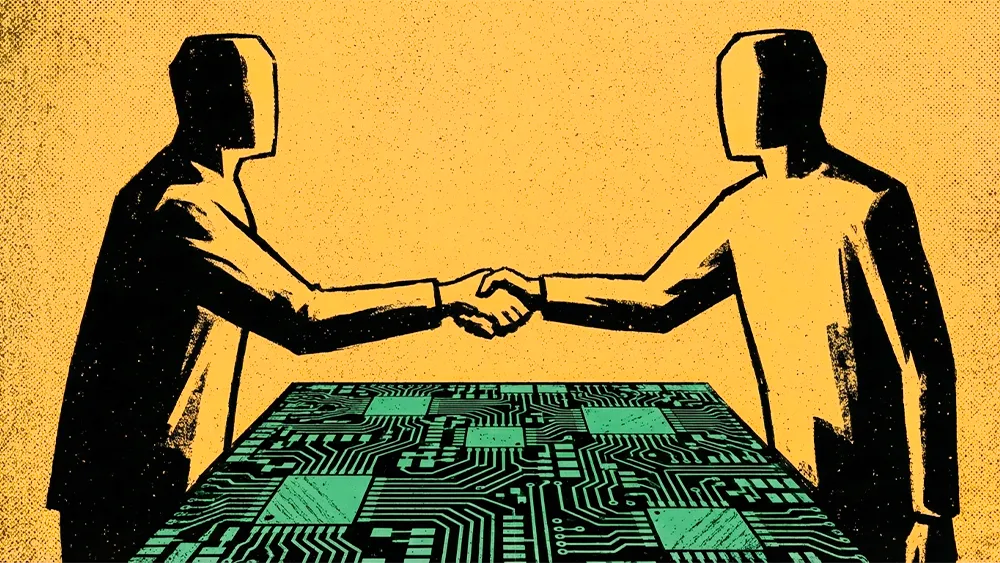
Handshake model: Saxena implements what he calls a “handshake model” to maintain momentum in talent acquisition. This protocol requires a 36-to-48-hour turnaround on all interview feedback. If the window is missed, AI bots “raise a flag,” giving teams more visibility around task management. “Our productivity has enhanced by nearly 4x because AI handles the patchwork,” he shares. “We can now manage 200 sizable hires with a team of only five or six people.”
The truth of data: Beyond simple efficiency, Saxena sees AI as a tool for organizational integrity. He argues though human evaluation is vital, without supportive data it can lead to “brownie points” for non-performers. This ultimately costs the company revenue. “AI gives us leverage by bringing in the data,” Saxena explains. “It flags when the handshake model isn’t met or when productivity isn’t working well, providing an objective action point for leadership.”
But AI can’t always catch the nuances involved with managing people. For many leaders, a primary challenge lies in navigating the gray areas where algorithms clash with nuanced reality.
The error in data: The core of the issue, Saxena notes, is that AI often functions in a binary “zero-to-one” world that can’t account for real-life context. He gave an example: “When an employee goes on maternity leave, the system continues to calculate their performance. When it comes out in the end, the report concludes that the person has not performed well.” The result is an error that HR must often correct manually, demonstrating that a tool without human context is a flawed instrument.
Maintaining trust: The challenge also extends to the issue of psychological safety, as he acknowledges some employees are often hesitant to share their true concerns for fear of being judged or losing their roles. “Even with tools labeled as anonymous, there is a lingering fear that feedback will be traced back and used against them,” he says. To solve this, he is exploring a “mentor-group” model where feedback bypasses HR entirely. “We want to create a system where a neutral party like a mentor provides assistance under a strict NDA, ensuring that when an employee needs help, it stays confidential and doesn’t create imbalances in the organization.”
Data transparency doesn’t just benefit managers, it can also help employees track and improve their own performance. So Saxena is experimenting with using AI dashboards to motivate teams from the bottom up. The same binary logic that struggles with complex cases like maternity leave can become an asset in a score-based system, where employees see real-time metrics on interviews completed, targets hit, and performance relative to their peers. Approaches like these demonstrate how AI can significantly reshape productivity.
Not just fun and games: “My idea was to bring in gamification as a methodology, so I wanted everybody to see their own dashboard,” he says, that way employees “have an insight into how many interviews they have conducted, what the target was, how they have performed, and how they are leading in comparison to the team.”
A mindset shift: Saxena says the goal is to change the perspective on performance tracking to something more motivational. “By using AI to analyze datasets that would be impossible to track manually, we provide real-time ‘scores’ that motivate the team to outclass their own records. They aren’t focused on the clock; they are focused on beating their personal best, whether that’s cracking 10 interviews or closing 20 candidates in a row.”
Data-informed HR helps build better management practices, but it also means smarter business. According to the 2026 AI in HR vendor and maturity report, fragmented data remains a key limiter to scale. By bridging the silos between sales, marketing, and HR, leaders can finally move beyond surface-level metrics to prove the genuine ROI of their talent operations. Saxena saw this in action at TapClicks, where an integrated dashboard revealed a critical blind spot in the org chart. The data highlighted a gap and provided the objective business case needed to justify a strategic new hire. By bridging the gap between talent and growth with AI, this data-driven approach elevates HR into a central role as a strategic business partner.
Even so, he cautions that AI works best as a tool guided by human judgment. While dashboards reveal patterns, they cannot navigate the complex “gray areas” of a workplace. “AI is not going to help us unless we give it the right subject to tackle,” he says. “The human mind is endless, while AI operates on algorithms. Situations cannot be judged by AI.” The mission, Saxena emphasizes, is to build smarter systems that allow humans to get a better look at blind spots to improve their work.
Related articles


TL;DR
A shift from administrative tasks to strategic enablement is underway in HR, as AI-driven platforms provide new visibility into performance and productivity.
Shubham Saxena, a talent acquisition leader who has scaled Global Capability Centers for TapClicks and Shiprocket, details a data-first approach that allows HR teams to help boost productivity and positively affect revenue.
He advises unifying HR, payroll, and performance data on dashboards and leveraging gamification to provide employees with real-time performance metrics and boost motivation.

Shubham Saxena
Vismayaa Global Exports
People Consultant
People Consultant
Human resources teams are expected to make high-stakes people decisions, often without the same level of operational visibility departments like sales or finance rely on. But with the help of AI-driven insights and automation, leaders have the opportunity to get a clearer view into what’s working. By unifying data across payroll, talent acquisition, and employee performance on integrated platforms, companies can make more objective, real-time decisions and align human resources more closely with business outcomes.
Some leaders, like Shubham Saxena, are experimenting with how greater data visibility can change how teams operate. A People Consultant at Vismayaa Global Exports with over a decade of experience in global HR and people operations, he specializes in scaling Global Capability Centers for companies like TapClicks and Shiprocket. His work focuses on how to successfully integrate AI-driven efficiency within the human complexities of the modern workforce, and he’s built a career on the front lines of high-volume hiring for varied roles across APAC, EMEA, and North America. Saxena’s answer to this challenge of quantifying performance lies in empowering teams, from entry-level to executive, with clear data.
“Visibility is a requirement in verticals where leadership is looking at revenue. From growth to productivity to outcomes, there should be no blind spots. Everything has to be communicated so well that leadership knows what is happening and where we are failing,” he says. One way to implement this visibility is building out metrics so HR leaders can track performance through data dashboards.
Handshake model: Saxena implements what he calls a “handshake model” to maintain momentum in talent acquisition. This protocol requires a 36-to-48-hour turnaround on all interview feedback. If the window is missed, AI bots “raise a flag,” giving teams more visibility around task management. “Our productivity has enhanced by nearly 4x because AI handles the patchwork,” he shares. “We can now manage 200 sizable hires with a team of only five or six people.”
The truth of data: Beyond simple efficiency, Saxena sees AI as a tool for organizational integrity. He argues though human evaluation is vital, without supportive data it can lead to “brownie points” for non-performers. This ultimately costs the company revenue. “AI gives us leverage by bringing in the data,” Saxena explains. “It flags when the handshake model isn’t met or when productivity isn’t working well, providing an objective action point for leadership.”
But AI can’t always catch the nuances involved with managing people. For many leaders, a primary challenge lies in navigating the gray areas where algorithms clash with nuanced reality.
The error in data: The core of the issue, Saxena notes, is that AI often functions in a binary “zero-to-one” world that can’t account for real-life context. He gave an example: “When an employee goes on maternity leave, the system continues to calculate their performance. When it comes out in the end, the report concludes that the person has not performed well.” The result is an error that HR must often correct manually, demonstrating that a tool without human context is a flawed instrument.
Maintaining trust: The challenge also extends to the issue of psychological safety, as he acknowledges some employees are often hesitant to share their true concerns for fear of being judged or losing their roles. “Even with tools labeled as anonymous, there is a lingering fear that feedback will be traced back and used against them,” he says. To solve this, he is exploring a “mentor-group” model where feedback bypasses HR entirely. “We want to create a system where a neutral party like a mentor provides assistance under a strict NDA, ensuring that when an employee needs help, it stays confidential and doesn’t create imbalances in the organization.”
Data transparency doesn’t just benefit managers, it can also help employees track and improve their own performance. So Saxena is experimenting with using AI dashboards to motivate teams from the bottom up. The same binary logic that struggles with complex cases like maternity leave can become an asset in a score-based system, where employees see real-time metrics on interviews completed, targets hit, and performance relative to their peers. Approaches like these demonstrate how AI can significantly reshape productivity.
Not just fun and games: “My idea was to bring in gamification as a methodology, so I wanted everybody to see their own dashboard,” he says, that way employees “have an insight into how many interviews they have conducted, what the target was, how they have performed, and how they are leading in comparison to the team.”
A mindset shift: Saxena says the goal is to change the perspective on performance tracking to something more motivational. “By using AI to analyze datasets that would be impossible to track manually, we provide real-time ‘scores’ that motivate the team to outclass their own records. They aren’t focused on the clock; they are focused on beating their personal best, whether that’s cracking 10 interviews or closing 20 candidates in a row.”
Data-informed HR helps build better management practices, but it also means smarter business. According to the 2026 AI in HR vendor and maturity report, fragmented data remains a key limiter to scale. By bridging the silos between sales, marketing, and HR, leaders can finally move beyond surface-level metrics to prove the genuine ROI of their talent operations. Saxena saw this in action at TapClicks, where an integrated dashboard revealed a critical blind spot in the org chart. The data highlighted a gap and provided the objective business case needed to justify a strategic new hire. By bridging the gap between talent and growth with AI, this data-driven approach elevates HR into a central role as a strategic business partner.
Even so, he cautions that AI works best as a tool guided by human judgment. While dashboards reveal patterns, they cannot navigate the complex “gray areas” of a workplace. “AI is not going to help us unless we give it the right subject to tackle,” he says. “The human mind is endless, while AI operates on algorithms. Situations cannot be judged by AI.” The mission, Saxena emphasizes, is to build smarter systems that allow humans to get a better look at blind spots to improve their work.