
AI Adoption Elevates HR as a Strategic Hub for Workforce Clarity
Key Points
AI moves faster than most organizations can adapt, creating confusion around roles, skills, and expectations while increasing anxiety about job security and the pace of change.
Cora Bennett, Founder of CorAlign HR, says companies increasingly rely on HR to translate AI adoption into clear workforce strategy and guide employees through the transition.
She believes organizations should invest in upskilling, empower employees to use AI as a productivity tool, and build a culture of trust that strengthens human judgment and critical thinking.
Because of the unknown that AI brings and the extreme speed at which it's advancing, having a human resources person is vitally important.

Cora Bennett
Senior HR Leader and Founder
Cora Bennett
The world of work is shifting faster than many organizations are built to handle. New AI tools promise efficiency and speed, but they also introduce uncertainty into roles, expectations, and the systems that support them. As companies rush to adapt, leaders are increasingly leaning on HR to restore clarity.
Helping companies minimize the disruption is Cora Bennett, a Senior HR Leader and the Founder of fractional HR consultancy CorAlign HR. As an SHRM-Certified Professional, she has built a career advising leaders in high-stakes, regulated environments. She sees HR increasingly acting as the connective layer between strategy, workforce capability, and operational execution.
“There’s a lot of anxiety building up across most industries. Because of the unknown that AI brings and the extreme speed at which it’s advancing, having a human resources person today is vitally important. The need to manage the complexities is growing,” she says. As automation begins absorbing administrative processes from reporting to payroll, the HR function is shifting away from transactional work and toward something more strategic, ensuring people can operate effectively in an environment where technology, expectations, and skills are evolving simultaneously.
Clearing the AI fog: One of HR’s most immediate responsibilities is helping organizations navigate uncertainty without losing momentum. According to Bennett, executives increasingly see HR as a central hub for interpreting new technology and translating it into operational clarity. “We’re seeing a shift in the way HR is viewed by executives,” Bennett says. “They’re now looking at HR as somebody to help get us through this transition.” She notes that the dynamic mirrors the role HR played during the early days of the COVID-19 pandemic, when organizations relied on the function to consolidate information, communicate policy changes, and guide the workforce through unfamiliar territory.
Someone’s got to do it: HR also remains the function responsible for managing the difficult realities that accompany technological change. “In most cases, HR professionals are the ones charged with performing reductions in force and gathering the information needed to protect the company and transition employees out,” Bennett says. “Nobody wants to be in charge of handling mass layoffs, but there does need to be someone in charge.” Even as AI automates tasks, the human elements of workforce management, like communication, fairness, and compliance, remain firmly in HR’s domain.
Automation is also creating a different kind of challenge surrounding time. As AI eliminates administrative friction, many professionals are finding themselves with more capacity than before. Bennett says the most productive organizations are using that space to expand human capabilities rather than simply accelerating output. “I’m seeing people focus more heavily on developing their soft skills,” she says. “They’re improving how they communicate, building their executive presence, and developing themselves in ways that might not necessarily be tied directly to their function.” The shift reflects a broader change in how careers develop. Instead of remaining at one company for decades, employees are increasingly moving laterally or upward between organizations as they build diverse skill sets. As a result, professional development is becoming less centralized and more continuous.
Ready for what’s next: At the same time, employers are starting to rethink how they approach talent investment. Bennett explains that rather than attempting to contain talent, organizations are increasingly focusing on strengthening workforce readiness, ensuring employees can adapt as roles evolve. “Upskilling is becoming a pivotal force that will shift the entire climate of talent development. Employers are more willing to invest in promising staff, even knowing that it might lead to them leaving for something more engaging or challenging.”
Technology adoption ultimately depends on trust, which can be challenging to build when employees worry that learning AI tools could accelerate their own replacement. Bennett believes HR leaders can address that concern by reframing AI as a productivity multiplier rather than a workforce replacement. “Highlight the benefits of learning to use AI as a tool that assists you in your job,” she advises. “Give employees ownership in learning it and helping the organization figure out how to use it.”
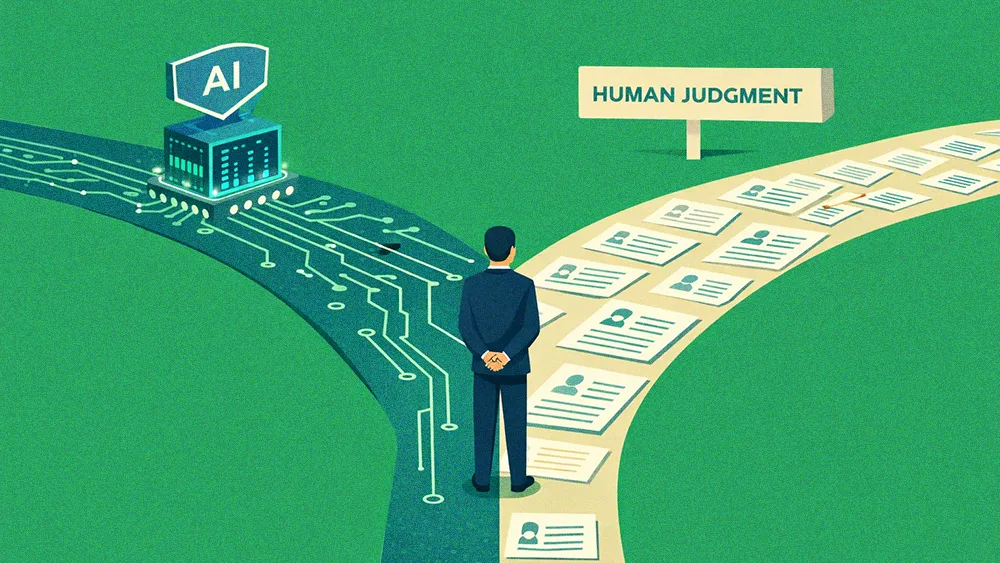
Cognitive creep: Even as AI improves efficiency, Bennett sees one emerging risk that could undermine long-term performance: the erosion of independent thinking. Her concern is that rapid adoption may encourage professionals to outsource too much decision-making to technology. “If we don’t slow down and make sure what we’re learning sticks, we’re going to lose our ability to think critically.”
Think fast: In her view, the skill of rapidly simplifying complex information and responding in real time may become one of the most important competencies HR leaders cultivate over the next several years. “We need to be able to think in the moment when we’re asked a question and don’t have time to sit with ChatGPT, Claude, or Gemini for an hour. We need to retain information and recall it quickly. That’s what I worry might go by the wayside.”
As automation accelerates and the pace of change increases, HR’s role may become less about managing people and more about ensuring people can operate at their best. For Bennett, the future of HR is about ensuring organizations use technology in ways that expand human capability rather than diminish it. “There has to be a good culture in place for that. There has to be trust for that to work. If there’s a good, strong culture and you empower your team to use the tools, they can master them and you can use them as a resource rather than putting your head in the sand and pretending it’s not happening.”
Related articles

TL;DR
AI moves faster than most organizations can adapt, creating confusion around roles, skills, and expectations while increasing anxiety about job security and the pace of change.
Cora Bennett, Founder of CorAlign HR, says companies increasingly rely on HR to translate AI adoption into clear workforce strategy and guide employees through the transition.
She believes organizations should invest in upskilling, empower employees to use AI as a productivity tool, and build a culture of trust that strengthens human judgment and critical thinking.

Cora Bennett
Cora Bennett
Senior HR Leader and Founder
Senior HR Leader and Founder
The world of work is shifting faster than many organizations are built to handle. New AI tools promise efficiency and speed, but they also introduce uncertainty into roles, expectations, and the systems that support them. As companies rush to adapt, leaders are increasingly leaning on HR to restore clarity.
Helping companies minimize the disruption is Cora Bennett, a Senior HR Leader and the Founder of fractional HR consultancy CorAlign HR. As an SHRM-Certified Professional, she has built a career advising leaders in high-stakes, regulated environments. She sees HR increasingly acting as the connective layer between strategy, workforce capability, and operational execution.
“There’s a lot of anxiety building up across most industries. Because of the unknown that AI brings and the extreme speed at which it’s advancing, having a human resources person today is vitally important. The need to manage the complexities is growing,” she says. As automation begins absorbing administrative processes from reporting to payroll, the HR function is shifting away from transactional work and toward something more strategic, ensuring people can operate effectively in an environment where technology, expectations, and skills are evolving simultaneously.
Clearing the AI fog: One of HR’s most immediate responsibilities is helping organizations navigate uncertainty without losing momentum. According to Bennett, executives increasingly see HR as a central hub for interpreting new technology and translating it into operational clarity. “We’re seeing a shift in the way HR is viewed by executives,” Bennett says. “They’re now looking at HR as somebody to help get us through this transition.” She notes that the dynamic mirrors the role HR played during the early days of the COVID-19 pandemic, when organizations relied on the function to consolidate information, communicate policy changes, and guide the workforce through unfamiliar territory.
Someone’s got to do it: HR also remains the function responsible for managing the difficult realities that accompany technological change. “In most cases, HR professionals are the ones charged with performing reductions in force and gathering the information needed to protect the company and transition employees out,” Bennett says. “Nobody wants to be in charge of handling mass layoffs, but there does need to be someone in charge.” Even as AI automates tasks, the human elements of workforce management, like communication, fairness, and compliance, remain firmly in HR’s domain.
Automation is also creating a different kind of challenge surrounding time. As AI eliminates administrative friction, many professionals are finding themselves with more capacity than before. Bennett says the most productive organizations are using that space to expand human capabilities rather than simply accelerating output. “I’m seeing people focus more heavily on developing their soft skills,” she says. “They’re improving how they communicate, building their executive presence, and developing themselves in ways that might not necessarily be tied directly to their function.” The shift reflects a broader change in how careers develop. Instead of remaining at one company for decades, employees are increasingly moving laterally or upward between organizations as they build diverse skill sets. As a result, professional development is becoming less centralized and more continuous.
Ready for what’s next: At the same time, employers are starting to rethink how they approach talent investment. Bennett explains that rather than attempting to contain talent, organizations are increasingly focusing on strengthening workforce readiness, ensuring employees can adapt as roles evolve. “Upskilling is becoming a pivotal force that will shift the entire climate of talent development. Employers are more willing to invest in promising staff, even knowing that it might lead to them leaving for something more engaging or challenging.”
Technology adoption ultimately depends on trust, which can be challenging to build when employees worry that learning AI tools could accelerate their own replacement. Bennett believes HR leaders can address that concern by reframing AI as a productivity multiplier rather than a workforce replacement. “Highlight the benefits of learning to use AI as a tool that assists you in your job,” she advises. “Give employees ownership in learning it and helping the organization figure out how to use it.”
Cognitive creep: Even as AI improves efficiency, Bennett sees one emerging risk that could undermine long-term performance: the erosion of independent thinking. Her concern is that rapid adoption may encourage professionals to outsource too much decision-making to technology. “If we don’t slow down and make sure what we’re learning sticks, we’re going to lose our ability to think critically.”
Think fast: In her view, the skill of rapidly simplifying complex information and responding in real time may become one of the most important competencies HR leaders cultivate over the next several years. “We need to be able to think in the moment when we’re asked a question and don’t have time to sit with ChatGPT, Claude, or Gemini for an hour. We need to retain information and recall it quickly. That’s what I worry might go by the wayside.”
As automation accelerates and the pace of change increases, HR’s role may become less about managing people and more about ensuring people can operate at their best. For Bennett, the future of HR is about ensuring organizations use technology in ways that expand human capability rather than diminish it. “There has to be a good culture in place for that. There has to be trust for that to work. If there’s a good, strong culture and you empower your team to use the tools, they can master them and you can use them as a resource rather than putting your head in the sand and pretending it’s not happening.”