
Targeted AI Deployment Positions HR for High-Impact Decision Making
Key Points
Companies are racing to roll out AI initiatives, but when HR is excluded from key decisions, it can end up causing cultural fallout instead of shaping people strategy.
Vytautė Repčienė, a Senior People and Culture Strategist, says HR faces higher stakes with AI because personnel decisions require judgment and nuance.
She recommends using AI for high-volume, low-risk tasks like recruiting, payroll, and employee inquiries, while keeping feedback, coaching, and workforce decisions firmly human led.
With humans, it's not ones and zeros like in computer science. What will work for one person will not work for another person.

Vytautė Repčienė
Senior People & Culture Strategist
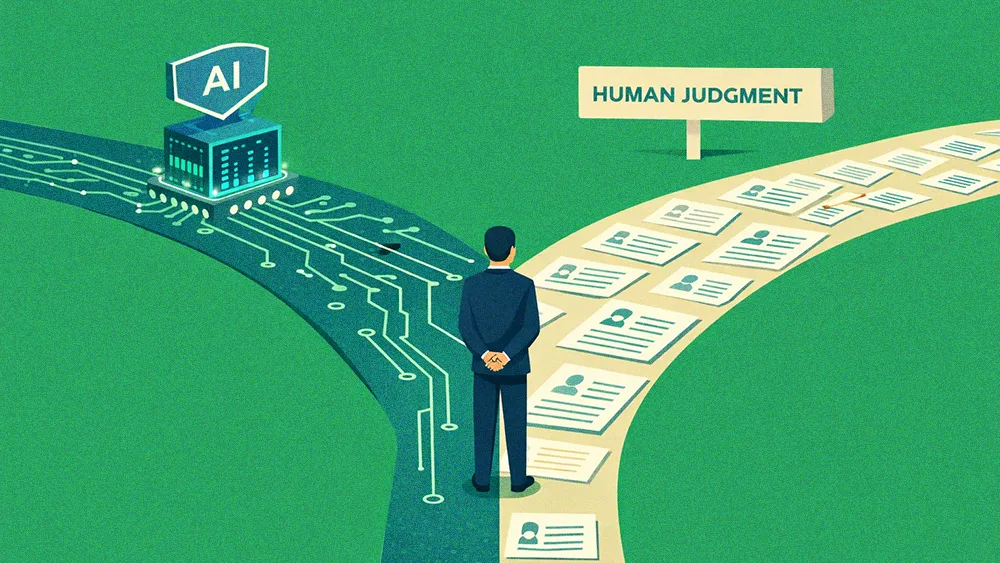
AI adoption is pushing human resources toward an inflection point, forcing leaders to choose what kind of function its HR teams will serve. As companies race to automate, the real risk is strategic sidelining, with HR left cleaning up consequences rather than shaping important people-centric decisions. Thoughtful, selective adoption is what separates a stronger, more influential HR team from one that loses ground in the AI era.
Vytautė Repčienė is a senior People & Culture Strategist who has navigated this tension from the executive front lines. The Cambridge alum and CHRO-trained M&A and Transformation Specialist believes that the rush to automate carries a higher risk in HR than in other fields because the job inherently requires a human touch.
“With humans, it’s not ones and zeros like in computer science. What will work for one person will not work for another person,” she explains. Instead of hasty, far-reaching rollouts, Repčienė advocates for easing into the transition with high-volume, low-risk processes.
Start where it’s safe: As an example of this strategy in practice, Repčienė points to hiring, noting that the use of AI to screen applications is already commonplace. “That’s why so many companies have started with recruitment,” she says. “It makes sense because you get so many resumes.” She says payroll and reporting are also good candidates for automation because of their repetitive, consistent nature.
Triage the volume: Beyond recruitment, payroll, and reporting, she sees another practical opportunity in triaging everyday employee questions. “I’m a big fan of using AI to manage the volume of employee requests or inquiries, like when an employee comes to you with questions about their health insurance. We send this to an internal AI agent and keep the more complex questions that agents cannot answer.”
For Repčienė, the more important question is where AI doesn’t belong. She draws a hard line around HR tasks involving feedback and connection, noting that over-automation in these areas can create significant cultural damage, erode trust, and potentially create a future leadership crisis. People-centric decisions, she says, require a level of nuance that automation can’t replicate.
When automation backfires: To illustrate, Repčienė shares a cautionary tale of an organization mistakenly firing 2,000 workers as part of a mass workforce reduction, only to hire them back later. “This created internal tension for employees worrying the same thing could happen again, and for HR, these situations create a lot of struggle.”
Inadvertent clean-up crew: Such stories, she says, are part of a more widespread problem where HR doesn’t have a seat at the table when important judgement calls, like those surrounding AI, are being made. “HR is sometimes expected to clean up the mess, but we are not involved in avoiding the mess. If we are not at the decision-making table, then AI just becomes another thing we have to fix later.”
In her view, the solution is rooted in dual responsibility. Leaders should have the foresight to bring HR to the table, and HR professionals must be ready to take the seat. She believes HR’s core value lies in the ability to navigate uniquely human nuances in decisions like hiring and coaching. “It’s an internal feeling. Maybe one employee needs more feedback, where another needs data in a table. Decision making on human intervention is where leaders could trust HR more.”
Ultimately, Repčienė asserts that the same technology that presents a challenge to HR is also what can free up its experts for more strategic work. In an era where some of the most lucrative jobs require proving AI’s value through real output, she advises HR pros to proactively experiment. “I have built few AI agents myself. The first one, sure, you do it quite slowly, but then you understand the tool and it’s not as difficult.” She likens the learning curve to candidates adopting digital resumes, which are now so ingrained it’s hard to imagine the old way of doing things. “There was a time when people were handing out physical CVs. Now a PDF is not something extraordinary. You need to be proactive in learning.”
Related articles

TL;DR
Companies are racing to roll out AI initiatives, but when HR is excluded from key decisions, it can end up causing cultural fallout instead of shaping people strategy.
Vytautė Repčienė, a Senior People and Culture Strategist, says HR faces higher stakes with AI because personnel decisions require judgment and nuance.
She recommends using AI for high-volume, low-risk tasks like recruiting, payroll, and employee inquiries, while keeping feedback, coaching, and workforce decisions firmly human led.

Vytautė Repčienė
Senior People & Culture Strategist
Senior People & Culture Strategist
AI adoption is pushing human resources toward an inflection point, forcing leaders to choose what kind of function its HR teams will serve. As companies race to automate, the real risk is strategic sidelining, with HR left cleaning up consequences rather than shaping important people-centric decisions. Thoughtful, selective adoption is what separates a stronger, more influential HR team from one that loses ground in the AI era.
Vytautė Repčienė is a senior People & Culture Strategist who has navigated this tension from the executive front lines. The Cambridge alum and CHRO-trained M&A and Transformation Specialist believes that the rush to automate carries a higher risk in HR than in other fields because the job inherently requires a human touch.
“With humans, it’s not ones and zeros like in computer science. What will work for one person will not work for another person,” she explains. Instead of hasty, far-reaching rollouts, Repčienė advocates for easing into the transition with high-volume, low-risk processes.
Start where it’s safe: As an example of this strategy in practice, Repčienė points to hiring, noting that the use of AI to screen applications is already commonplace. “That’s why so many companies have started with recruitment,” she says. “It makes sense because you get so many resumes.” She says payroll and reporting are also good candidates for automation because of their repetitive, consistent nature.
Triage the volume: Beyond recruitment, payroll, and reporting, she sees another practical opportunity in triaging everyday employee questions. “I’m a big fan of using AI to manage the volume of employee requests or inquiries, like when an employee comes to you with questions about their health insurance. We send this to an internal AI agent and keep the more complex questions that agents cannot answer.”
For Repčienė, the more important question is where AI doesn’t belong. She draws a hard line around HR tasks involving feedback and connection, noting that over-automation in these areas can create significant cultural damage, erode trust, and potentially create a future leadership crisis. People-centric decisions, she says, require a level of nuance that automation can’t replicate.
When automation backfires: To illustrate, Repčienė shares a cautionary tale of an organization mistakenly firing 2,000 workers as part of a mass workforce reduction, only to hire them back later. “This created internal tension for employees worrying the same thing could happen again, and for HR, these situations create a lot of struggle.”
Inadvertent clean-up crew: Such stories, she says, are part of a more widespread problem where HR doesn’t have a seat at the table when important judgement calls, like those surrounding AI, are being made. “HR is sometimes expected to clean up the mess, but we are not involved in avoiding the mess. If we are not at the decision-making table, then AI just becomes another thing we have to fix later.”
In her view, the solution is rooted in dual responsibility. Leaders should have the foresight to bring HR to the table, and HR professionals must be ready to take the seat. She believes HR’s core value lies in the ability to navigate uniquely human nuances in decisions like hiring and coaching. “It’s an internal feeling. Maybe one employee needs more feedback, where another needs data in a table. Decision making on human intervention is where leaders could trust HR more.”
Ultimately, Repčienė asserts that the same technology that presents a challenge to HR is also what can free up its experts for more strategic work. In an era where some of the most lucrative jobs require proving AI’s value through real output, she advises HR pros to proactively experiment. “I have built few AI agents myself. The first one, sure, you do it quite slowly, but then you understand the tool and it’s not as difficult.” She likens the learning curve to candidates adopting digital resumes, which are now so ingrained it’s hard to imagine the old way of doing things. “There was a time when people were handing out physical CVs. Now a PDF is not something extraordinary. You need to be proactive in learning.”