
Global People Teams Earn AI Cooperation By Delivering On Everyday Commitments First
Psychological safety is the most important thing in any company. When your employees trust the system and trust their HR, that company is stable.
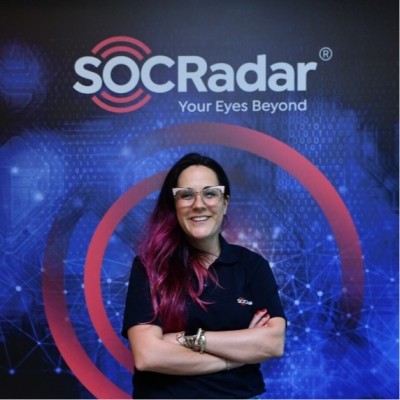
Andjela Petrovic
Head of People
SOCRadar
Companies moving to full AI adoption are asking employees to pick up new skills quickly and to take on oversight of software handling work they used to do themselves. Whether employees agree depends on the record the company has built with them already. That record comes from years of ordinary follow-through. HR leaders running adoption programs this year are finding out how much of it they have.
Andjela Petrovic is Head of People at SOCRadar, a cybersecurity company that provides threat intelligence to enterprises worldwide. She leads the full people function, covering recruitment, onboarding, employee experience, compensation, and promotion cycles. Petrovic started working in HR 12 years ago as a recruiter, and then, after 6 years, she took responsibility for leading the entire HR function. She describes SOCRadar as running at full AI adoption across every team, where even individual contributors are expected to manage AI agents as well.
“Psychological safety is the most important thing in any company. When your employees trust the system and trust their HR, that company is stable,” Petrovic says. Stability of that kind is what she draws on when the company asks employees to take on something new.
Small promises compound
Employees at SOCRadar take on the extra work because Petrovic’s team has a record of doing what it says it will do. The promises are small ones, and the team meets them every time, which is what gives the bigger claims their weight. “If I say I will deliver this to you within the next two days, that will be delivered within the next two days,” she says.
Employees at other companies are hearing something different. BambooHR’s State of the Workforce 2026 report found that 57% of leaders would fire an employee who refuses to use AI. The report calls the accumulated strain dignity debt, the cost of treating people as a means to productivity. LinkedIn keeps stories like that in front of anyone working in tech, whatever their own employer is doing. Petrovic gets the same result without any of that pressure behind it. “If we tell them there are no layoffs, that means there are no layoffs, and they trust it,” she adds.
Teaching the limits
Tasks that took three hours at SOCRadar now take three minutes, and Petrovic’s team has moved its own operational work onto AI. An OKR framework the company has spent the past year and a half putting in place ties the time saved back to business goals. The team’s reporting runs partly on it as well, including headcount planning, and the HR system they use has it built in. “AI does a great job with outreach and nurturing in recruitment,” she observes.
The boundaries around all of it get set outside the company. Petrovic’s team works under the EU AI Act, the European regulation governing how companies build and use AI systems, and she reads it as extending existing data protection requirements into AI. Employee records sit inside that scope, so her team keeps HR data out of any tool the company has not vetted. “The EU AI Act is pretty rigid, and it combines GDPR into AI as well. Because of that, we have a massive project in the company right now, educating our people on what they can and cannot do with AI and how they can use the internal agents,” she says.
SOCRadar hires across 33 sites covering APAC, EMEA, LATAM, and North America, and each region carries its own data protection rules, so guidance written for one market gets checked against the others before it reaches employees. “We are developing our own AI agents internally and trying to rely on third-party tools as little as possible, primarily because of governance,” Petrovic notes. The agents her team builds handle onboarding reminders and schedule the meetings a new joiner needs in the first month, which keeps personal and salary information inside the company.
Learning on the clock
SOCRadar provides each employee with a discretionary learning budget to spend on anything related to their role, without guidance on what to choose. “Our people have the freedom to use their educational budget for whatever they want, as long as it is related to their role. For the last six to eight months, most employees are using that budget for AI skills,” Petrovic says. The skills themselves are changing, with employees building capabilities previous generations never needed, including running a workflow of agents.
Petrovic expects that demand to keep climbing as more work moves to agents. Employees who start building now will be able to follow the changes and either hold onto their jobs or move easily to new ones, though she does not treat that as something they should work out alone. “Our main assignment as an HR community is to secure our people and guide them, almost like parenting. We guide them on how to think about these changes so they are not scared, because a lot of fear leads to burnout,” she says.
Related articles



TL;DR
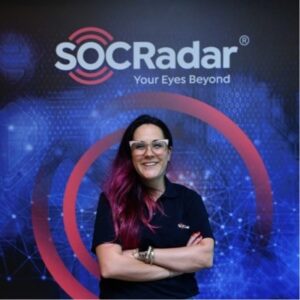
Andjela Petrovic
SOCRadar
Head of People
Head of People
Companies moving to full AI adoption are asking employees to pick up new skills quickly and to take on oversight of software handling work they used to do themselves. Whether employees agree depends on the record the company has built with them already. That record comes from years of ordinary follow-through. HR leaders running adoption programs this year are finding out how much of it they have.
Andjela Petrovic is Head of People at SOCRadar, a cybersecurity company that provides threat intelligence to enterprises worldwide. She leads the full people function, covering recruitment, onboarding, employee experience, compensation, and promotion cycles. Petrovic started working in HR 12 years ago as a recruiter, and then, after 6 years, she took responsibility for leading the entire HR function. She describes SOCRadar as running at full AI adoption across every team, where even individual contributors are expected to manage AI agents as well.
“Psychological safety is the most important thing in any company. When your employees trust the system and trust their HR, that company is stable,” Petrovic says. Stability of that kind is what she draws on when the company asks employees to take on something new.
Small promises compound
Employees at SOCRadar take on the extra work because Petrovic’s team has a record of doing what it says it will do. The promises are small ones, and the team meets them every time, which is what gives the bigger claims their weight. “If I say I will deliver this to you within the next two days, that will be delivered within the next two days,” she says.
Employees at other companies are hearing something different. BambooHR’s State of the Workforce 2026 report found that 57% of leaders would fire an employee who refuses to use AI. The report calls the accumulated strain dignity debt, the cost of treating people as a means to productivity. LinkedIn keeps stories like that in front of anyone working in tech, whatever their own employer is doing. Petrovic gets the same result without any of that pressure behind it. “If we tell them there are no layoffs, that means there are no layoffs, and they trust it,” she adds.
Teaching the limits
Tasks that took three hours at SOCRadar now take three minutes, and Petrovic’s team has moved its own operational work onto AI. An OKR framework the company has spent the past year and a half putting in place ties the time saved back to business goals. The team’s reporting runs partly on it as well, including headcount planning, and the HR system they use has it built in. “AI does a great job with outreach and nurturing in recruitment,” she observes.
The boundaries around all of it get set outside the company. Petrovic’s team works under the EU AI Act, the European regulation governing how companies build and use AI systems, and she reads it as extending existing data protection requirements into AI. Employee records sit inside that scope, so her team keeps HR data out of any tool the company has not vetted. “The EU AI Act is pretty rigid, and it combines GDPR into AI as well. Because of that, we have a massive project in the company right now, educating our people on what they can and cannot do with AI and how they can use the internal agents,” she says.
SOCRadar hires across 33 sites covering APAC, EMEA, LATAM, and North America, and each region carries its own data protection rules, so guidance written for one market gets checked against the others before it reaches employees. “We are developing our own AI agents internally and trying to rely on third-party tools as little as possible, primarily because of governance,” Petrovic notes. The agents her team builds handle onboarding reminders and schedule the meetings a new joiner needs in the first month, which keeps personal and salary information inside the company.
Learning on the clock
SOCRadar provides each employee with a discretionary learning budget to spend on anything related to their role, without guidance on what to choose. “Our people have the freedom to use their educational budget for whatever they want, as long as it is related to their role. For the last six to eight months, most employees are using that budget for AI skills,” Petrovic says. The skills themselves are changing, with employees building capabilities previous generations never needed, including running a workflow of agents.
Petrovic expects that demand to keep climbing as more work moves to agents. Employees who start building now will be able to follow the changes and either hold onto their jobs or move easily to new ones, though she does not treat that as something they should work out alone. “Our main assignment as an HR community is to secure our people and guide them, almost like parenting. We guide them on how to think about these changes so they are not scared, because a lot of fear leads to burnout,” she says.