
The Invisible Intervention: How Continuous Communication Replaces The Tough Conversation
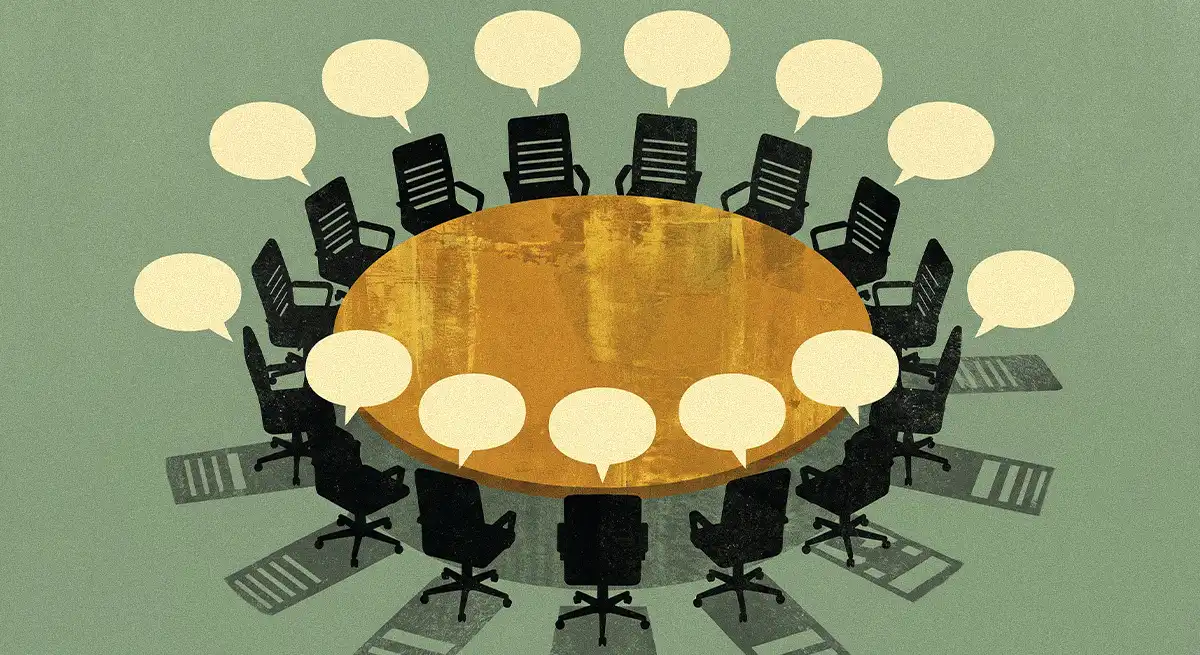
If I'm not actively seeking out those conversations, then the issue may lie with my leadership, not necessarily with my employee.

Jeffrey Mitchell
HR Professional
Manufacturing Industry
The views and opinions expressed are those of Jeffrey Mitchell and do not represent the official policy or position of any organization.
Many managers wait until a performance problem becomes impossible to ignore before addressing it. What could have been a quick conversation turns into a formal discussion loaded with tension and frustration on both sides.
Jeffrey Mitchell, an HR Professional with more than 20 years of experience in manufacturing, has spent much of his career helping organizations navigate employee relations in unionized environments. He holds a JD and has supported workforces ranging from 400 to more than 1,100 employees. Through that experience, he has found that difficult conversations are often the result of too few conversations happening earlier.
“If I’m not actively seeking out those conversations, then the issue may lie with my leadership, not necessarily with my employee,” Mitchell says. His approach swaps the formal performance review for an ongoing rhythm of low-stakes contact, where small moments of candor accumulate into a reserve that both manager and employee can draw on. By the time a problem surfaces, the two have already built the trust needed to work through it.
Smaller conversations, fewer surprises
Mitchell believes feedback works best as a regular part of everyday interaction, well ahead of any scheduled review. A quick conversation during a shift change or a walk through the workplace can reveal issues long before they affect performance. “You don’t have to be brutal in the critique, but you do have to be open and transparent to help the individual,” Mitchell says. Those informal conversations create room for that honesty to happen in the moment, without the weight of a formal review.
They also give employees space to raise obstacles that might otherwise stay hidden. Process bottlenecks and everyday frustrations tend to come up more readily in a casual conversation than in a scheduled meeting. Leaders who make those check-ins a regular habit are more likely to spot problems early, while employees gain confidence that concerns will be heard before they grow into bigger issues.
Removing friction early
Regular conversations let employees flag what is slowing them down. In many cases the friction lives in the system itself, like a missing resource or an unclear process the manager can remove. “What can I do for you? How can I serve you so that you can be better?” Mitchell says. Those moments tend to catch obstacles early, before they harden into performance concerns.
The value of that exchange runs both ways. Employees gain support that helps them stay effective in their roles, while managers get a clearer read on the conditions shaping performance day to day. What might otherwise feel like feedback or correction starts to resemble joint problem-solving, with both sides working from the same set of facts.
That visibility matters most when issues are still small. Employees are often closest to the friction points that slow work down, but those signals can get lost in environments where communication only escalates when something goes wrong. The BambooHR State of the Workforce 2026 report highlights what happens when that distance grows, describing a compounding “dignity debt” that builds when organizations prioritize output over understanding the people behind it. It also finds that many leaders acknowledge leaving known operational issues unresolved due to cost or disruption, even as employees continue to rank transparency as one of the most valued leadership qualities.
Mitchell’s approach treats those early signals as the point where action is most effective, before frustration or inefficiency becomes normalized. Performance management then turns into the steady removal of friction while it is still manageable.
Safe to stumble
When trust is in place, missing a target stops being something to dread. “When I miss my performance targets, I can come and seek help to improve,” Mitchell says. That openness depends on psychological safety, where people can admit a problem without fear of being punished, and it builds slowly through small everyday exchanges.
It also means treating employees as individuals, because the same approach will not motivate everyone. “What are the employee’s goals? Do they want to move up, or do they just want a good work-life balance?” he adds. Knowing the answer gives a manager something to work with. Helping someone move toward what they want is what builds the trust to have the harder conversations later.
Robots on the roster
Early in his manufacturing career, automation arrived to the same alarm that meets AI today. “When robots were introduced into assembly line operations, the concern was those workers’ jobs were going to be taken away and replaced by complete automation. That hasn’t happened. Efficiencies were gained, but the workers are still there, and the type of work just changed,” Mitchell says. The panic faded once the work proved durable. He expects AI to follow the same path, valuable because it frees people for the parts of the job that still need a human, and because a team often sees what a system cannot.
One idea runs through every part of his method. Trust, built in small conversations and extended to both people and tools, is what lets a team hold more than any one person could. Spreading the work that way eases the load and brings in judgment a single leader would never reach alone. “When I allow myself the freedom to trust other people, that in turn creates trust within the team so that they are going to want to participate as well,” Mitchell says.
Related articles





TL;DR
.

Jeffrey Mitchell
Manufacturing Industry
HR Professional
HR Professional
The views and opinions expressed are those of Jeffrey Mitchell and do not represent the official policy or position of any organization.
Many managers wait until a performance problem becomes impossible to ignore before addressing it. What could have been a quick conversation turns into a formal discussion loaded with tension and frustration on both sides.
Jeffrey Mitchell, an HR Professional with more than 20 years of experience in manufacturing, has spent much of his career helping organizations navigate employee relations in unionized environments. He holds a JD and has supported workforces ranging from 400 to more than 1,100 employees. Through that experience, he has found that difficult conversations are often the result of too few conversations happening earlier.
“If I’m not actively seeking out those conversations, then the issue may lie with my leadership, not necessarily with my employee,” Mitchell says. His approach swaps the formal performance review for an ongoing rhythm of low-stakes contact, where small moments of candor accumulate into a reserve that both manager and employee can draw on. By the time a problem surfaces, the two have already built the trust needed to work through it.
Smaller conversations, fewer surprises
Mitchell believes feedback works best as a regular part of everyday interaction, well ahead of any scheduled review. A quick conversation during a shift change or a walk through the workplace can reveal issues long before they affect performance. “You don’t have to be brutal in the critique, but you do have to be open and transparent to help the individual,” Mitchell says. Those informal conversations create room for that honesty to happen in the moment, without the weight of a formal review.
They also give employees space to raise obstacles that might otherwise stay hidden. Process bottlenecks and everyday frustrations tend to come up more readily in a casual conversation than in a scheduled meeting. Leaders who make those check-ins a regular habit are more likely to spot problems early, while employees gain confidence that concerns will be heard before they grow into bigger issues.
Removing friction early
Regular conversations let employees flag what is slowing them down. In many cases the friction lives in the system itself, like a missing resource or an unclear process the manager can remove. “What can I do for you? How can I serve you so that you can be better?” Mitchell says. Those moments tend to catch obstacles early, before they harden into performance concerns.
The value of that exchange runs both ways. Employees gain support that helps them stay effective in their roles, while managers get a clearer read on the conditions shaping performance day to day. What might otherwise feel like feedback or correction starts to resemble joint problem-solving, with both sides working from the same set of facts.
That visibility matters most when issues are still small. Employees are often closest to the friction points that slow work down, but those signals can get lost in environments where communication only escalates when something goes wrong. The BambooHR State of the Workforce 2026 report highlights what happens when that distance grows, describing a compounding “dignity debt” that builds when organizations prioritize output over understanding the people behind it. It also finds that many leaders acknowledge leaving known operational issues unresolved due to cost or disruption, even as employees continue to rank transparency as one of the most valued leadership qualities.
Mitchell’s approach treats those early signals as the point where action is most effective, before frustration or inefficiency becomes normalized. Performance management then turns into the steady removal of friction while it is still manageable.
Safe to stumble
When trust is in place, missing a target stops being something to dread. “When I miss my performance targets, I can come and seek help to improve,” Mitchell says. That openness depends on psychological safety, where people can admit a problem without fear of being punished, and it builds slowly through small everyday exchanges.
It also means treating employees as individuals, because the same approach will not motivate everyone. “What are the employee’s goals? Do they want to move up, or do they just want a good work-life balance?” he adds. Knowing the answer gives a manager something to work with. Helping someone move toward what they want is what builds the trust to have the harder conversations later.
Robots on the roster
Early in his manufacturing career, automation arrived to the same alarm that meets AI today. “When robots were introduced into assembly line operations, the concern was those workers’ jobs were going to be taken away and replaced by complete automation. That hasn’t happened. Efficiencies were gained, but the workers are still there, and the type of work just changed,” Mitchell says. The panic faded once the work proved durable. He expects AI to follow the same path, valuable because it frees people for the parts of the job that still need a human, and because a team often sees what a system cannot.
One idea runs through every part of his method. Trust, built in small conversations and extended to both people and tools, is what lets a team hold more than any one person could. Spreading the work that way eases the load and brings in judgment a single leader would never reach alone. “When I allow myself the freedom to trust other people, that in turn creates trust within the team so that they are going to want to participate as well,” Mitchell says.