
How One Airline Industry Vet Elevated NPS By Prioritizing Employee Recognition

When you set high expectations for your people and give them the freedom to go out and execute, they surprise you.
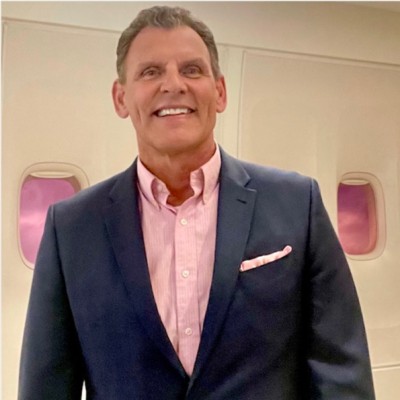
John Slater
Former Senior Vice President of Inflight Services and Catering Operations
United Airlines
When thousands of employees operate independently across multiple global bases, brand-defining customer experience can’t be scripted or controlled from above. It has to be built through pride, local leadership, visible recognition, and the kind of trust that gives frontline workers the freedom to represent the brand on their own terms. This dynamic makes the aviation industry one of the purest tests of whether an organization’s culture actually works at the point of delivery.
As the former Senior Vice President of Inflight Services and Catering Operations at United Airlines, John Slater oversaw 28,000 flight attendants who served as representatives of the brand from takeoff until touchdown. His 43-year career in aviation began as a flight attendant and included leadership of United’s O’Hare hub, where he managed 5,000 employees and delivered the hub’s strongest operational performance on record. His perspective on employee experience is shaped entirely by the challenge of leading a self-managed, internationally distributed workforce where the brand lives or dies in moments no leader can directly observe.
“Once you close the cabin door, flight attendants are on their own. Getting them to believe in the product, take pride in their jobs, and deliver the service you’ve promised to customers is accomplished by letting know how important their role is.” He asserts that successful distributed leadership requires moving away from a command-and-control approach and toward a servant-leadership model where the primary job of the executive is to clear the path for the frontline.
The 30,000 foot trust fall
In most industries, brands try to control every customer touchpoint. Aviation doesn’t have that option. Slater’s approach was built on the premise that if you can’t be there when the moment happens, you have to create the conditions for the right behavior to happen without you. “When you set high expectations for your people and give them the freedom to go out and execute, they surprise you,” he says. “In a command-and-control environment, people will do everything you ask while you’re watching. The question is what they’re doing when you’re not watching, and in our scenario, we’re very seldom watching.”
In Slater’s view, that trust has to be mutual and visible. Employees need to know that leadership trusts them, and they need the latitude to act outside the rulebook when the situation calls for it. “We told our employees: if you color outside the lines and you have a good reason, great. If you won that customer over by doing something that’s not in the rule book, you’re not going to get chastised for it,” he shares. “Give them the freedom to use the personality we hired them for to actually drive the brand experience.”
Culture is local
Slater is quick to emphasize that the C-suite sets the tone, but culture is forged in the daily interactions between employees and the leaders they know by name. “Culture is very localized. Each of our bases had its own personality. New York was big and fast paced, Denver was more casual, and the West coast bases had their own flavor. But the common thread was that leadership at a local level had to be respected and credible. It had to feel like home for employees, no matter what the local culture was.”
Senior leadership matters for setting direction and earning credibility at scale. But for a frontline employee, he says, the relationship that defines their experience is with the person who picks up the phone, listens to their feedback, and follows through on promises. “What they really think about in terms of leadership are the people they interface with day to day—a servant leader. If you don’t have that, you’ll never get anyone in frontline to carry out the mission.” He set a personal standard that any employee in the company could reach him, and he would respond within 24 hours. He required the same of his leadership team. “I told them they wouldn’t be in trouble for making a wrong decision, but they were accountable for being responsive to our team. If I got a saying someone reached out and a week later hadn’t heard back, I’m going to ask why.”
Recognition drives desired behavior
In his tenure at United, Slater found that the most powerful lever for driving discretionary effort at scale was public recognition, specifically letting customers speak for the employees who served them. The company communicated with flight attendants twice weekly. Wednesday was for operational items like policy updates and procedural changes. Friday was about them. Customer letters were excerpted, with the employee’s photo and the specific behavior the customer praised. The recognition went out to all 28,000 peers. “When we started publicly recognizing our workforce and letting them hear the voice of the customer every week, we saw an immediate step increase in NPS,” Slater recalls.
Interestingly, the employees who were recognized almost never expected it. “The people that deserve the most recognition never thought they were doing anything special, but the people around them noticed, and they wanted to see their face on that newsletter, too. They’d take it and send it to their families. It built pride within the workforce and created a groundswell you could continuously reinforce.”
Customer feedback as a tool, not a threat
While analyzing customer feedback is crucial, Slater says rolling out in-flight surveys created an immediate trust challenge. Employees assumed the system was a surveillance tool that would be used to place blame for any mishaps. “The immediate reaction was, ‘This is a gotcha tool,'” he says. “So we had to turn that narrative around. This is a tool for process improvement. We can hear directly from customers, address issues in a non-punitive way, and on top of that, create a reward system that recognizes when customers give good feedback. The tool becomes a mechanism for recognition, not something they should fear.”
That reframing required consistency over time, showing employees that the data was used to fix broken processes, not to punish individuals. Once the shift took hold, the feedback system became one of the strongest drivers of both operational improvement and employee engagement.
Start by removing the excuses
Slater is equally emphatic that before asking employees to deliver a consistently great experience, leadership must eliminate the obstacles that give less-passionate employees a reason not to try. “If they’re not prepared properly or given the right tools, it’s easy for people to say, ‘I can’t win because you haven’t given me what I need.’ You’re going to fail sometimes, so you have to be willing to admit when you make mistakes.” He believes the leaders who succeed at scale are the ones who build the conditions where frontline employees can deliver excellence on their own terms, without needing permission or a script. He draws a parallel to luxury brands, which command a premium for their ability to deliver a predictably fantastic experience every time. “We know what we’re buying, and we’re buying consistency. That’s the same thing we’re trying to deliver on board. You have to give employees consistency in the tools they have to deliver the product.”
Related articles





TL;DR
Large, distributed workforces often default to a command-and-control environment where employees only perform while being watched, but aviation requires an alternate approach as leadership is absent once the cabin door closes.
John Slater, former Senior Vice President of Inflight Services and Catering Operations at United Airlines, explains how a lack of trust or pride can lead to inconsistent service and frontline employees who feel unheard by distant executives.
He advocates for replacing oversight with a culture of consistent support, positive recognition, and mutual trust that allows employees to “color outside the lines” for the customer.

John Slater
United Airlines
Former Senior Vice President of Inflight Services and Catering Operations
Former Senior Vice President of Inflight Services and Catering Operations
When thousands of employees operate independently across multiple global bases, brand-defining customer experience can’t be scripted or controlled from above. It has to be built through pride, local leadership, visible recognition, and the kind of trust that gives frontline workers the freedom to represent the brand on their own terms. This dynamic makes the aviation industry one of the purest tests of whether an organization’s culture actually works at the point of delivery.
As the former Senior Vice President of Inflight Services and Catering Operations at United Airlines, John Slater oversaw 28,000 flight attendants who served as representatives of the brand from takeoff until touchdown. His 43-year career in aviation began as a flight attendant and included leadership of United’s O’Hare hub, where he managed 5,000 employees and delivered the hub’s strongest operational performance on record. His perspective on employee experience is shaped entirely by the challenge of leading a self-managed, internationally distributed workforce where the brand lives or dies in moments no leader can directly observe.
“Once you close the cabin door, flight attendants are on their own. Getting them to believe in the product, take pride in their jobs, and deliver the service you’ve promised to customers is accomplished by letting know how important their role is.” He asserts that successful distributed leadership requires moving away from a command-and-control approach and toward a servant-leadership model where the primary job of the executive is to clear the path for the frontline.
The 30,000 foot trust fall
In most industries, brands try to control every customer touchpoint. Aviation doesn’t have that option. Slater’s approach was built on the premise that if you can’t be there when the moment happens, you have to create the conditions for the right behavior to happen without you. “When you set high expectations for your people and give them the freedom to go out and execute, they surprise you,” he says. “In a command-and-control environment, people will do everything you ask while you’re watching. The question is what they’re doing when you’re not watching, and in our scenario, we’re very seldom watching.”
In Slater’s view, that trust has to be mutual and visible. Employees need to know that leadership trusts them, and they need the latitude to act outside the rulebook when the situation calls for it. “We told our employees: if you color outside the lines and you have a good reason, great. If you won that customer over by doing something that’s not in the rule book, you’re not going to get chastised for it,” he shares. “Give them the freedom to use the personality we hired them for to actually drive the brand experience.”
Culture is local
Slater is quick to emphasize that the C-suite sets the tone, but culture is forged in the daily interactions between employees and the leaders they know by name. “Culture is very localized. Each of our bases had its own personality. New York was big and fast paced, Denver was more casual, and the West coast bases had their own flavor. But the common thread was that leadership at a local level had to be respected and credible. It had to feel like home for employees, no matter what the local culture was.”
Senior leadership matters for setting direction and earning credibility at scale. But for a frontline employee, he says, the relationship that defines their experience is with the person who picks up the phone, listens to their feedback, and follows through on promises. “What they really think about in terms of leadership are the people they interface with day to day—a servant leader. If you don’t have that, you’ll never get anyone in frontline to carry out the mission.” He set a personal standard that any employee in the company could reach him, and he would respond within 24 hours. He required the same of his leadership team. “I told them they wouldn’t be in trouble for making a wrong decision, but they were accountable for being responsive to our team. If I got a saying someone reached out and a week later hadn’t heard back, I’m going to ask why.”
Recognition drives desired behavior
In his tenure at United, Slater found that the most powerful lever for driving discretionary effort at scale was public recognition, specifically letting customers speak for the employees who served them. The company communicated with flight attendants twice weekly. Wednesday was for operational items like policy updates and procedural changes. Friday was about them. Customer letters were excerpted, with the employee’s photo and the specific behavior the customer praised. The recognition went out to all 28,000 peers. “When we started publicly recognizing our workforce and letting them hear the voice of the customer every week, we saw an immediate step increase in NPS,” Slater recalls.
Interestingly, the employees who were recognized almost never expected it. “The people that deserve the most recognition never thought they were doing anything special, but the people around them noticed, and they wanted to see their face on that newsletter, too. They’d take it and send it to their families. It built pride within the workforce and created a groundswell you could continuously reinforce.”
Customer feedback as a tool, not a threat
While analyzing customer feedback is crucial, Slater says rolling out in-flight surveys created an immediate trust challenge. Employees assumed the system was a surveillance tool that would be used to place blame for any mishaps. “The immediate reaction was, ‘This is a gotcha tool,'” he says. “So we had to turn that narrative around. This is a tool for process improvement. We can hear directly from customers, address issues in a non-punitive way, and on top of that, create a reward system that recognizes when customers give good feedback. The tool becomes a mechanism for recognition, not something they should fear.”
That reframing required consistency over time, showing employees that the data was used to fix broken processes, not to punish individuals. Once the shift took hold, the feedback system became one of the strongest drivers of both operational improvement and employee engagement.
Start by removing the excuses
Slater is equally emphatic that before asking employees to deliver a consistently great experience, leadership must eliminate the obstacles that give less-passionate employees a reason not to try. “If they’re not prepared properly or given the right tools, it’s easy for people to say, ‘I can’t win because you haven’t given me what I need.’ You’re going to fail sometimes, so you have to be willing to admit when you make mistakes.” He believes the leaders who succeed at scale are the ones who build the conditions where frontline employees can deliver excellence on their own terms, without needing permission or a script. He draws a parallel to luxury brands, which command a premium for their ability to deliver a predictably fantastic experience every time. “We know what we’re buying, and we’re buying consistency. That’s the same thing we’re trying to deliver on board. You have to give employees consistency in the tools they have to deliver the product.”