
AI Has Become The Layoff Scapegoat. In Reality, Leaders Need Better Workforce Planning.
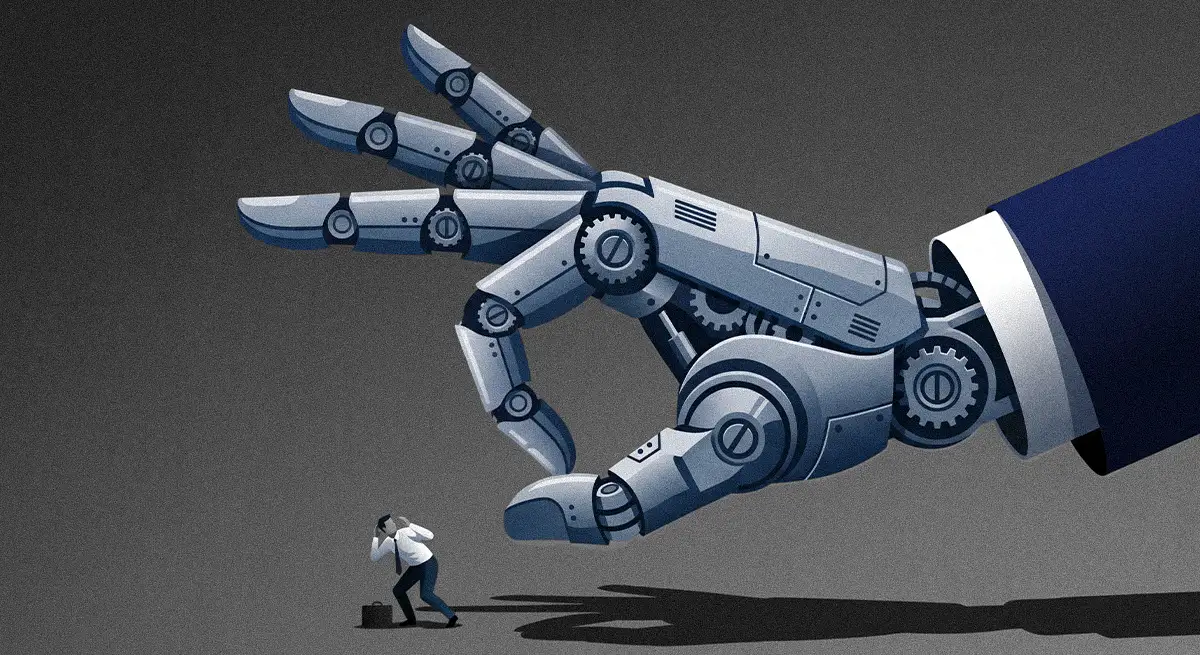
Layoffs aren't the problem. It's the hiring rate. Finding a new job if you are laid off is really, really hard. Over 25% of unemployed people today have been unemployed for over six months.

Stephen Kates
Financial Analyst
Bankrate
The loudest AI layoff announcements of the past year share a pattern. Companies tripled headcount during a boom, watched their stock price collapse, and then cut staff while pointing to AI as the reason. The narrative is tidy, but the data does not support it. Only about 3.5% of announced job cuts since 2023 actually list AI as the cause. The rest is air cover for ordinary business problems that existed long before generative AI entered the conversation.
Stephen Kates is a CFP and Financial Analyst at Bankrate, where he covers economic, market, and industry trends. He is also Founder of Clocktower Financial Consulting. His career spans over 15 years in wealth management and fintech, including advisory roles at Fidelity Investments and TIAA. Kates argues the AI layoff story is distracting from a harder labor market problem: workers who lose jobs are struggling to get back in.
“Layoffs aren’t the problem. It’s the hiring rate. Finding a new job if you are laid off is really, really hard. Over 25% of unemployed people today have been unemployed for over six months,” says Kates.
Block is the poster child for AI washing
Kates points to Block as the sharpest example of companies using AI to frame layoffs that have nothing to do with AI. “They massively overhired. They tripled the size of their company through about 2024. Their stock price is down 80% from the peak,” Kates says. “They cannot support 12,000 employees for a business that is not performing.” He notes that former employees have publicly questioned management’s credibility, with one viral LinkedIn post citing loss of confidence in leadership rather than displacement by AI.
Kates sees similar dynamics at Amazon, Microsoft, and Salesforce, though he notes those companies also have routine annual layoff cycles. “They overhired throughout 2022 and 2023. They are rightsizing for what needs to be a leaner operation given how much they are spending on infrastructure.”
The slower crisis underneath
The employment effect of AI is real, Kates argues, but it shows up as companies hiring fewer people, not as entire teams being replaced overnight. “Instead of hiring five software developers, maybe they’re hiring one,” Kates says. “The employment impact is real, but it is developing slowly. We’re not seeing entire working groups immediately laid off. The liability for companies is simply too great at this stage.”
College graduates face unusually high unemployment, with rates equal to or higher than the national average. Kates draws a direct parallel to 2009. “I graduated in 2009. The job I found at Fidelity, I sat next to a man with 20 years of money management experience who lost all his clients. We were doing the same job, resetting PINs over the phone.” He sees a similar displacement pattern forming where workers take whatever job they can get, not the job they trained for.
Employee trust is already gone
For HR leaders, the downstream effect is a workforce that has already stopped believing employers will protect them. “Employee trust, what little there is left, is gone,” Kates says. Younger workers especially are pushing away from the idea that large company careers are viable long term.
“The message I hear from a lot of people is that I have to create other income streams for myself.” Even employees with no evidence their job is at risk carry persistent anxiety, driving a surge in business creation and side income. The same tools reshaping hiring are lowering the barrier for individual entrepreneurship.
What AI cannot replace
Kates, a former financial adviser, grounds his argument about AI’s limits in relational work, the category where human judgment, accountability, and emotional presence still matter most.
“AI can give you all the knowledge in the world, but it cannot execute for you,” Kates says. “It cannot keep you from selling out of the market when it goes down. It cannot hold your hand when your spouse dies. AI will never be able to provide the kind of relational benefit that a human can.” He extends this beyond financial services to sales, healthcare, and any role where trust and follow-through determine outcomes.
The labor market is functioning, Kates notes, and the economy is not heading toward a 2009-style collapse. But the gap between how the economy performs on paper and how workers experience it is wide. Consumer sentiment is terrible. Inflation compounds the pressure. And a historically low hiring rate means losing a job today carries far more risk than it did two years ago. “I empathize with anybody who has been laid off,” Kates says. “Those personal experiences don’t necessarily reflect the broader economy. But you can’t separate the two.”
Related articles


TL;DR

Stephen Kates
Bankrate
Financial Analyst
Financial Analyst
The loudest AI layoff announcements of the past year share a pattern. Companies tripled headcount during a boom, watched their stock price collapse, and then cut staff while pointing to AI as the reason. The narrative is tidy, but the data does not support it. Only about 3.5% of announced job cuts since 2023 actually list AI as the cause. The rest is air cover for ordinary business problems that existed long before generative AI entered the conversation.
Stephen Kates is a CFP and Financial Analyst at Bankrate, where he covers economic, market, and industry trends. He is also Founder of Clocktower Financial Consulting. His career spans over 15 years in wealth management and fintech, including advisory roles at Fidelity Investments and TIAA. Kates argues the AI layoff story is distracting from a harder labor market problem: workers who lose jobs are struggling to get back in.
“Layoffs aren’t the problem. It’s the hiring rate. Finding a new job if you are laid off is really, really hard. Over 25% of unemployed people today have been unemployed for over six months,” says Kates.
Block is the poster child for AI washing
Kates points to Block as the sharpest example of companies using AI to frame layoffs that have nothing to do with AI. “They massively overhired. They tripled the size of their company through about 2024. Their stock price is down 80% from the peak,” Kates says. “They cannot support 12,000 employees for a business that is not performing.” He notes that former employees have publicly questioned management’s credibility, with one viral LinkedIn post citing loss of confidence in leadership rather than displacement by AI.
Kates sees similar dynamics at Amazon, Microsoft, and Salesforce, though he notes those companies also have routine annual layoff cycles. “They overhired throughout 2022 and 2023. They are rightsizing for what needs to be a leaner operation given how much they are spending on infrastructure.”
The slower crisis underneath
The employment effect of AI is real, Kates argues, but it shows up as companies hiring fewer people, not as entire teams being replaced overnight. “Instead of hiring five software developers, maybe they’re hiring one,” Kates says. “The employment impact is real, but it is developing slowly. We’re not seeing entire working groups immediately laid off. The liability for companies is simply too great at this stage.”
College graduates face unusually high unemployment, with rates equal to or higher than the national average. Kates draws a direct parallel to 2009. “I graduated in 2009. The job I found at Fidelity, I sat next to a man with 20 years of money management experience who lost all his clients. We were doing the same job, resetting PINs over the phone.” He sees a similar displacement pattern forming where workers take whatever job they can get, not the job they trained for.
Employee trust is already gone
For HR leaders, the downstream effect is a workforce that has already stopped believing employers will protect them. “Employee trust, what little there is left, is gone,” Kates says. Younger workers especially are pushing away from the idea that large company careers are viable long term.
“The message I hear from a lot of people is that I have to create other income streams for myself.” Even employees with no evidence their job is at risk carry persistent anxiety, driving a surge in business creation and side income. The same tools reshaping hiring are lowering the barrier for individual entrepreneurship.
What AI cannot replace
Kates, a former financial adviser, grounds his argument about AI’s limits in relational work, the category where human judgment, accountability, and emotional presence still matter most.
“AI can give you all the knowledge in the world, but it cannot execute for you,” Kates says. “It cannot keep you from selling out of the market when it goes down. It cannot hold your hand when your spouse dies. AI will never be able to provide the kind of relational benefit that a human can.” He extends this beyond financial services to sales, healthcare, and any role where trust and follow-through determine outcomes.
The labor market is functioning, Kates notes, and the economy is not heading toward a 2009-style collapse. But the gap between how the economy performs on paper and how workers experience it is wide. Consumer sentiment is terrible. Inflation compounds the pressure. And a historically low hiring rate means losing a job today carries far more risk than it did two years ago. “I empathize with anybody who has been laid off,” Kates says. “Those personal experiences don’t necessarily reflect the broader economy. But you can’t separate the two.”