
As AI Makes Data Access Universal, HR Leaders Graduate From Reporting to Owning Outcomes
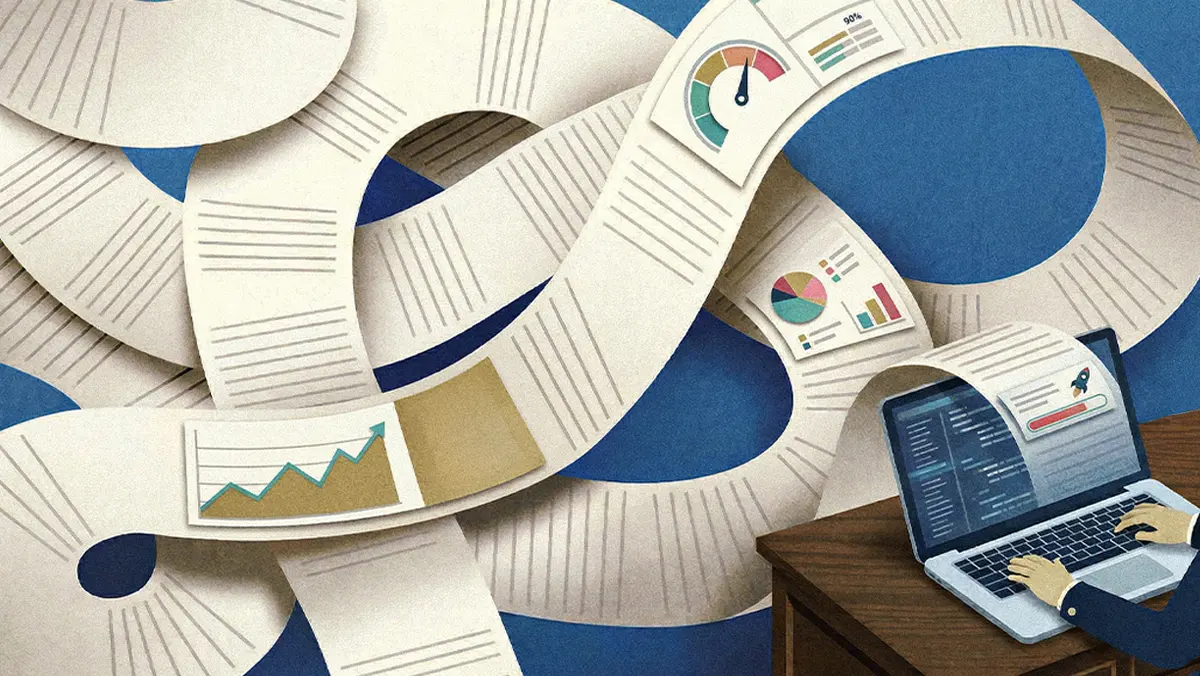
Building dashboards is not enough. HR's role now is to take the insight, connect it to business impact, and hold leadership accountable for the outcome. Otherwise, we're just reporting, not driving change.

Bernardo Asbun
Talent Development
Saudi Aramco
The skill gap that once kept workforce insights locked behind analytical teams has disappeared. Today, any HR professional with basic tool literacy can surface what used to require a dedicated analyst. The divide is no longer between companies that have information and those that don’t, but between those that act on what it reveals and those still handing off dashboards for others to interpret. Access is no longer the differentiator; ownership of outcomes is.
Bernardo Asbun is a SPHR-certified HR professional and DBA candidate, working in Talent Development at Saudi Aramco, the world’s largest oil producer. A trained psychologist, he taught himself Python and data science fundamentals to run machine learning algorithms and interpret workforce data firsthand, a combination that lets him translate human patterns into the financial language executives act on.
“Building dashboards is not enough. HR’s role now is to take the insight, connect it to business impact, and hold leadership accountable for the outcome. Otherwise, we’re just reporting, not driving change,” Asbun says. That disconnect is playing out in real time. “I see it on LinkedIn constantly. Everyone talks about new tools and their features, but not the real value HR can deliver.” To understand that value, it helps to look at how HR’s role has evolved over the past decade.
Power player: “Ten years ago, HR’s lane was compliance, making sure policies and performance systems were followed. Now everyone has the data. Before, HR handed off dashboards; today, HR holds executive management accountable,” he explains. AI has made the information and technology readily available, but the challenge becomes using that insight effectively to drive results and ensure executives take responsibility.
Bring the receipts: “If 360-degree feedback shows low leadership development in a division, HR can connect that to higher attrition and the associated annual replacement costs,” says Asbun. That connection between behavior and financial impact is what turns HR from a support function into a business driver. “The conversation then moves from a development issue to evidence that holds leaders accountable, not just to present data.” Connecting cost to performance changes how executives listen, but the real resistance comes from within the function itself.
“I think it’s a problem of perception. HR has seen itself as process owners, not responsible for the culture or leadership quality,” he says. Changing that means redefining what the role is built to carry. “Owning a healthy culture and strong leadership pipeline requires a change of perception. It’s a thing of identity.” When that lens is applied to workforce analytics, red flags may show up in unexpected places.
The golden handcuffs: “When compensation is what employees value most about your company, it signals cultural issues. High praise on compensation correlates with low satisfaction. Using large-scale tools like NLP, you can uncover patterns underneath.” Reading those signals is possible now, but getting there wasn’t straightforward. Asbun notes that earlier attempts to bring numbers into the function didn’t live up to expectations. The people analytics hype after Google’s Oxygen project, which became popular around 2012, promised HR would deliver big value through data, but fell short. Data scientists couldn’t bridge the gap due to poor communication and limited HR analytics skills. Today, AI has lowered that barrier enough for HR professionals to close this gap themselves.
Math for mortals: “I am a psychologist, but I’ve learned Python and the data science fundamentals required to run machine learning algorithms and understand what is happening in the data. That wouldn’t have been possible for me five years ago. Now it’s much easier to learn,” Asbun adds. “I’ve been using NLP tools to analyze large-scale employee reviews and even public Glassdoor data, uncovering patterns that don’t appear in engagement scores and spotting trends in what employees are talking about, or not talking about.” The role doesn’t need a technical background, just the willingness to build one, and AI has shortened the learning curve dramatically.
Statistical linguistics: “In a year to 18 months, you can become fluent. You don’t need to be an expert, but you have to understand the data and basic statistics. Bridging that gap lets you speak the language of business and understand where the numbers come from,” Asbun explains. The barrier for most HR teams isn’t brainpower, it’s bandwidth. “The teams making the transition aren’t necessarily more technical. They’ve just carved out the time and permission.” Once that space exists, the playbook writes itself.
AI has given HR the means, the moment, and the mandate to prove its worth in numbers. “When you put a pattern and a cost in front of a leader, the conversation changes. You’re not advising anymore. You’re holding them accountable,” he says. Every advantage the profession needs to operate at that level already exists. The only thing standing in the way is whether the profession is ready to claim it. “We’re very capable. We just need to see ourselves differently,” Asbun concludes.
Related articles




TL;DR
AI and data make insights accessible, but HR risks focusing on tools without taking action, leaving leaders uninformed and decisions unchanged.
Bernardo Asbun, Talent Development leader at Saudi Aramco, emphasizes that HR must understand the fundamentals of working with data, because access to AI alone does not automatically translate into actionable knowledge or influence.
By combining data fluency with strategic thinking and evidence-based reporting, HR can ensure insights drive real decisions and hold leadership accountable.

Bernardo Asbun
Saudi Aramco
Talent Development
Talent Development
The skill gap that once kept workforce insights locked behind analytical teams has disappeared. Today, any HR professional with basic tool literacy can surface what used to require a dedicated analyst. The divide is no longer between companies that have information and those that don’t, but between those that act on what it reveals and those still handing off dashboards for others to interpret. Access is no longer the differentiator; ownership of outcomes is.
Bernardo Asbun is a SPHR-certified HR professional and DBA candidate, working in Talent Development at Saudi Aramco, the world’s largest oil producer. A trained psychologist, he taught himself Python and data science fundamentals to run machine learning algorithms and interpret workforce data firsthand, a combination that lets him translate human patterns into the financial language executives act on.
“Building dashboards is not enough. HR’s role now is to take the insight, connect it to business impact, and hold leadership accountable for the outcome. Otherwise, we’re just reporting, not driving change,” Asbun says. That disconnect is playing out in real time. “I see it on LinkedIn constantly. Everyone talks about new tools and their features, but not the real value HR can deliver.” To understand that value, it helps to look at how HR’s role has evolved over the past decade.
Power player: “Ten years ago, HR’s lane was compliance, making sure policies and performance systems were followed. Now everyone has the data. Before, HR handed off dashboards; today, HR holds executive management accountable,” he explains. AI has made the information and technology readily available, but the challenge becomes using that insight effectively to drive results and ensure executives take responsibility.
Bring the receipts: “If 360-degree feedback shows low leadership development in a division, HR can connect that to higher attrition and the associated annual replacement costs,” says Asbun. That connection between behavior and financial impact is what turns HR from a support function into a business driver. “The conversation then moves from a development issue to evidence that holds leaders accountable, not just to present data.” Connecting cost to performance changes how executives listen, but the real resistance comes from within the function itself.
“I think it’s a problem of perception. HR has seen itself as process owners, not responsible for the culture or leadership quality,” he says. Changing that means redefining what the role is built to carry. “Owning a healthy culture and strong leadership pipeline requires a change of perception. It’s a thing of identity.” When that lens is applied to workforce analytics, red flags may show up in unexpected places.
The golden handcuffs: “When compensation is what employees value most about your company, it signals cultural issues. High praise on compensation correlates with low satisfaction. Using large-scale tools like NLP, you can uncover patterns underneath.” Reading those signals is possible now, but getting there wasn’t straightforward. Asbun notes that earlier attempts to bring numbers into the function didn’t live up to expectations. The people analytics hype after Google’s Oxygen project, which became popular around 2012, promised HR would deliver big value through data, but fell short. Data scientists couldn’t bridge the gap due to poor communication and limited HR analytics skills. Today, AI has lowered that barrier enough for HR professionals to close this gap themselves.
Math for mortals: “I am a psychologist, but I’ve learned Python and the data science fundamentals required to run machine learning algorithms and understand what is happening in the data. That wouldn’t have been possible for me five years ago. Now it’s much easier to learn,” Asbun adds. “I’ve been using NLP tools to analyze large-scale employee reviews and even public Glassdoor data, uncovering patterns that don’t appear in engagement scores and spotting trends in what employees are talking about, or not talking about.” The role doesn’t need a technical background, just the willingness to build one, and AI has shortened the learning curve dramatically.
Statistical linguistics: “In a year to 18 months, you can become fluent. You don’t need to be an expert, but you have to understand the data and basic statistics. Bridging that gap lets you speak the language of business and understand where the numbers come from,” Asbun explains. The barrier for most HR teams isn’t brainpower, it’s bandwidth. “The teams making the transition aren’t necessarily more technical. They’ve just carved out the time and permission.” Once that space exists, the playbook writes itself.
AI has given HR the means, the moment, and the mandate to prove its worth in numbers. “When you put a pattern and a cost in front of a leader, the conversation changes. You’re not advising anymore. You’re holding them accountable,” he says. Every advantage the profession needs to operate at that level already exists. The only thing standing in the way is whether the profession is ready to claim it. “We’re very capable. We just need to see ourselves differently,” Asbun concludes.