
Strategic HR Leadership Begins With Presence, Not Permission

You can't ask, 'Can I sit here?' You say, 'I'm going to join you for this conversation because I want to make sure all the questions are asked.' Set that expectation, and you automatically become the strategic partner leaders turn to.
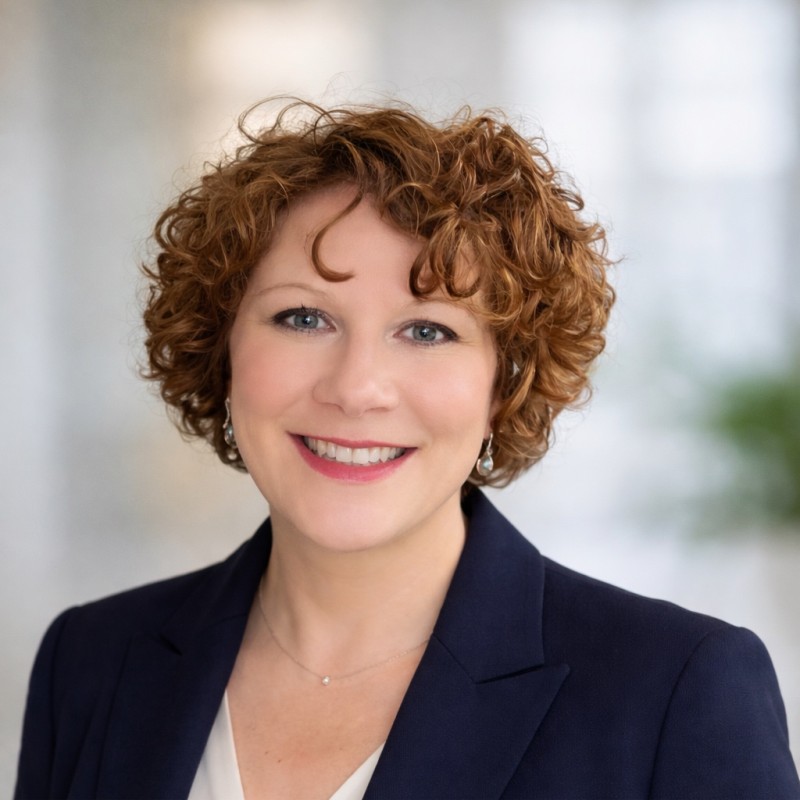
Kelly Davis
Senior HR Manager (Head of HR)
CMC North America
HR leaders are routinely held accountable for culture and engagement while being excluded from the decisions that shape both. That disconnect doesn’t stay quiet for long; it shows up in attrition, disengagement, and cultures that quietly deteriorate.
Kelly Davis, Senior HR Manager (Head of Human Resources) at CMC North America, a manufacturer’s representative firm, has spent over 25 years building that playbook. With a background navigating organizational change and post-acquisition integrations at companies like Atari and Infineon Technologies, she has a practiced view on what it takes for HR to operate as a genuine strategic partner and how to claim that role on her own terms. “You can’t ask, ‘Can I sit here?’ You say, ‘I’m going to join you for this conversation because I want to make sure all the questions are asked.’ Set that expectation, and you automatically become the strategic partner leaders turn to,” she says.
A year after CMC North America was acquired, the company brought in new leadership across the C-suite. Davis, operating as an HR of one for 52 employees, deployed a simple eNPS survey to establish a baseline read on the culture. The score came back at -38. Within one year of targeted interventions, it rose to +21.
A dose of well-being: Not every meaningful benefit costs a fortune. Davis introduced an additional 40 hours of front-loaded paid time off, separate from the standard PTO policy and designed to cover the moments that standard sick leave often doesn’t. “We developed the idea for well-being time that can be used for personal time, for your children, or even a sick pet. If they don’t take it, it doesn’t cost us anything. But if they do, it doesn’t cost us that much,” she explains.
A grand of prevention: Davis also shifted the company to an HRA model, targeting the out-of-pocket costs that create the most financial stress for employees. “We improved our benefits by moving to an HRA model where the company gives a thousand dollars toward an employee’s deductible,” she says. The change required negotiation but not a major budget overhaul, demonstrating that targeted adjustments can meaningfully shift how supported employees feel.
Trust is not a byproduct of good policy. It is built through consistent, human behavior: showing up and treating employees as individuals rather than productivity variables. For HR leaders, that kind of presence is often the difference between being seen as an administrative function and being regarded as a genuine partner in the business.
Friendly, not friends: Davis’s approach to trust-building starts with a simple principle: “We build trust by asking questions.” In practice, that means being physically present and genuinely curious. “I walk around and talk to my employees. I ask specific questions, like, ‘Did you have time with your dog today?’ I’m not friends with them, but I am friendly enough that they feel comfortable stopping by my office to tell me when something isn’t working for them.”
Curiosity as currency: That openness creates a natural feedback loop, giving Davis the ground-level insight she needs to bring informed proposals to leadership. She demonstrates value by proactively inserting herself into key processes rather than waiting to be included. “If I have to sit in on a termination, I always make sure that I sit with those managers and have a pre-check with them,” she says. It is a process of continuous learning: “I don’t have all the answers, and I probably never will.”
Before the earthquake: Davis is direct about what she sees as a fundamental misunderstanding of HR’s role. Too often, leaders treat HR as a reactive fix-it function rather than a proactive strategic one. “Leaders expect HR to fix the people side, but that’s not what we’re really there for. We’re not there to fix things after the aftershock; we’re there to fix them before the earthquake happens. You can’t outsource leadership accountability to HR.”
For Davis, preventing that earthquake starts with understanding the workforce you actually have, not the one you assume you have. The modern workforce spans generations with vastly different relationships to technology, flexibility, and work itself, and navigating that complexity requires the same tool she returns to again and again: curiosity. “You have to be in tune with what the needs are for each generation. You cannot judge someone based on when they were born; everybody’s different. Being in tune, asking questions, and getting to know your employees is the only way you’re going to be able to work with them.”
Related articles





TL;DR
When HR is treated as an administrative function rather than a strategic one, the cost shows up in disengaged teams, high turnover, and cultures that erode from the inside out.
Kelly Davis, Head of Human Resources at CMC North America, details how she rebuilt a deeply challenged culture in one year using low-cost, human-centered initiatives that addressed real employee needs.
Her approach comes down to one principle: HR’s job is to prevent the earthquake, not clean up the aftershock, and that starts with trust, curiosity, and a willingness to show up uninvited.

Kelly Davis
CMC North America
Senior HR Manager (Head of HR)
Senior HR Manager (Head of HR)
HR leaders are routinely held accountable for culture and engagement while being excluded from the decisions that shape both. That disconnect doesn’t stay quiet for long; it shows up in attrition, disengagement, and cultures that quietly deteriorate.
Kelly Davis, Senior HR Manager (Head of Human Resources) at CMC North America, a manufacturer’s representative firm, has spent over 25 years building that playbook. With a background navigating organizational change and post-acquisition integrations at companies like Atari and Infineon Technologies, she has a practiced view on what it takes for HR to operate as a genuine strategic partner and how to claim that role on her own terms. “You can’t ask, ‘Can I sit here?’ You say, ‘I’m going to join you for this conversation because I want to make sure all the questions are asked.’ Set that expectation, and you automatically become the strategic partner leaders turn to,” she says.
A year after CMC North America was acquired, the company brought in new leadership across the C-suite. Davis, operating as an HR of one for 52 employees, deployed a simple eNPS survey to establish a baseline read on the culture. The score came back at -38. Within one year of targeted interventions, it rose to +21.
A dose of well-being: Not every meaningful benefit costs a fortune. Davis introduced an additional 40 hours of front-loaded paid time off, separate from the standard PTO policy and designed to cover the moments that standard sick leave often doesn’t. “We developed the idea for well-being time that can be used for personal time, for your children, or even a sick pet. If they don’t take it, it doesn’t cost us anything. But if they do, it doesn’t cost us that much,” she explains.
A grand of prevention: Davis also shifted the company to an HRA model, targeting the out-of-pocket costs that create the most financial stress for employees. “We improved our benefits by moving to an HRA model where the company gives a thousand dollars toward an employee’s deductible,” she says. The change required negotiation but not a major budget overhaul, demonstrating that targeted adjustments can meaningfully shift how supported employees feel.
Trust is not a byproduct of good policy. It is built through consistent, human behavior: showing up and treating employees as individuals rather than productivity variables. For HR leaders, that kind of presence is often the difference between being seen as an administrative function and being regarded as a genuine partner in the business.
Friendly, not friends: Davis’s approach to trust-building starts with a simple principle: “We build trust by asking questions.” In practice, that means being physically present and genuinely curious. “I walk around and talk to my employees. I ask specific questions, like, ‘Did you have time with your dog today?’ I’m not friends with them, but I am friendly enough that they feel comfortable stopping by my office to tell me when something isn’t working for them.”
Curiosity as currency: That openness creates a natural feedback loop, giving Davis the ground-level insight she needs to bring informed proposals to leadership. She demonstrates value by proactively inserting herself into key processes rather than waiting to be included. “If I have to sit in on a termination, I always make sure that I sit with those managers and have a pre-check with them,” she says. It is a process of continuous learning: “I don’t have all the answers, and I probably never will.”
Before the earthquake: Davis is direct about what she sees as a fundamental misunderstanding of HR’s role. Too often, leaders treat HR as a reactive fix-it function rather than a proactive strategic one. “Leaders expect HR to fix the people side, but that’s not what we’re really there for. We’re not there to fix things after the aftershock; we’re there to fix them before the earthquake happens. You can’t outsource leadership accountability to HR.”
For Davis, preventing that earthquake starts with understanding the workforce you actually have, not the one you assume you have. The modern workforce spans generations with vastly different relationships to technology, flexibility, and work itself, and navigating that complexity requires the same tool she returns to again and again: curiosity. “You have to be in tune with what the needs are for each generation. You cannot judge someone based on when they were born; everybody’s different. Being in tune, asking questions, and getting to know your employees is the only way you’re going to be able to work with them.”