
Hiring Speed and Strong Screening Define Success in Scarce Talent Markets

The most important process in the recruitment value chain is screening. If a company has a strong screening process, everything will be like a song. If the screening is poor, they will struggle throughout the entire process.
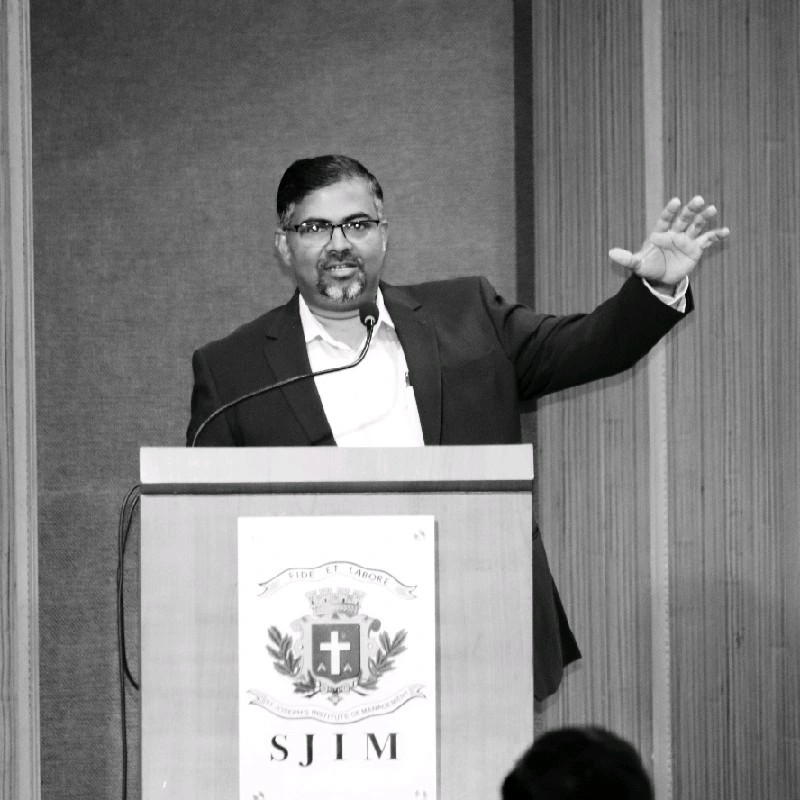
George Varghese Madathilathu
Founder & CEO
PeoplepulseHR Consulting Solutions
The job market has slowed, but competition for quality talent has not. Given high-profile layoffs and a larger candidate pool, many employers assume the balance of power has shifted in their favor. In practice, the opposite is often true. Job tenures have shortened, younger candidates are stepping into senior roles earlier, and experienced professionals are seeing their leverage quietly reduced. Companies that treat hiring as a slow, one-sided filtering exercise are already falling behind, and success now depends less on simply having an open role and more on speed and mutual respect.
George Varghese Madathilathu brings more than two decades of human resources leadership experience across manufacturing, IT, retail, and pharmaceutical industries. The Founder and CEO of PeoplepulseHR Consulting Solutions, he advises companies on talent acquisition and HR transformation, backed by a career holding senior HR roles at organizations including Titan Company and First Abu Dhabi Bank. He believes that hiring success today starts with mastering the fundamentals before scaling processes or introducing automation.
“The most important process in the recruitment value chain is screening. If a company has a strong screening process, everything will be like a song. If the screening is poor, they will struggle throughout the entire process,” says Madathilathu. But the issue goes beyond process alone, reflecting a power dynamic many employers still misunderstand. The assumption that companies hold all the leverage is increasingly out of step with reality, particularly in roles where specialized skills are limited and hiring demand remains strong across key sectors and emerging markets.
Rebalancing leverage: Candidates retain meaningful choice in the hiring process. Companies must fill roles; strong candidates can walk away. Treating talent as easily replaceable reflects a false sense of abundance and quickly erodes trust and outcomes, Madathilathu says. “If employers think there are hundreds of people waiting outside their office to join them, they’re living in a dream world. That mindset is exactly what causes them to lose good talent.”
In a market where high-quality talent remains scarce, the real advantage comes from getting the first step right by identifying who is truly worth interviewing. This reality requires a shift toward a more candidate-centric approach, where speed is treated as a strategic advantage rather than an operational detail. Madathilathu says many leaders still underestimate how narrow the pool of qualified talent can be, even in markets that appear crowded. He recalls a recent CFO search where nearly 400 candidates were reviewed, yet only 12 met the mandate. In that kind of market, slow decision-making often determines whether a company secures the right hire or loses them to a faster-moving competitor.
Speed wins talent: Hiring velocity is now a decisive differentiator. Companies that rely on panel interviews instead of putting candidates through five or six rounds are far more likely to secure strong talent before competing offers and second thoughts take over. “Speed of hiring is going to be a major differentiator. If you like a candidate, do your due diligence and close fast,” Madathilathu says.
That philosophy of respect must carry through to the interview itself, which should function as a two-way evaluation rather than a one-sided interrogation. While HR professionals tend to be well-trained in interviewing, Madathilathu observes that business line managers can inadvertently turn interviews into damaging experiences through overly rigid or purely technical approaches. His approach offers a practical counterbalance, showing how human connection can be deliberately built into even the most structured corporate interview frameworks without sacrificing rigor.
Forty minutes of torture: When interviews turn into pure technical interrogations, they actively damage the employer brand. “We see hiring managers who stick only to technical questions in what amounts to a ruthless 30 to 40 minutes of torture,” Madathilathu says, noting that abrupt endings often leave candidates questioning whether they would want to work for that manager at all.
Humanize the machine, then close strong: Even inside rigid, competency-based frameworks, interviews can feel human by design. “For every situational question I asked to validate a competency, I backed it up with a relationship question,” Madathilathu says. For promising candidates, he treats the closing call as a moment to deploy a specific, high-value differentiator that keeps top talent engaged.
Winning in today’s hiring market is not about volume or leverage, but about focus and follow-through. The companies that succeed screen carefully, move quickly, and understand that speed only matters when the offer itself is strong.
Recruitment may begin with HR, but it only succeeds when compensation, leadership, and hiring managers are aligned around what modern candidates actually value. “Today, people look for ownership, for a stake in the game,” Madathilathu concludes. “A very different total rewards approach is needed to attract good talent.”
Related articles





TL;DR
Hiring slows, but strong talent still holds leverage, and slow, one-sided hiring processes cause companies to lose qualified candidates despite larger applicant pools.
George Varghese Madathilathu, Founder and CEO of PeoplepulseHR Consulting Solutions, explains why screening quality and hiring speed now matter more than perceived employer power.
Companies win by screening rigorously, interviewing with respect, and moving decisively before strong candidates disengage or accept faster offers.

George Varghese Madathilathu
PeoplepulseHR Consulting Solutions
Founder & CEO
Founder & CEO
The job market has slowed, but competition for quality talent has not. Given high-profile layoffs and a larger candidate pool, many employers assume the balance of power has shifted in their favor. In practice, the opposite is often true. Job tenures have shortened, younger candidates are stepping into senior roles earlier, and experienced professionals are seeing their leverage quietly reduced. Companies that treat hiring as a slow, one-sided filtering exercise are already falling behind, and success now depends less on simply having an open role and more on speed and mutual respect.
George Varghese Madathilathu brings more than two decades of human resources leadership experience across manufacturing, IT, retail, and pharmaceutical industries. The Founder and CEO of PeoplepulseHR Consulting Solutions, he advises companies on talent acquisition and HR transformation, backed by a career holding senior HR roles at organizations including Titan Company and First Abu Dhabi Bank. He believes that hiring success today starts with mastering the fundamentals before scaling processes or introducing automation.
“The most important process in the recruitment value chain is screening. If a company has a strong screening process, everything will be like a song. If the screening is poor, they will struggle throughout the entire process,” says Madathilathu. But the issue goes beyond process alone, reflecting a power dynamic many employers still misunderstand. The assumption that companies hold all the leverage is increasingly out of step with reality, particularly in roles where specialized skills are limited and hiring demand remains strong across key sectors and emerging markets.
Rebalancing leverage: Candidates retain meaningful choice in the hiring process. Companies must fill roles; strong candidates can walk away. Treating talent as easily replaceable reflects a false sense of abundance and quickly erodes trust and outcomes, Madathilathu says. “If employers think there are hundreds of people waiting outside their office to join them, they’re living in a dream world. That mindset is exactly what causes them to lose good talent.”
In a market where high-quality talent remains scarce, the real advantage comes from getting the first step right by identifying who is truly worth interviewing. This reality requires a shift toward a more candidate-centric approach, where speed is treated as a strategic advantage rather than an operational detail. Madathilathu says many leaders still underestimate how narrow the pool of qualified talent can be, even in markets that appear crowded. He recalls a recent CFO search where nearly 400 candidates were reviewed, yet only 12 met the mandate. In that kind of market, slow decision-making often determines whether a company secures the right hire or loses them to a faster-moving competitor.
Speed wins talent: Hiring velocity is now a decisive differentiator. Companies that rely on panel interviews instead of putting candidates through five or six rounds are far more likely to secure strong talent before competing offers and second thoughts take over. “Speed of hiring is going to be a major differentiator. If you like a candidate, do your due diligence and close fast,” Madathilathu says.
That philosophy of respect must carry through to the interview itself, which should function as a two-way evaluation rather than a one-sided interrogation. While HR professionals tend to be well-trained in interviewing, Madathilathu observes that business line managers can inadvertently turn interviews into damaging experiences through overly rigid or purely technical approaches. His approach offers a practical counterbalance, showing how human connection can be deliberately built into even the most structured corporate interview frameworks without sacrificing rigor.
Forty minutes of torture: When interviews turn into pure technical interrogations, they actively damage the employer brand. “We see hiring managers who stick only to technical questions in what amounts to a ruthless 30 to 40 minutes of torture,” Madathilathu says, noting that abrupt endings often leave candidates questioning whether they would want to work for that manager at all.
Humanize the machine, then close strong: Even inside rigid, competency-based frameworks, interviews can feel human by design. “For every situational question I asked to validate a competency, I backed it up with a relationship question,” Madathilathu says. For promising candidates, he treats the closing call as a moment to deploy a specific, high-value differentiator that keeps top talent engaged.
Winning in today’s hiring market is not about volume or leverage, but about focus and follow-through. The companies that succeed screen carefully, move quickly, and understand that speed only matters when the offer itself is strong.
Recruitment may begin with HR, but it only succeeds when compensation, leadership, and hiring managers are aligned around what modern candidates actually value. “Today, people look for ownership, for a stake in the game,” Madathilathu concludes. “A very different total rewards approach is needed to attract good talent.”