
Executive Hiring Enters a New Phase in 2026 as Companies Demand Builders, Not Managers
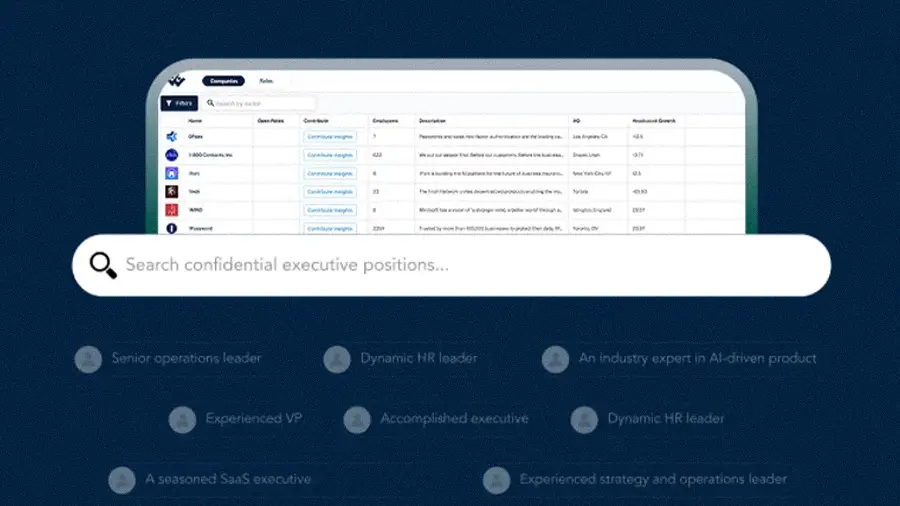
Fundamentally, people don’t just want a VP who sits back. They want someone who rolls up their sleeves and gets their hands dirty. That’s the kind of leader the market is demanding in 2026.

Andy Mowat
Founder
Whispered
The executive job market is tightening just as expectations are rising. As AI reshapes how work gets done, companies are rethinking what senior leadership should look like and many are no longer impressed by titles alone. The executives in highest demand are “builders” who can set direction and still roll up their sleeves, proving their value through real output, not just oversight.
Andy Mowat is a four-time unicorn go-to-market executive and founder of the executive career platform Whispered. Having scaled multiple companies through high-growth phases, he has a clear view into how executive hiring is shifting away from traditional manager roles and toward hands-on builders. For mid- to late-career leaders, Mowat says this shift brings a new set of expectations, where adaptability and demonstrable execution matter as much as vision.
“Fundamentally, people don’t just want a VP who sits back. They want someone who rolls up their sleeves and gets their hands dirty. That’s the kind of leader the market is demanding in 2026,” says Mowat. It speaks to a growing impatience with executives who manage from a distance rather than contribute directly.
Mindset over milestone: What hiring managers are really screening for isn’t tenure or years in role, but adaptability. Mowat says concerns that get mislabeled as age bias are more often about mental rigidity. “I was reflecting back to when I was 35. I didn’t want to hire old people, but it wasn’t because they were old. It was because they were rigid in their thinking,” he recalls.
Builders gonna build: Mowat’s advice is simple: show, don’t tell. For executives in a hiring process, that means treating every evaluation as a chance to demonstrate real capability, not just articulate strategy. Traditional case studies, once a reliable signal, are losing their value now that AI can generate polished decks on demand. Mowat says the strongest candidates go beyond the expected output and build something tangible instead. “The best candidates don’t just talk through the solution. They take the dataset, build a working app, and show exactly how they’d think and execute. At that point, there’s nothing left to debate.”
So what does being a “builder” actually mean? The mindset is often demonstrated through specific, high-demand skills. Mowat cites Canva as a top company focused on “hiring builders,” a topic he explored on a recent episode of the Whispered Hiring podcast. Deep AI experience, once a bonus, is now a minimum skills requirement, especially as AI impacts the middle management layer. The demand for data self-sufficiency is another hallmark of the modern builder.
Fluent or finished: “Candidates without real AI and data fluency don’t always realize what they’re walking into. Companies will ask very directly how things work, from concepts like RAG to pulling insights from a live dataset. If someone can’t do that themselves, the gap shows immediately,” says Mowat.
Mowat acknowledges that this expectation creates new pressure. The need to be fluent in the data stack while simultaneously driving high-level vision is a key tension in the modern executive role. But demonstrating skills isn’t just about the ‘what.’ it’s about the ‘how.’
Prepare your proof: He advises executives to use every tool available to demonstrate impact and back up their experience as a builder. “References are probably the highest-signal resource you have,” notes Mowat. “Make sure you’ve prepared your references to speak directly to your experience as a builder. Prompting them on that is key.”
Take the lead: Beyond skills, hiring teams are paying close attention to how executives show up and drive the conversation in the room. “There’s a big difference between diving deep versus asking shallow questions. It’s about taking control of the interview versus sitting back and waiting. If your questions are relevant and timely, it shows you’ve done your research. That level of depth is getting more and more important.”
Leadership credibility is no longer anchored in hierarchy, polish, or past wins, but in the ability to adapt, build, and contribute in real time. The market is rewarding those who can pair strategic judgment with hands-on execution, even as the bar for technical and data fluency continues to rise. For leaders navigating the shift, relevance now depends on visible proof of capability, not promises of potential. “The safest position in this market is being able to show exactly how you create value, because talk fades fast, but proof doesn’t,” concludes Mowat.
Related articles





TL;DR
A tighter job market and AI-driven work shift expose a gap between executive titles and real, hands-on capability, leaving many leaders struggling to prove relevance.
Andy Mowat, Founder of Whispered, frames this shift as a demand for adaptability, AI fluency, and visible execution rather than tenure.
Mowat’s solution is to show, not tell, by building real outputs in interviews, working directly with data, asking sharp questions, and preparing references to validate builder impact.

Andy Mowat
Whispered
Founder
Founder
The executive job market is tightening just as expectations are rising. As AI reshapes how work gets done, companies are rethinking what senior leadership should look like and many are no longer impressed by titles alone. The executives in highest demand are “builders” who can set direction and still roll up their sleeves, proving their value through real output, not just oversight.
Andy Mowat is a four-time unicorn go-to-market executive and founder of the executive career platform Whispered. Having scaled multiple companies through high-growth phases, he has a clear view into how executive hiring is shifting away from traditional manager roles and toward hands-on builders. For mid- to late-career leaders, Mowat says this shift brings a new set of expectations, where adaptability and demonstrable execution matter as much as vision.
“Fundamentally, people don’t just want a VP who sits back. They want someone who rolls up their sleeves and gets their hands dirty. That’s the kind of leader the market is demanding in 2026,” says Mowat. It speaks to a growing impatience with executives who manage from a distance rather than contribute directly.
Mindset over milestone: What hiring managers are really screening for isn’t tenure or years in role, but adaptability. Mowat says concerns that get mislabeled as age bias are more often about mental rigidity. “I was reflecting back to when I was 35. I didn’t want to hire old people, but it wasn’t because they were old. It was because they were rigid in their thinking,” he recalls.
Builders gonna build: Mowat’s advice is simple: show, don’t tell. For executives in a hiring process, that means treating every evaluation as a chance to demonstrate real capability, not just articulate strategy. Traditional case studies, once a reliable signal, are losing their value now that AI can generate polished decks on demand. Mowat says the strongest candidates go beyond the expected output and build something tangible instead. “The best candidates don’t just talk through the solution. They take the dataset, build a working app, and show exactly how they’d think and execute. At that point, there’s nothing left to debate.”
So what does being a “builder” actually mean? The mindset is often demonstrated through specific, high-demand skills. Mowat cites Canva as a top company focused on “hiring builders,” a topic he explored on a recent episode of the Whispered Hiring podcast. Deep AI experience, once a bonus, is now a minimum skills requirement, especially as AI impacts the middle management layer. The demand for data self-sufficiency is another hallmark of the modern builder.
Fluent or finished: “Candidates without real AI and data fluency don’t always realize what they’re walking into. Companies will ask very directly how things work, from concepts like RAG to pulling insights from a live dataset. If someone can’t do that themselves, the gap shows immediately,” says Mowat.
Mowat acknowledges that this expectation creates new pressure. The need to be fluent in the data stack while simultaneously driving high-level vision is a key tension in the modern executive role. But demonstrating skills isn’t just about the ‘what.’ it’s about the ‘how.’
Prepare your proof: He advises executives to use every tool available to demonstrate impact and back up their experience as a builder. “References are probably the highest-signal resource you have,” notes Mowat. “Make sure you’ve prepared your references to speak directly to your experience as a builder. Prompting them on that is key.”
Take the lead: Beyond skills, hiring teams are paying close attention to how executives show up and drive the conversation in the room. “There’s a big difference between diving deep versus asking shallow questions. It’s about taking control of the interview versus sitting back and waiting. If your questions are relevant and timely, it shows you’ve done your research. That level of depth is getting more and more important.”
Leadership credibility is no longer anchored in hierarchy, polish, or past wins, but in the ability to adapt, build, and contribute in real time. The market is rewarding those who can pair strategic judgment with hands-on execution, even as the bar for technical and data fluency continues to rise. For leaders navigating the shift, relevance now depends on visible proof of capability, not promises of potential. “The safest position in this market is being able to show exactly how you create value, because talk fades fast, but proof doesn’t,” concludes Mowat.