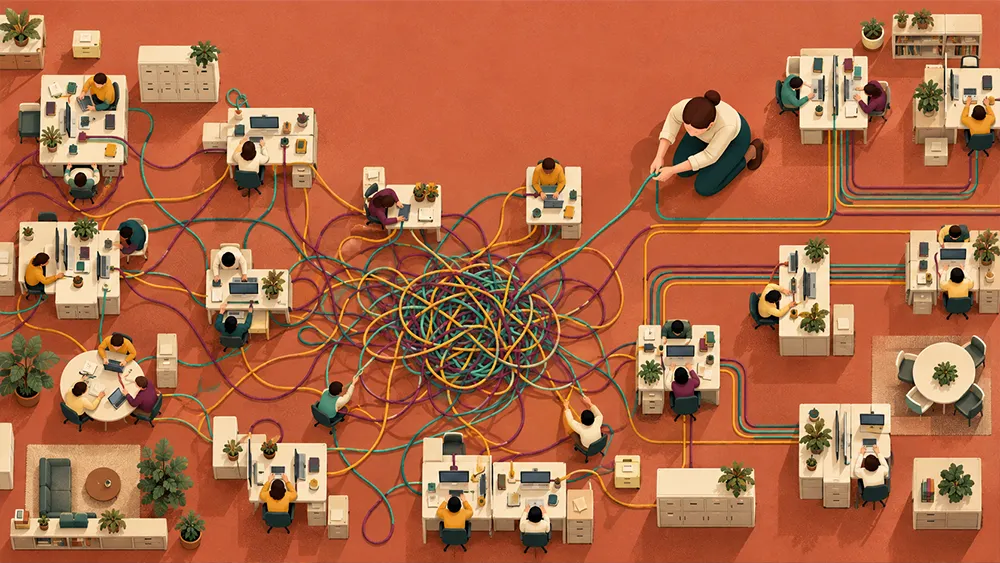
I'm still HR at the end of the day. And there's always that persona around HR, so they may not want to talk to me about how they feel.
 Kayden DavisHuman Resources Generalist, Southern Fabricators, Inc.
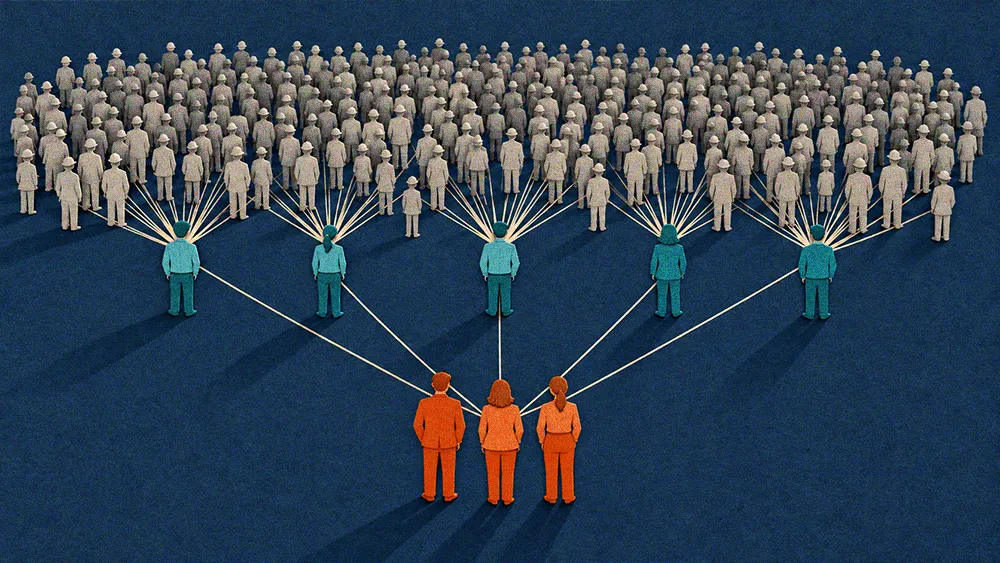
The employees HR most wants to hear from don't always want to talk to HR, and a team of three can't be on the floor for every shift to change that. Even as employee happiness recovers, averages can hide who HR isn't hearing. eNPS reached 40 in the first half of 2026, its strongest opening half since 2023, according to BambooHR's 2026 Employee Happiness Report, but the gains vary by age, gender, tenure, and industry. One workable response starts with something an employee said and runs through the people already in the room, like supervisors and trainers. It gives a small HR team a clear way to get better, which is to get closer to the work by hearing what employees ask for and giving the people nearest to them a reason to act on it.
Kayden Davis, Human Resources Generalist at Southern Fabricators, Inc., is one of three people running HR for a North Carolina manufacturer of roughly 200 employees. She joined about a year ago while finishing her master's degree in human resources management at Tarleton State University, and she has since helped build much of the function from scratch, including an FMLA process, an engagement survey, quarterly roundtables, and a recognition program that began as a booklet of paper "high fives." This year she also facilitated a session on employee engagement at a regional forum for manufacturing HR leaders. Her first year in the role shows what that approach looks like with three people and no template.
"If no one ever told me, 'good job,' I probably wouldn't want to do my job that much either," Davis says. She was reacting to what her first engagement survey turned up. Her response put the fix in supervisors' hands and gave them a reason to use it, and the same logic runs through how she listens and how she trains.
Start by asking where HR isn't reaching
Nobody handed Davis a playbook. When she asked how FMLA should work at the company, her professor could explain what the law is and how it plays out in the real world, but that didn't tell her how to run it at Southern Fabricators. "No one actually knew how to do FMLA the way that Southern Fabricators needed FMLA to be handled," she says. "And so that was where I had to create it." On a team of three with no one else to ask about the niche parts of HR, she sees AI as a way to widen what the team can draw on. "It just makes it a lot more accessible to everybody," she says.
The first thing she did on arriving was roll out an engagement and satisfaction survey to the whole company. "The number-one piece of feedback I got was that employees had no idea what was going on in HR," Davis says. The responses also suggested that frontline supervisors weren't acknowledging what their employees wanted and needed, and that, in her reading, motivation had dropped along with it. She followed the survey with quarterly roundtables, drawing on her internship experience at larger employers. "I know that this worked well per shift, so maybe this will work well company-wide," she says.
Reach employees through the people they already talk to
Surveys and roundtables can only go so far, and Davis knows why. "I'm still HR at the end of the day," she says. "And there's always that persona around HR, so they may not want to talk to me about how they feel." BambooHR's Redesigning Work report suggests the hesitation reaches well beyond HR, finding that 27% of workers would rather ask AI than admit they need help.
Her first priority was a closer relationship between HR and frontline supervisors. "HR wants to know these employees so bad, and the supervisors have no option but to know these employees," she says. Because employees may hold back with HR, much of her feedback comes from direct conversations with their supervisors. She asks supervisors what changes they think need to happen, and she starts with a simple question: "What have you been hearing on the floor lately?"
Turn the smallest request into a program supervisors keep going
One roundtable produced the idea Davis calls her favorite thing she's done. An employee who rarely spoke up told her, "Ms. Kayden, it's very simple. I just want someone to give me a high five." She took the request literally. Working in Canva and talking through ideas with AI, she designed a booklet she named Weld Done, a play on the welding that fills the company's days. Each entry records the employee's name, which of the company's seven core values they showed, and what happened.
An entry can reward anything from one coworker buying another lunch to a save worth $100,000, and the supervisor decides. "It could be super extreme or super small, but if the supervisor thinks that employee deserves a Weld Done, then they get the Weld Done," Davis says. She calls the booklets her paper high fives, and she says complaints about going unacknowledged have become rare. "I very rarely hear a complaint about someone not being told that they're getting a high five," she says. "So that's my favorite thing that I've done."
An employee recognition program lasts only as long as supervisors keep writing entries, so Davis built a competition around them. At the meeting HR holds with supervisors every other week, the supervisor who wrote the most Weld Dones the week before wins a dollar, she says, and anyone who writes at least one a week for a full quarter enters a drawing for a larger quarterly prize. A marketing intern now runs Weld Done Wednesdays, which can put recipients in front of the company's social media followers. "It's fun to see something so small turn into such a big deal with everybody," she says.
Pay for the training outcome you want
The same logic reshaped how new hires learn. Davis separated trainers from supervisors and team leaders, who she says had been handling training on top of their own jobs. "A trainer needs to be its own thing," she says. Many employees didn't want the role without an incentive, so she built Train the Trainers, a program that, in her words, "incentivizes the training instead of the trainer."
After a new hire finishes training, they take a final test and a long evaluation survey that rates both the trainer and the training, covering people skills and hands-on skills such as welding and press brake operation. The results combine into a score, and the trainer earns a percentage of $200 at the end of each training, Davis says. Some of the employees she trained as trainers surprised her after she'd doubted how they would perform. "They're so much more motivated to be at work and to train others," she says.
A new hire's trainer shapes the first weeks on the job, and the first year is where unhappier companies lose more people. In the Employee Happiness Report, companies with a negative eNPS had a first-year turnover rate of 2.7%, compared with 2.1% at companies with an excellent eNPS, though the report notes that the pattern can't establish causation.
Test program results with the next survey
Davis hasn't run her survey a second time yet. She plans to run it again soon, which will give her the first side-by-side look at whether recognition, roundtables, and the new training model changed what employees say. Until then her evidence is her own account, and she describes most of her work as trial and error that a small company lets her run as long as nothing harms anyone or breaks the law. "We're an HR team of three and we're trying our best and they let us kind of run that whole trial and error thing," she says.
Each program she described feeds the next round of questions, which is how Davis sees engagement improving HR itself. "The more that they engage with us, I feel like the better our process has become," she says.